Israeli plans for Rafah ‘camp’ in Gaza slammed as continuation of genocide | Israel-Palestine conflict News
While diplomatic circles welcome the recovery of the last Israeli captive’s remains in Gaza and the imminent partial reopening of the enclave’s Rafah border crossing with Egypt, a quieter, darker reality is taking shape on the ground.
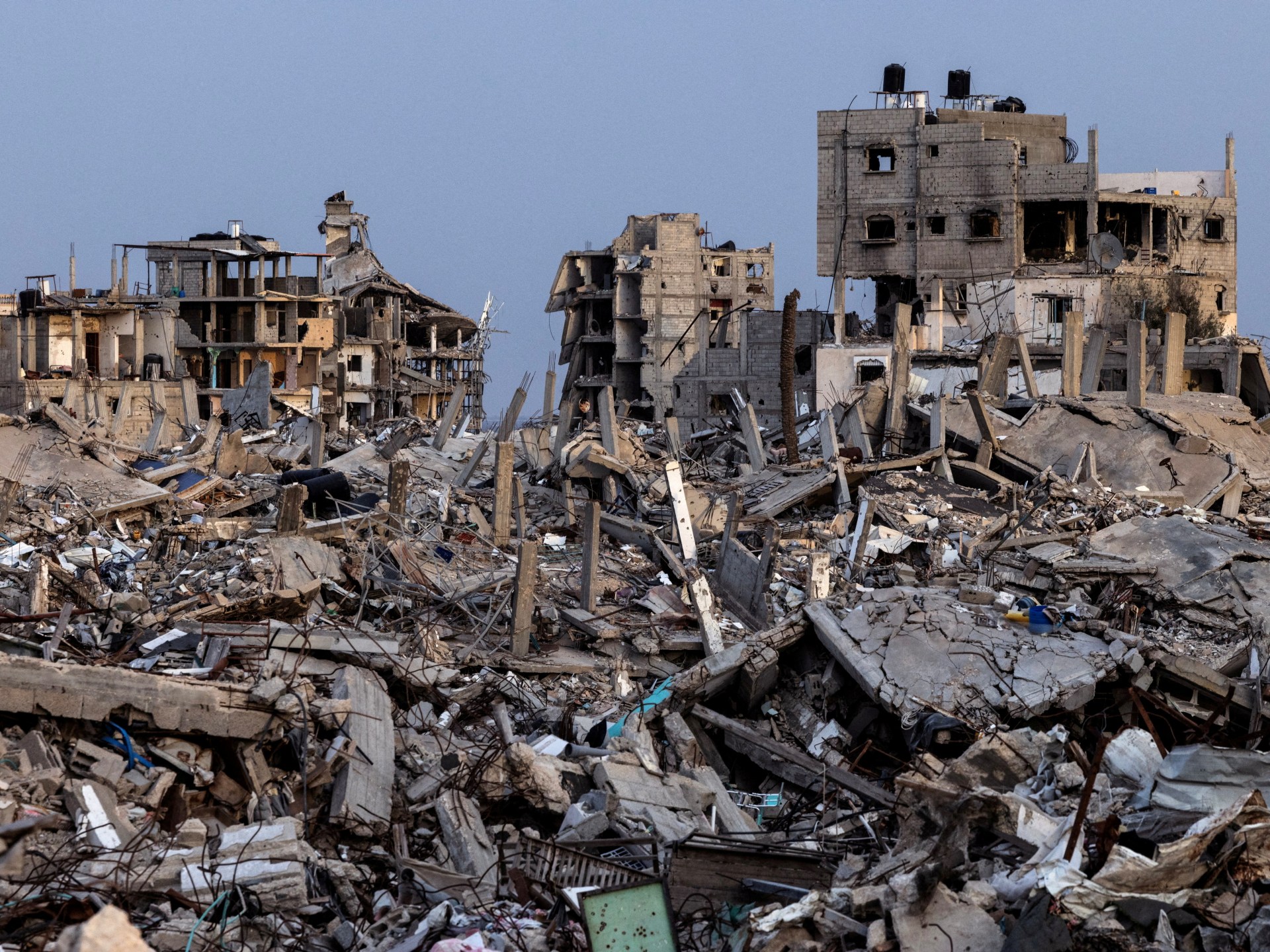
According to comments by retired Israeli General Amir Avivi, who still advises the military, Israel has cleared land in Rafah, an area in the southern Gaza Strip that it had already flattened in more than two years of its genocidal war, to construct an enormous facility to entrench its military control and presence in Gaza for the long term.
Speaking to the Reuters news agency on Tuesday, Avivi described the project as a “big, organised camp” capable of holding hundreds of thousands of people, stating it would be equipped with “ID checks, including facial recognition”, to track every Palestinian entering or leaving.
Corroborating Avivi’s claims, exclusive analysis by Al Jazeera’s Digital Investigations Team confirms that ground preparations for this project are already well under way.
Satellite imagery captured from December 2 through Monday reveals extensive clearing operations in western Rafah. The analysis identifies an area of about 1.3sq km (half a square mile) that has undergone systematic levelling.
According to the investigation, the operations went beyond mere debris removal and involved the flattening of land previously devastated by Israeli air strikes.
The cleared zone is located adjacent to two Israeli military posts, suggesting the new camp will be under direct and immediate military supervision. The satellite evidence aligns with reports that the facility is to act as a controlled “holding pen” rather than a humanitarian shelter.

The trap of return
To analysts in Gaza, no humanitarian intent is behind this projected high-tech infrastructure, which they say is in fact a trap for Palestinians.
“What they are building is, in reality, a human-sorting mechanism reminiscent of Nazi-era selection points,” Wissam Afifa, a Gaza-based political analyst, told Al Jazeera. “It is a tool for racial filtering and a continuation of the genocide by other means.”
The reopening of the Rafah crossing, tentatively scheduled for Thursday, according to The Jerusalem Post, comes with strict Israeli conditions. Prime Minister Benjamin Netanyahu has insisted on full “security control”.
For Palestinians hoping to return to Gaza, this means submitting to what Afifa describes as “human sorting stations”.
“This mechanism is designed to deter return,” Afifa said. “Palestinians will face interrogation, humiliation and the risk of arrest at these Israeli-run checkpoints just to go home.”
By leveraging facial recognition technology confirmed by Avivi, Israel is creating a high-risk ordeal for returnees, he said. Afifa argued it will force many Palestinians to choose exile over the risk of the “sorting station”, serving Israel’s longstanding goal of depopulating the Strip.

Permanent occupation within the ‘yellow line’
The Rafah camp is just one piece of a larger puzzle. Israel in effect occupies all of Gaza with a physical military presence in 58 percent of the Gaza Strip. Its forces directly occupy an area within the “yellow line”, a self-proclaimed Israeli military buffer zone established by an October ceasefire.
“We are witnessing the re-engineering of Gaza’s geography and demography,” Afifa said. “About 70 percent of the Strip is now under direct Israeli military management.”
This assessment of a permanent foothold is reinforced by Netanyahu’s own remarks to the Knesset on Monday. By declaring that “the next phase is demilitarisation”, or disarming Hamas, rather than reconstruction, Netanyahu signalled that the military occupation has no end date.
“The talk of ‘reconstruction’ starting in Rafah under Israeli security specifications suggests they are building a permanent security infrastructure, not a sovereign Palestinian state,” Afifa added.
A ‘show’ of peace
For the more than two million Palestinians in Gaza, the hope that the return of the last Israeli captive would bring relief has turned into frustration.
“There is a deep sense of betrayal,” Afifa said. “The world celebrated the release of one Israeli body as a triumph while two million Palestinians remain hostages in their own land.”
Afifa warned that the international silence regarding these “sorting stations” risks normalising them. If the Rafah model succeeds, it would transform Gaza from a besieged territory into a high-tech prison where the simple act of travel becomes a tool of subjugation, he said.
“Israel is behaving as if it is staying forever,” Afifa concluded. “And the world is watching the show of peace while the prison walls are being reinforced.”

Post Comment