Rubio says Maduro abduction ‘strategic’ necessity, downplays future attacks | US-Venezuela Tensions News
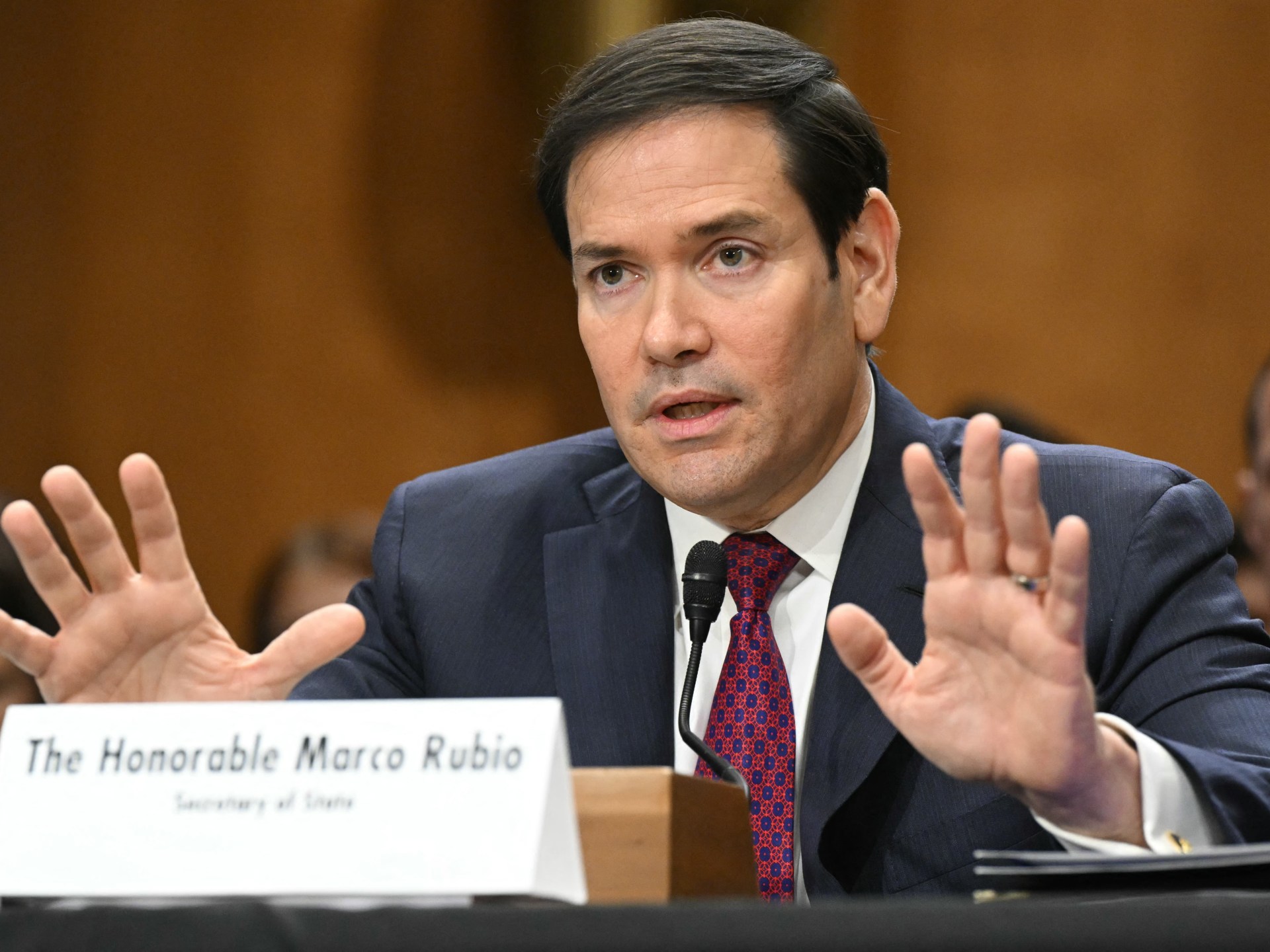
Secretary of State Marco Rubio has defended the United States abduction of Venezuelan leader Nicolas Maduro before a Senate committee, arguing the operation did not constitute an act of war while framing the attack as a strategic necessity.
The hearing before the Senate Foreign Relations Committee on Wednesday offered the latest window into the administration’s thinking behind the extraordinary January 3 abduction of Maduro, who remains in a New York prison awaiting drug trafficking and narco-terrorsim conspiracy charges.
Recommended Stories
list of 3 itemsend of list
Rubio began the hearing by underscoring the operation as a “strategic” necessity for the Trump administration, while downplaying what United Nations Experts have decried as a flagrant violation of international law.
Rubio described Venezuela under Maduro as a “base of operation for virtually every competitor, adversary and enemy in the world”. He listed Venezuela’s alleged ties to Iran, Russia and Cuba.
“[Having Maduro in power] was an enormous strategic risk for the United States, not halfway around the world, not in another continent, but in in the hemisphere in which we all live, and it was having dramatic impacts on us, but also on Colombia and on the Caribbean Basin and all sorts of other places,” he told lawmakers.
“It was an untenable situation, and it had to be addressed, and now the question becomes what happens moving forward,” he said.
Rubio said the US had three objectives in the South American country, the culmination being “a phase of transition where we are left with a friendly, stable, prosperous Venezuela – and democratic”.
In that, Rubio defended the decision of US President Donald Trump to continue working with the government surrounding Maduro, including interim President Delcy Rodriguez, while not initially supporting an opposition takeover.
Rubio said the first objective was avoiding civil war in Venezuela and aiming to “establish direct, honest, respectful, but very direct and honest conversations with the people who today control the elements of that nation”.
He said the second objection aims for “period of recovery … and that is the phase in which you want to see a normalised oil industry”.
Speaking before Rubio, Senator Jeanne Shaheen, the top Democrat on the Senate, focused little on the wider international law implications of the Trump administration’s approach to Venezuela.
Instead, she emphasised the cost, noting that the military operation and ongoing naval blockade have been estimated by some outside analysts to cost $1bn.
“So it’s no wonder that so many of my constituents are asking, why is the president spending so much time focused on Venezuela instead of the cost of living and their kitchen table economic concerns?”
Senator Rand Paul, a Republican, was more direct, asking Rubio is the operation against Maduro constituted an act of war.
“We just don’t believe that this operation comes anywhere close to the constitutional definition of war,” Rubio responded, arguing that Maduro’s election in 2024 had been contested and that he had been indicted on US drug trafficking charges.
Paul, who has been a vocal advocate of passing legislation asserting congressional oversight over future actions in Venezuela, described the arguments as “empty”.
Emphasis on oil
During his testimony, Rubio appeared to downplay the prospect of future attacks on Venezuela, even as a blockade on sanctioned oil tankers remains in effect and US military assets remain surged to the region.
“We are not postured and do not expect to take military action,” Rubio said. Still, he declined to rule out future strikes to protect US interests.
The Secretary of State also laid out plans for Venezuela’s oil industry, which has been a key emphasis of the Trump administration.
He said Washington and Caracas reached an agreement that “on the oil that is sanctioned and quarantined, we will allow you to move it to market… In return, the funds from that will be deposited into an account that we will have oversight over, and you will spend that money for the benefit of the Venezuelan people.”
He called the plan a “short-term mechanism”.
“And so we have created that, we hope to do is transition to a mechanism that allows that to be sold in a normal way, a normal oil industry, not one dominated by cronies, not one dominated by graft and corruption,” Rubio added.
He further hailed a law passed by Venezuela’s legislature that allows for more international access to the country’s oil industry.
Trump has repeatedly appealed for more access for US companies in the wake of Maduro’s abduction.

Post Comment