Mexico’s oil industry faces new pressures from Venezuela oil under US | Oil and Gas News
Monterrey, Mexico: For more than 30 years, Dagoberto Ramos worked at Pemex, Mexico’s state-owned oil company, at one of its petrochemical complexes in the energy hub of Coatzacoalcos, Veracruz.
Ten years ago, the specialist in ethylene production opted for early retirement, fearing that deteriorating maintenance routines were putting him at risk of injury and liability. He was particularly concerned about being blamed for an accident resulting from neglected infrastructure.
Recommended Stories
list of 4 itemsend of list
“Previously, the production plant received a month of maintenance, but this was gradually cut down to 20 days, and sometimes even 15, where only the most urgent tasks were prioritised,” he said.
“The risk of a potential catastrophe was very real, both for the staff and for the surrounding communities.”
On April 20, 2016, less than a year after Ramos left, an explosion rocked the Pajaritos complex, where he had worked before transferring to the Morelos complex just five kilometres away. The incident killed 32 people and injured more than 130 workers.
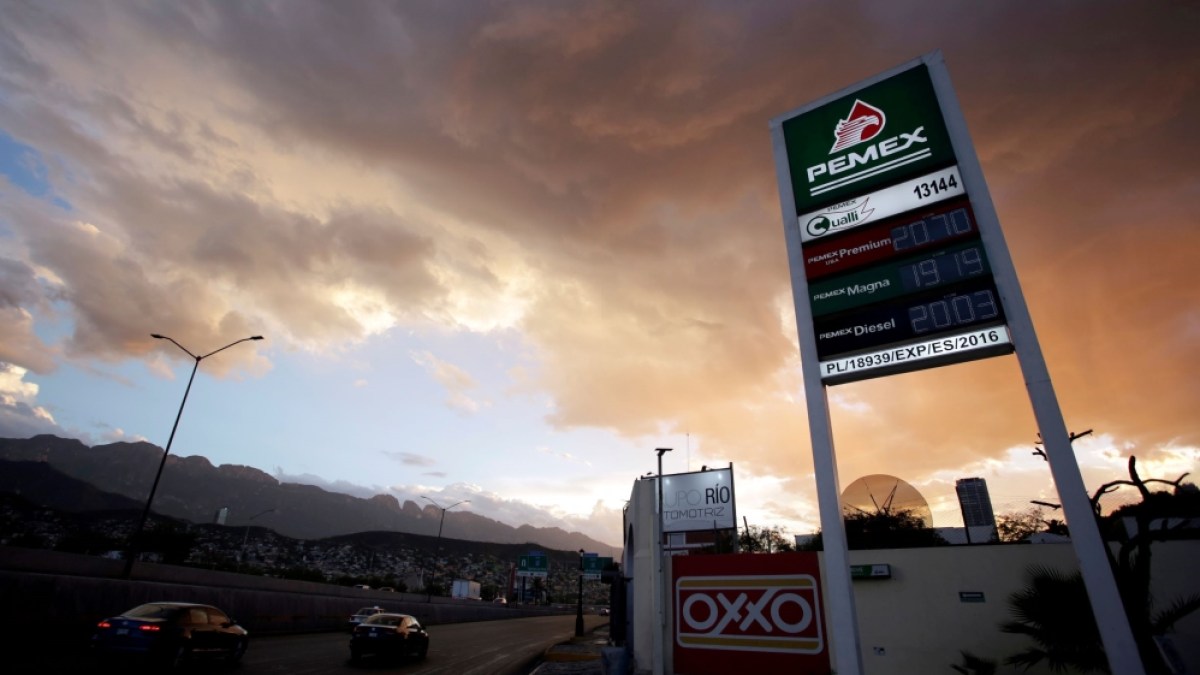
Pemex, over the years, has been responsible for soil contamination, rising methane emissions, and pipeline spills, with chronic leaks impacting local communities and marine fauna. This lack of infrastructure maintenance has worsened as the state-owned giant contends with significant financial and operational constraints and a massive debt burden.
For the past two decades, Pemex has struggled to increase production as mature oil fields decline, while it carries a debt of $100bn and has failed to attract private investment. Concerns are growing for the sustainability of the oil company and the future of Mexico’s energy sector amid regional changes, financial instability and a strong reliance on imports from the United States.
Despite being a crude oil producer, Mexico remains dependent on refined products and natural gas imports from the US. Mariana Castaneda, director of Grupo Estrategia Politica, a public affairs consulting firm, told Al Jazeera that domestic fuel production currently falls 21 percent short of demand. This gap, she said, is expected to widen, even as most refineries operate at or near their maximum capacity.
Rafael Vaquera Salazar, a professor at Monterrey Technological University (TEC), told Al Jazeera that despite the country’s vast reserves and long history of extraction, the outlook for recovery remains bleak.
Now there is a new challenge.
Following the US invasion of Venezuela that resulted in the abduction of then-President Nicolas Maduro and his wife on January 3, the regional energy landscape has become unstable, complicating long-term planning.
While shifts in Venezuela’s oil industry could impact Mexico’s own production, Vaquera said that the timeframe and specific conditions remain uncertain.
Both Venezuelan and Mexican crude are heavy, and US Gulf Coast refineries are specifically equipped to process this type of oil. “A competitive situation could arise where whoever offers the biggest discounts will secure the refining capacity,” he pointed out.
About 60 percent of Pemex’s crude oil exports go to the US. While imports from Venezuela were limited by sanctions, volumes are expected to rise with renewed activity.
Even though oil executives told US President Donald Trump that significant reforms are needed before they commit to Venezuela, a market that Exxon CEO Darren Woods called “uninvestible”, that may not really be the case.
In the oil industry, it doesn’t really matter who you do business with. What matters is the guarantee that investments will be secure and stable, Vaquera told Al Jazeera. “If I have certainty and stability, I can make investments,” he said. “Even if it means dealing with the devil.”
Aid to Cuba and an ailing state oil company
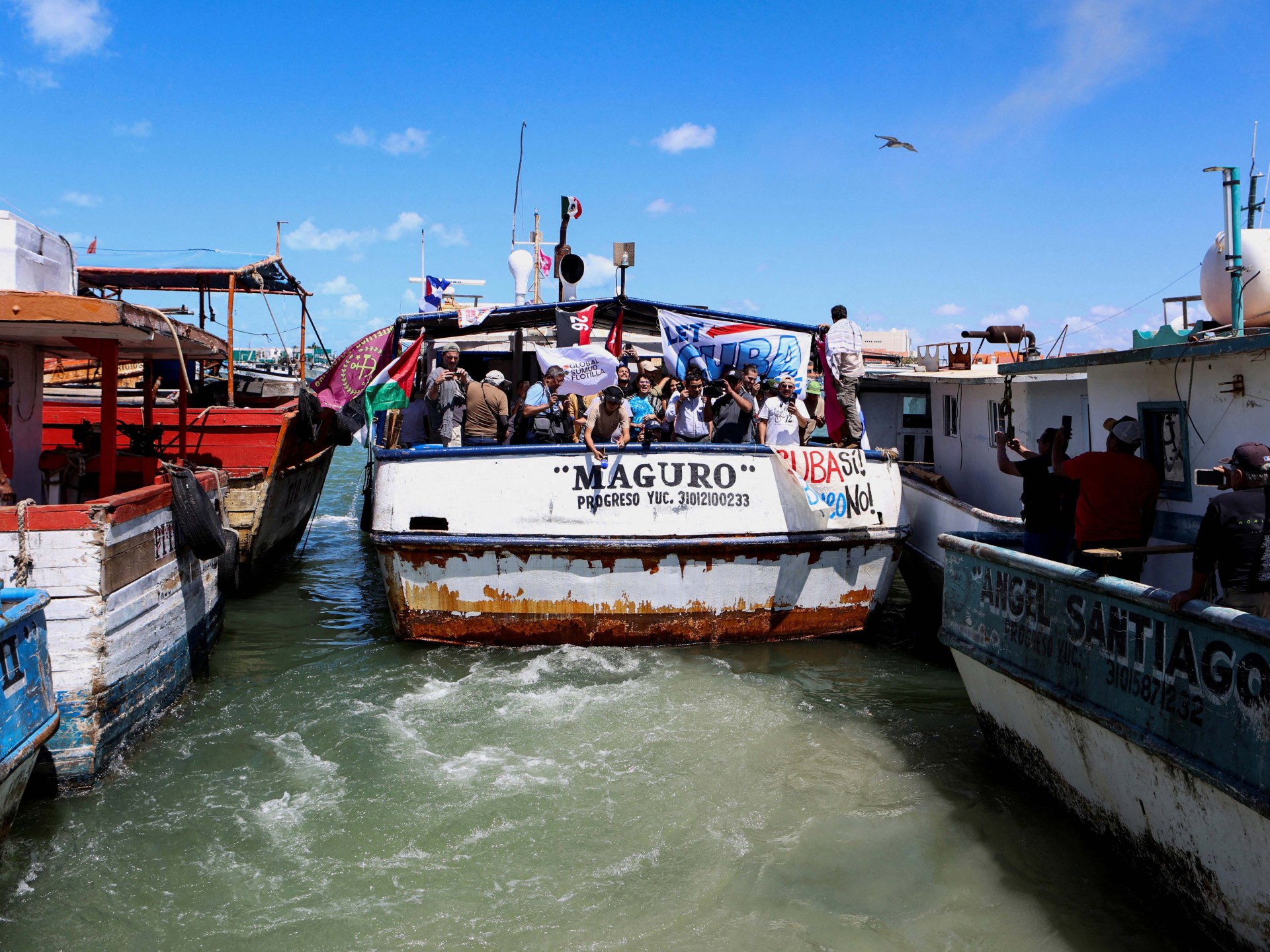
Mexico has been sending oil shipments to Cuba since 2023 through Pemex subsidiary Gasolina Bienestar. These shipments, which were once sporadic, became consistent under the administration of Andres Manuel Lopez Obrador, who framed them as humanitarian aid.
Last year, between January and September 30, Mexico shipped 17,200 barrels of crude oil per day and 2,000 barrels of refined products, according to a report submitted to the US Securities and Exchange Commission.
Mexico’s President Claudia Sheinbaum has also defended the oil shipments as humanitarian aid, yet they continue to fuel tensions with the Trump administration.
On January 26, reports emerged that Pemex had halted oil shipments to Cuba amid rising tensions. The following day, Sheinbaum declined to confirm or deny the reports, stating that the move was a “sovereign decision” by the state oil company.
Camila Acosta, an independent journalist in Havana, told Al Jazeera on January 15 that 60 percent of the island faces blackouts. These are driven by fuel shortages and crumbling infrastructure, along with declining oil shipments, the longstanding US embargo and the Trump administration’s tactic of seizing Venezuelan oil tankers.
“People are fed up with the blackouts, having to cook with firewood, not being able to refrigerate food – or having it spoil – and the lack of water because, without electricity, it can’t be pumped,” she said.
Acosta said that Mexico now stands as the Cuban regime’s “lifeline” as Trump pledged in early January to stop Venezuelan oil shipments to Cuba. However, there is growing concern over how much worse the crisis could become if Mexican shipments were to cease entirely.
“Pemex is in serious financial trouble, and given the public pressure, I don’t know how much longer they can sustain these shipments to the island,” Acosta added.
Following a series of reforms since 2013, a 2025 reform under Sheinbaum changed Pemex’s status from a “Productive State Enterprise” to a “Public State Enterprise”. This legal change prioritises public benefit over economic profitability.
Castaneda says that the current administration recognises the need for private capital to guarantee Pemex’s financial viability, provided it doesn’t compromise national sovereignty.
“The goal is to ensure that sovereignty and Mexican oil remain in the hands of Mexicans. But Pemex itself has acknowledged that without support and participation from the private sector, it is practically impossible to face the challenges Pemex has, including its debt,” she added.
Pemex owes roughly $30bn to its suppliers despite official promises to accelerate payments. Castaneda said that while the government has been making payments, the amounts remain insufficient compared with the total debt, though it does offer some reassurance to the market. The Ministry of Finance and Public Credit didn’t respond to multiple requests for comment from Al Jazeera.
Ramos, the former worker, said that this debt has severely affected local businesses, such as those providing maintenance, supplies, and technical and transportation services, which rely on those funds to stay afloat and pay their employees. He noted that in Coatzacoalcos, many residents are moving to cities like Monterrey for work.
Pedro Aguirre, CEO at Verifigas, a firm that provides technical verification in Mexico’s energy sector, told Al Jazeera that the government’s push for private capital is falling short of expectations.
The combination of Mexico’s 2025 judicial reforms – which increase legal uncertainty – alongside Pemex’s operational challenges and the risks surrounding payment, have caused many companies to have second thoughts.
Last year, Aguirre said, the Mexican government provided Pemex with nearly 400 billion pesos ($23bn), more than double the approved amount, to stabilise its finances and bolster its reliability.
“The uncomfortable question that remains is, how long will this deficit be sustained?” Aguirre said. “And who, in a few years, will make the decision to say enough is enough.”
For 2026, Pemex’s budget grew 7.7 percent. Its strategy relies on hitting 1.8 million barrels per day, up from last year’s average of 1.6 million, and increasing domestic fuel processing at the Dos Bocas and Deer Park refineries to reduce imports. The Ministry of Energy is not granting interviews at this time.
But the growing financial support has also raised questions about which other key sectors are being impacted.
Castaneda said that despite government efforts to ensure that overall investment continues, sectors such as health, education and infrastructure have been diminished or neglected.
“It is like a blanket, isn’t it? If you pull on one side, the other side is revealed,” Castaneda said. “In other words, if there is more on one side, there will be less on the other.”
Pemex’s precarious financial position has been further strained by fuel theft, commonly known as huachicol. While criminal organisations traditionally siphoned gasoline from pipelines, the practice has evolved into a more complex scheme, involving a network of organised crime, Mexican and US companies, and corrupt officials. Fiscal fuel theft involves misclassifying fuel imports to evade the required taxes.
“For many years, these networks were importing diesel, in particular, but labelling it as lubricants or waste. This creates a fiscal shortfall. Funds that the state did not receive and should have received,” Vaquera added.
According to Aguirre, from Verifigas, the country lost about $10bn in 2025 due to this illicit trade, resulting in a massive deficit of public funds. He describes it as an “increasingly sophisticated fraud” that exposes governance failures and has direct impacts on community safety, local market competition, and Pemex’s economy.
While the US and Mexican governments have sanctioned and arrested people for their involvement in the huachicol fiscal, many in Mexico are still calling for high-ranking politicians within the Morena ruling party to be held accountable.
In September, Vice Admiral Manuel Roberto Farias Laguna, a relative of a former navy secretary, was arrested alongside other businessmen and public officials for alleged involvement in organised crime and fuel smuggling. He is the highest-ranking official detained to date in connection with these investigations.
For Vaquera, the issue is less about the money and more about how those funds are used. He warns that it can be used to install handpicked candidates in elections, influence authorities, or facilitate money laundering.
“It’s about who kept it [the money] and the political power they acquired by having all that money or economic power,” he said.


Post Comment