Israel’s war on Gaza decimated transport and even made walking perilous | Israel-Palestine conflict
Gaza City – Every morning, university professor Hassan El-Nabih straps his briefcase and laptop to his bicycle and rides out in search of a place with electricity and an internet connection, hoping to reach his students online.
Before Israel’s genocidal war on Gaza, a professor on a bicycle was not a common sight. Today, it has become a reality imposed by the war – a practical option, one of the only options, given damaged infrastructure and decimated public transport.
Recommended Stories
list of 4 itemsend of list
“My car was severely damaged in December 2023 while it was parked in the Shujayea neighbourhood [of Gaza City],” El-Nabih said.
“I was visiting relatives when an Israeli air strike struck a nearby building … shattering both windscreens and crippling the engine. With my car unusable and fuel almost impossible to find, I had to adapt.”
The genocidal war has severely damaged the besieged enclave’s transport infrastructure, with total losses estimated at roughly $2.5bn. A joint report by the World Bank, the European Union and the United Nations found that about 81 percent of Gaza’s road network has been damaged or destroyed, leaving many areas isolated and basic transport services largely suspended.
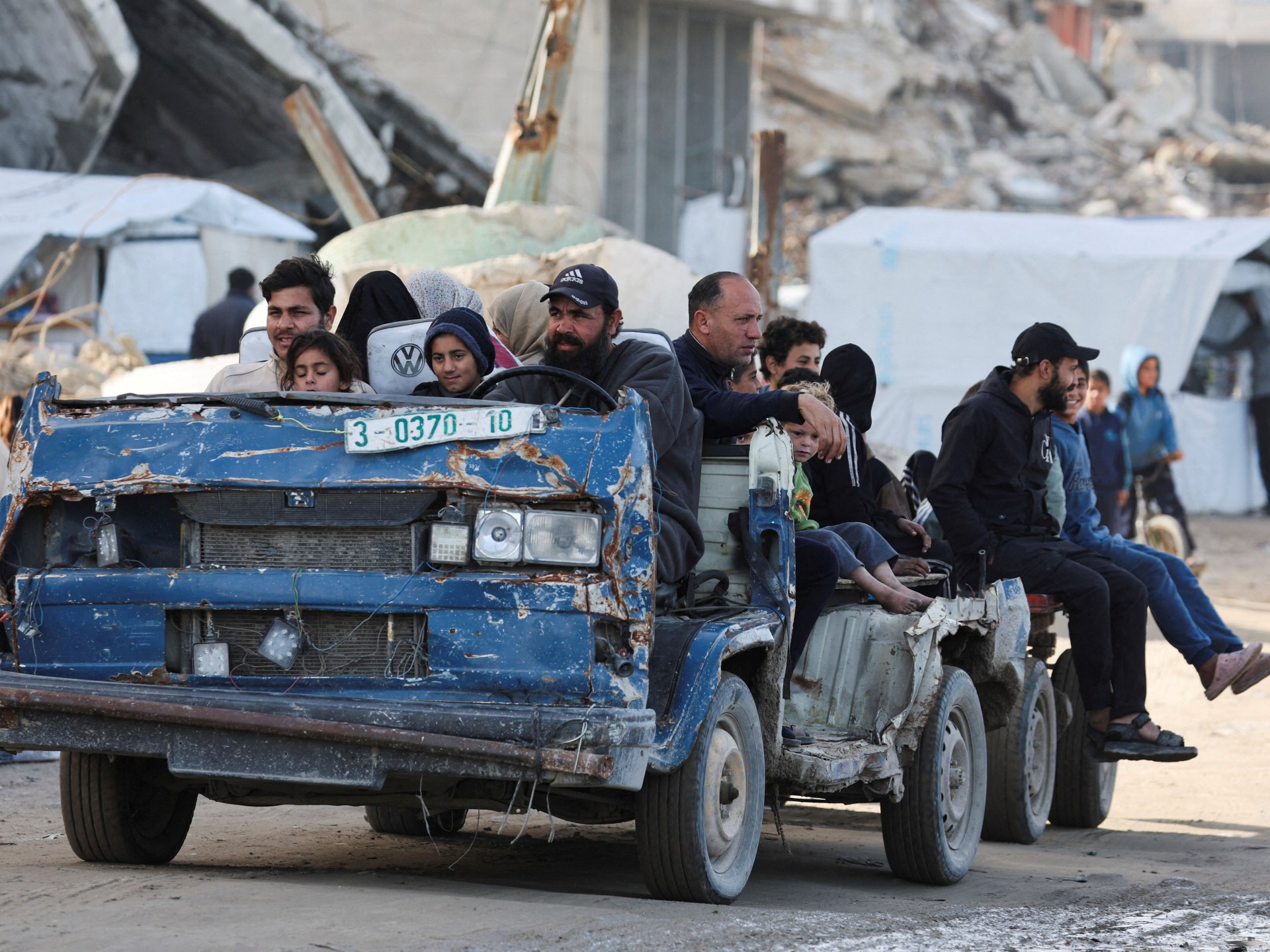
Before the war, Gaza’s streets were buzzing with cars, motorcycles, buses and taxis, and even those without private vehicles could usually find a ride within minutes. That reality has changed dramatically after more than two years of relentless Israeli bombardment.
Many streets are blocked by huge piles of rubble or considered too dangerous to use, making motorised transport difficult, and, in some places, impossible.
‘Even walking is difficult’
Abu Mohammed Jundieh, 55, used to work as a driver using his own car, which he lost in the early days of the genocidal war.
“That car was my source of income and my only way to get around,” he said, adding that owning a vehicle has now become a distant dream.
“Prices are high, fuel is expensive, and even if you find transport, it’s hard to [pay],” he said. “Most of the cash we have is worn out, and drivers often refuse it.”
“Sometimes I have to take much longer routes just to reach my destination,” Jundieh said, referring to the destroyed streets. “Even walking is difficult now.”
There is also the ever-present threat of Israeli attack, in any type of movement by Palestinians in Gaza, or staying put.
The few Palestinians, many with severe medical conditions, allowed to leave during Israel’s partial opening of the Rafah border crossing are having to do so on foot.
No new bicycles for sale
As its use increased, the bicycle’s status changed from a simple, affordable means of transport to a rare and expensive commodity.
On Gaza City’s Jalaa Street, Abu Luay Haniyeh, 52, runs a small bicycle repair shop, its shelves filled with used parts and a few new ones and customers from all walks of life waiting to have their bicycles repaired.
There are no new bicycles for sale.
“Before the war, selling bicycles was my main business,” Abu Luay said. “Now, repairs are all I can offer.”
“People come here every day asking for bicycles, but there’s nothing … Even when a bicycle is available, most people can’t afford it.
“A bicycle that sold for less than $200 before the war now costs over $1,000,” he added.
With cars and motorcycles largely unusable due to fuel shortages and damage, some residents have turned to hand-pulled carts or limited motorcycle use where fuel is available.
For many, however, bicycles have become the most reliable and sometimes the only means of transport.

Surviving displacement, finding a source of income
Bicycles have also made an appearance in some service sectors, like delivery services.
In a large tent on al-Shifa Street, west of Gaza City, is the headquarters of Hamama Delivery. Out front is a row of bicycles, while a few broken-down motorcycles stand off to the side. Abu Nasser al-Yazji, 45, Hamama Delivery’s manager, works from here.
The company had been operating for more than 10 years before the war started, using cars and motorcycles to cover the entire Gaza Strip around the clock.
Today, the fuel shortage has made running vehicles impossible. “We had no choice but to switch entirely to bicycles,” al-Yazji said.
“Most of our motorcycles were destroyed, and around 50 of our employees were killed during the war,” he continued.
“But as unemployment increased, more people began looking for any kind of work, including delivery. That’s why our workforce actually grew.”
Now, delivery drivers have adapted their bicycles by attaching plastic vegetable crates to them as carrier baskets.
“We transport all kinds of orders … meals from restaurants, clothing from small shops, or whatever people need. We load everything into plastic crates attached to the bicycles,” al-Yazji said.
Because the streets are unlit and difficult to navigate, the company had to cut its delivery hours, no longer able to operate around the clock. Now they deliver for only about 10 hours a day.
Among those working with Hamama is Ahmad, 23, who was studying law before the war and is now running deliveries after being unable to continue his studies.
“At the beginning, it was physically exhausting,” Ahmad said. “I never imagined I’d be so grateful for owning a bicycle.
“In the first days of the war, my mother told me to buy one,” he continued. “She felt movement would soon become impossible.”
“During displacement, there are no cars and no transport,” he said. “You move with a few bags, and the bicycle helps you carry them and stay with your family while you’re trying to reach a safer place.”
What began as a way to survive displacement later became his only source of income.
“Now, securing transport is almost impossible,” Ahmad said. “If you don’t have a bicycle, you’re nearly stuck.”


Post Comment