Jimmy Lai sentenced: What happened to other HK pro-democracy protesters? | Protests News
Jimmy Lai, Hong Kong’s prominent pro-democracy prisoner and media mogul, was sentenced to 20 years in prison under Beijing’s sweeping national security law on Monday in a high-profile case that has dragged on for five years.
Lai, the founder of the now-shuttered Apple Daily newspaper, was first arrested in August 2020 and found guilty late last year on two counts of foreign collusion and one count of seditious publication.
Now age 78, he faces a prison term that is effectively a life sentence, rights groups say – a “profoundly unjust” verdict they call emblematic of China’s crackdown on pro-democracy activists in Hong Kong.
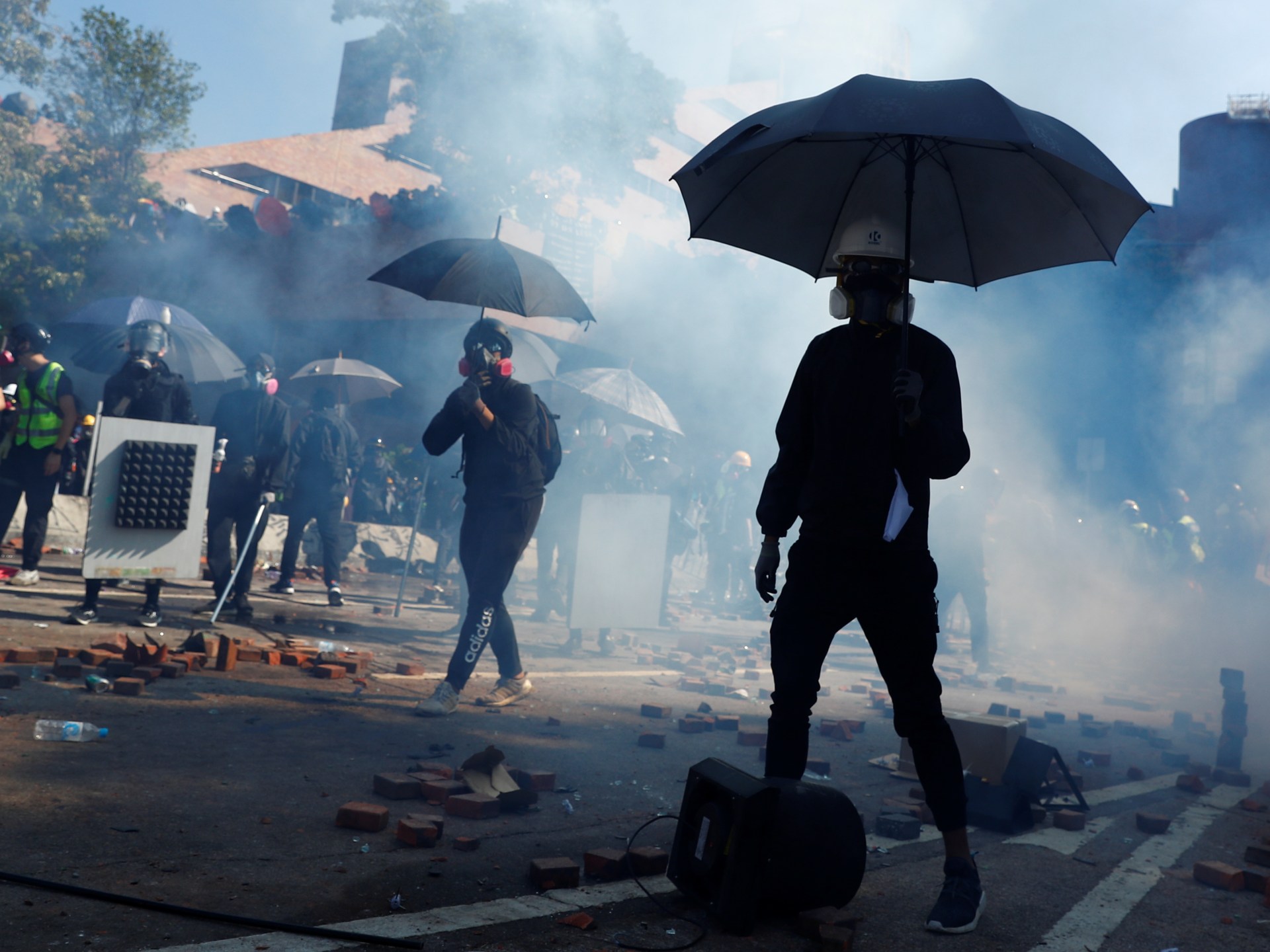
More than six years have passed since millions of Hong Kongers – led by students and young activists – first took to the streets to protest against Beijing’s expanding powers in the territory in 2019.
After a months-long standoff with protesters occupying roads ended with thousands of arrests, China imposed its sweeping national security law in Hong Kong in 2020, effectively quelling the most significant challenge to the Communist Party’s authority in decades.
Called the Law of the People’s Republic of China on Safeguarding National Security in the Hong Kong Special Administrative Region, the legislation practically criminalised protest, or any act of subversion, in Hong Kong. Since its introduction, it has seen a near-100 percent conviction rate.
So, what happened to the pro-democracy activists in these years, and where are they now?

Who is Jimmy Lai, and what is his sentence for?
Lai’s case has drawn the attention of world leaders and global rights groups.
Before he was arrested in 2020 and held in solitary confinement in Hong Kong’s high-security Stanley Prison, Lai was one of Hong Kong’s most famous rags-to-riches stories.
After fleeing China for then-British Hong Kong as a child in the 1950s, he built up a business empire in the city, including the tabloid Apple Daily, over several decades.
He was among the few Beijing critics among Hong Kong elites, and has openly supported the city’s democracy movement, including during the 2019 protests.
Last year, Lai was found guilty of two counts of foreign collusion and one count of seditious publication.
The Hong Kong court noted that Lai’s sentence was particularly punitive because he had been the “mastermind” and driving force behind foreign collusion conspiracies.
Lai’s family, lawyer, supporters, and former colleagues have warned that he could die in prison, as he suffers from health conditions, including heart palpitations and high blood pressure.
His co-defendants in the case – six editors and journalists from Apple Daily – also received jail terms ranging from six years and three months to 10 years. They are publisher Cheung Kim-hung, associate publisher Chan Pui-man, editor-in-chief Ryan Law, executive editor-in-chief Lam Man-chung, executive editor-in-chief responsible for English news Fung Wai-kong, and editorial writer Yeung Ching-kee.

Are other major trials of pro-democracy figures taking place?
Yes. One month after Lai was convicted, three more pro-democracy figures who organised an annual memorial in Hong Kong to mark the Tiananmen Square massacre of 1989 were charged under the new national security law.
Their trial commenced last month.
Chow Hang-tung, Lee Cheuk-yan and Albert Ho have been charged with inciting subversion, with a maximum penalty of 10 years’ imprisonment if convicted.
The activists are former leaders of the Hong Kong Alliance in Support of Patriotic Democratic Movements of China. The alliance was founded in May 1989 to support protesters holding democracy and anticorruption rallies in Beijing.
The following month, China’s government sent in soldiers to crush the movement around Tiananmen Square.
Every year since then, Hong Kong has hosted yearly candlelight vigils to mark Beijing’s deadly crackdown. These were banned by the government in 2020, but some activists continued to attempt to hold them.
“This case is not about national security – it is about rewriting history and punishing those who refuse to forget the victims of the Tiananmen crackdown,” said Sarah Brooks, Amnesty International’s deputy regional director for Asia, when the trial commenced last month.

Have there been other trials in the past?
The trial of the HK47, or Hong Kong 47 – a protest group of politicians, activists, campaigners, and community members during the 2019 demonstrations – became the largest national security case in the territory, with 47 prominent pro-democracy activists and politicians facing charges.
Many of them were arrested in early 2021 under the new national security law for organising an unofficial primary election in 2020 to choose pro-democracy candidates for legislative elections.
Prosecutors accused the defendants of plotting to “overthrow” the Hong Kong Special Administrative Region government, whose executive is appointed by Beijing, to force the city’s leader to resign. In November last year, a Hong Kong Court sentenced 45 of them to jail terms of up to 10 years in a mass sentencing under the controversial law. Thirty-one of them had pleaded guilty in the landmark case.
In the verdict, judges noted that if the defendants had succeeded in their plot, it would have created “a constitutional crisis for Hong Kong”.
Two individuals – barrister Lawrence Lau and social worker Lee Yue-shun – were acquitted during the lengthy trial.
Among the defendants were activists Joshua Wong, Benny Tai, Owen Chow and Gwyneth Ho, alongside veteran democratic lawmakers such as Leung Kwok-hung, Lam Cheuk-ting and Helena Wong.
Where are Hong Kong’s pro-democracy protesters now?
Here is the latest we know about Hong Kong’s prominent pro-democracy activists:

Benny Tai
Benny Tai, a former University of Hong Kong professor, is serving a 10-year sentence in Hong Kong, the heaviest punishment issued during the trial.
Handing down the sentence to Tai, judges, who were hand-picked by the Hong Kong government, described him as the “mastermind” behind the “conspiracy”, in their judgement.
Tai, now 61, could have been sentenced to 15 years in prison, but the judges said that the sentence was lower because he entered a guilty plea.

Joshua Wong
Wong was one of the most internationally recognised faces of Hong Kong’s pro-democracy movement and emerged during the protests of the Umbrella Movement in 2014, when activists demanded electoral reforms in Hong Kong. The protests failed to trigger electoral reforms, but became the catalyst for several years of escalating resistance that culminated in the 2019 protests and Beijing’s eventual imposition of the national security law.
Wong co-founded Demosisto, a pro-democracy political party launched in 2016 from the student-led movements of the 2010s. The party was disbanded on June 30, 2020, the same day the national security law was enacted.
Wong has been arrested and jailed multiple times over the years for protest-related offences, including unlawful assembly and once for participating in a Tiananmen vigil after the 2020 ban. Last year, Wong was convicted in the HK47 trial, and was sentenced to four years and eight months in prison.
However, in June last year, he was again charged with conspiring to collude with foreign forces – also under the national security law.
He has been accused of conspiring to ask foreign countries, institutions, organisations or individuals outside China to impose sanctions or blockades. He awaits trial for this charge.
Nathan Law
Nathan Law, who co-founded Demosisto with Wong, fled Hong Kong in 2020 after China imposed the sweeping security law.
In 2021, Law, who also previously served as a local legislator in Hong Kong, was granted asylum in the United Kingdom. Hong Kong authorities have offered rewards of one million Hong Kong dollars ($128,000) for information on him.
Law was alleged to be a co-conspirator with Wong in the latest charge of “foreign collusion” brought against them last year. He remains wanted by Hong Kong authorities, with arrest warrants issued under the security law.
Agnes Chow
Chow, the third co-founder of Demosisto alongside Wong and Law, is living in exile in Canada.
Now 29, she was arrested in 2020 and received a 10-month jail sentence for participating in an unauthorised assembly during the 2019 demonstrations. She was released on bail in 2021, after spending more than six months in jail, on the condition that she check in with the police regularly.
She went to Toronto to pursue a master’s degree after securing permission from authorities – and then jumped bail in 2023, announcing in a social media post that she did not intend to return to Hong Kong.

Owen Chow
Owen Chow is a pro-democracy activist who was jailed for involvement in the 2019-2020 anti-Beijing protests.
He was arrested at age 23 in January 2021 and tried and sentenced to seven years and nine months’ imprisonment. He is currently serving jail time in Hong Kong.
Chow was also a candidate in the District Council elections in 2019 and ran in the pro-democracy primaries in 2020. When arrested, he had nearly finished earning a degree in nursing.

Leung Kwok-hung
A founding member of the League of Social Democrats in 2006, Leung formerly served as a member of the Legislative Council from 2004 to 2016.
He was disqualified from his Legislative Council position in 2016 after he held a yellow umbrella, exclaiming that the “Umbrella Movement would never end”, in reference to the protests of 2014.
He has had multiple stints in jail, and was convicted in the HK47 case, receiving a prison sentence of six years and nine months.
Leung was known for sporting long hair and his political theatrics. He is now 69.
He married his longtime partner, Vanessa Chan, also a prominent activist, after China imposed the national security law, noting that marriage would give them greater legal rights, such as prison visitations.
Gordon Ng Ching-hang
Ng, a Hong Kong-Australian citizen, was jailed for seven years and three months as part of the mass sentencing in the HK-47 case.
Ng went to Sydney’s Waverley College to study mathematics and commerce. He has been in jail since his arrest in February 2021.

Gwyneth Ho
Gwyneth Ho, who worked at Radio Television Hong Kong (RTHK) and various media outlets, including Stand News and BBC, as a journalist, is also serving a prison sentence in Hong Kong.
Ho reported from the front lines of the protests and later ran in the unofficial democratic primary elections that led to her arrest in January 2021.
She was convicted of conspiracy to commit subversion under the national security law and handed a seven-year sentence. She was also sentenced to six months’ imprisonment for participating in a Tiananmen Square vigil in June 2020.

Jimmy Sham
Sham, a prominent pro-democracy and LGBTQ+ activist, was released from prison in May last year, after being imprisoned for over four years in the HK47 case.
While imprisoned, Sham fought for recognition of his same-sex marriage at the city’s top court, which later in September 2023 led to a ruling that the government should provide a framework for recognising same-sex partnerships.
Sham was freed with three others, Kinda Li Ka-tat, Roy Tam Hoi-pong, and Henry Wong Pak-yu, who are all former district councillors. They live in Hong Kong now.
They were the second batch of prisoners to have completed their sentences through pre-trial imprisonment by the time the HK47 trial concluded.
In April last year, four former Legislative Council members – Fan Kwok-wai, Claudia Mo Man-ching, Kwok Ka-ki and Jeremy Tam Man-ho – were also freed after completing their sentences.


Post Comment