More than 5,000 ISIL detainees transferred from Syria, says Iraqi ministry | ISIL/ISIS News
Iraq says more than 3,000 Syrians are among the ISIL-linked detainees transferred to one of its prisons by US military.
More than 5,000 ISIL-linked (ISIS) detainees have been transferred from Syrian jails to a prison in neighbouring Iraq so far, according to Iraq’s Ministry of Justice.
In comments to the Iraqi News Agency on Friday, ministry spokesperson Ahmed Laibi said the transfers and ongoing detention of the prisoners had been carried out at the request of an international coalition led by the United States to combat ISIL, of which Iraq is a key member.
Recommended Stories
list of 4 itemsend of list
In separate comments on the sidelines of the Munich Security Conference, Iraqi Foreign Minister Fuad Hussein gave a lower figure, telling Reuters that about 3,000 ISIL-linked detainees had been transferred.
He told the news agency that the process was ongoing and that Baghdad was in discussions with various countries about repatriating their nationals who had been transferred.
Iraq would need more financial assistance to deal with the intake, he said, adding that there had been a recent uptick in ISIL activity in Syria.
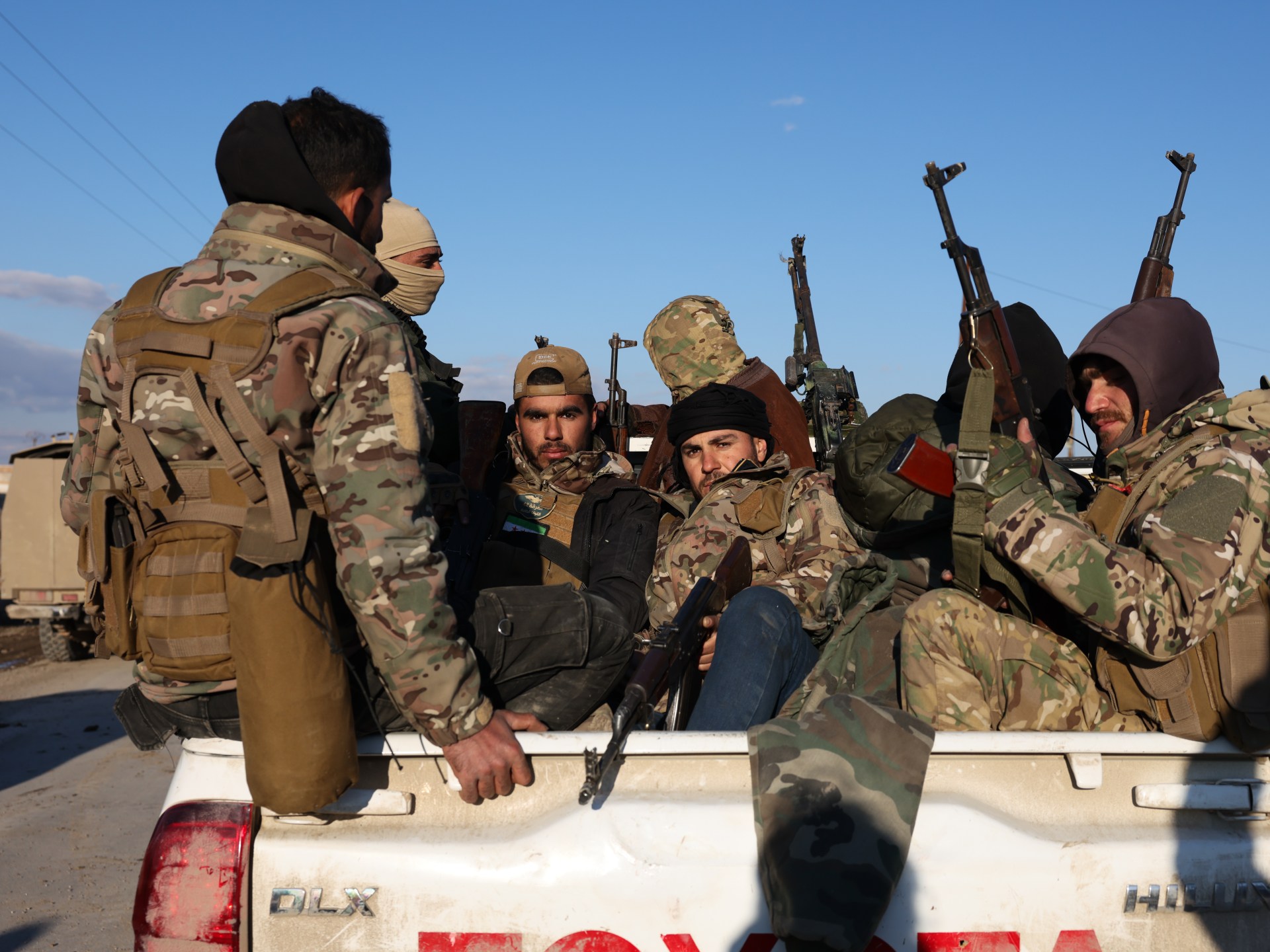
The US military has been transporting thousands of ISIL-linked prisoners from jails and detention centres previously run by the Kurdish-led Syrian Democratic Forces (SDF) in northeast Syria.
The transfers have come as control of the prisons has been handed over to the Syrian government, amid a push by Damascus to assert its authority over the full extent of a country still fragmented in the wake of a brutal war.
Deadly clashes with SDF forces broke out amid the Syrian army’s advance in recent weeks, including in and around key prison sites, resulting in some ISIL detainees escaping and raising fears the armed group could exploit any security vacuum to regroup.
A ceasefire has since been struck between the government and the SDF.
Detainees mostly Syrian nationals
Laibi, the Iraqi Justice Ministry spokesperson, said that of the 5,064 ISIL detainees transferred so far, more than 3,000 were Syrian, while at least 270 were Iraqi.
He said the detainees were being held in a single prison, in a section separated from other prisoners.
The detainees would all be investigated and prosecuted under Iraqi law, he said, while the responsibility for feeding the thousands of detainees was being handled by the international coalition, rather than Iraq.
Last month, lawyers for a group of French ISIL suspects who had been transported by the US military from Syria to Iraqi prisons in an earlier series of transfers claimed the inmates had been subjected to “torture and inhumane treatment” there.
Damascus becomes US’s main anti-ISIL partner
The US military has previously said up to 7,000 people with alleged ISIL links could be transferred to Iraqi-controlled facilities.
US Admiral Brad Cooper, the head of US forces in the Middle East, said last month that facilitating the secure transfer of detainees was critical to preventing mass breakouts that could pose a direct threat to the US and regional security.
The statement came shortly after the US special envoy to Syria said that Washington’s main partner against ISIL in Syria would be the Syrian government, rather than the SDF, which had held that position for years.
The shift followed Syria – under new President Ahmed al-Sharaa, the former leader of the armed group Hayat Tahrir al-Sham, who was once deemed a “Specially Designated Global Terrorist” by the US – joining the anti-ISIL coalition in November.
US departs Syrian base
The ongoing transfers of the detainees from Syria have come as the US military reduces its presence in the country, where it has conducted operations against ISIL for years.
On Thursday, Syrian forces announced they had taken control of the al-Tanf military base, a strategic garrison near the border with Iraq and Jordan, following the withdrawal of US forces.
Cooper, the commander of US forces in the Middle East, said the departure was “part of a deliberate and conditions-based transition”, and that US forces remained “poised to respond to any [ISIL] threats that arise in the region as we support partner-led efforts” to prevent the group’s resurgence.
While ISIL was largely defeated in 2017 in Iraq and in Syria two years later, sleeper cells still carry out attacks in both countries.

Post Comment