Bangladesh’s BNP claims landslide win in first election since 2024 uprising | Bangladesh Election 2026 News
The Bangladesh Nationalist Party (BNP) has claimed victory in the country’s first election since a student-led uprising that ousted longtime leader Sheikh Hasina in 2024.
Unofficial results confirmed by election officials to Al Jazeera on Friday showed the BNP winning 209 seats, easily crossing the 151-seat threshold needed for a majority in parliament.
Its leader, Tarique Rahman, the son of former Prime Minister Khaleda Zia, is now set to become the country’s next prime minister. BNP officials said the party expected to form a government by Sunday.
The BNP was followed by Jamaat-e-Islami, which secured 68 seats in Thursday’s polls – its highest-ever tally.
The party, which is led by Shafiqur Rahman and contested for the first time since a 2013 ban that was lifted after Hasina’s ouster, said it is not “satisfied” with the vote count and raised “serious questions about the integrity of the results process”.
The National Citizen Party (NCP), led by youth activists instrumental in toppling Hasina and part of a Jamaat-led alliance, won just six of the 30 seats that it contested.
The Election Commission has yet to formally announce the final tally, which is expected either later on Friday or on Saturday.
Turnout stood at almost 60 percent of registered voters, according to the Election Commission, well over the nearly 42 percent in the last election in 2024.
The election featured a record number of parties, more than 50, and at least 2,000 candidates, many of them independents. The parliament comprises 350 lawmakers, with 50 seats reserved for women.
More than 127 million people were eligible to cast their votes, with many expressing enthusiasm for what was widely seen as Bangladesh’s first competitive vote in years.
An interim government led by Nobel peace laureate Muhammad Yunus, 85, has been in office since Hasina fled to India in 2024 after widespread protests led largely by young people, who were killed in their hundreds by security forces.

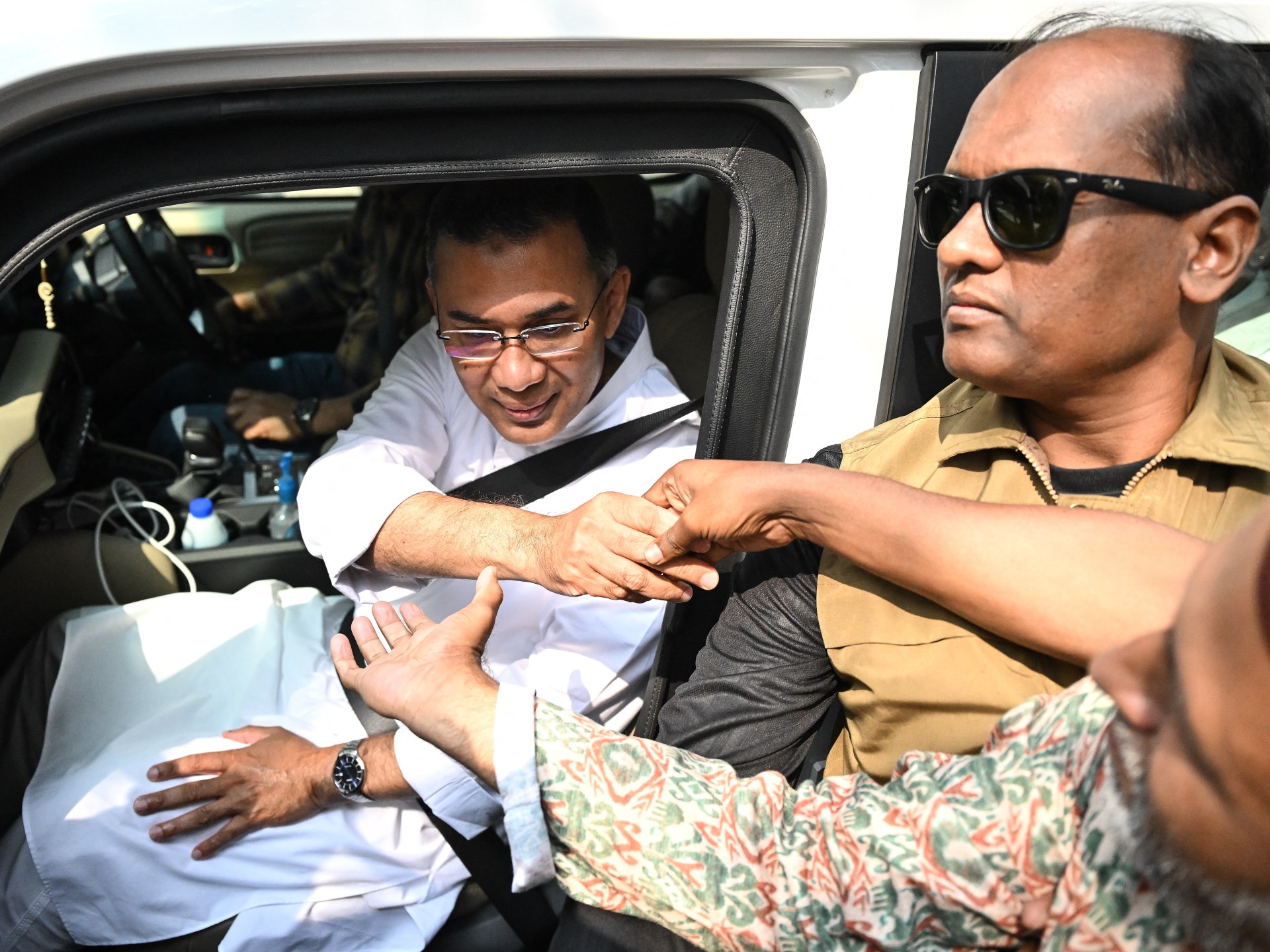
Tarique Rahman, who has never held government office, returned to Bangladesh in December after 17 years of self-imposed exile in the United Kingdom. The 60-year-old has yet to comment on the unofficial results but on Friday, he waved from his car as he left his house in the capital, Dhaka, for a mosque.
In a statement, the BNP asked people to refrain from large celebrations and offer special prayers instead.
“Despite winning … by a large margin of votes, no celebratory procession or rally shall be organised,” the party said in a statement.
‘Litmus test’
The 78-year-old former leader, Hasina, was sentenced to death in absentia for crimes against humanity for the bloody crackdown on protesters during her final months in power, and remains in hiding in India. Her Awami League party was barred from the election.
BNP members have said the party would formally request Hasina’s extradition from India. In its manifesto, the BNP promised to prioritise job creation, protect low-income and marginal households and ensure fair prices to farmers. Tarique Rahman has also promised to revive a stagnant economy, reset ties with countries in the region and crack down on corruption.
Abbas Faiz, an independent South Asia researcher, said the election was a test of how Bangladesh was “ready for democracy”.
“Also, a test of the political parties which have been able to take part in the elections. They have actually understood the aspirations and the wishes of the people of their country for the removal of corrupt practices in the administration and parliament,” Faiz told Al Jazeera.
He added the election is the “litmus test” which puts responsibility on the “shoulders of the new government”.
But Faiz explained that the election would have been “fairer” if all parties, including the Awami League, were allowed to participate.
“But in a way, the problem lies with the Awami League itself, because it did not reimage itself as a party that could be trusted by the general populace in Bangladesh,” he said.
Indian Prime Minister Narendra Modi, Pakistan Prime Minister Shehbaz Sharif and the US ambassador to Bangladesh, Brent T Christensen, were among the first to congratulate Rahman on his party’s victory. China’s embassy in Dhaka also congratulated the BNP over its election showing.
The election commission also said some 48 million voters chose “Yes” while about 23 million said “No” in a referendum on constitutional reforms held alongside the election, though there was no official word on the outcome.
The changes include two-term limits for prime ministers and stronger judicial independence and women’s representation, while providing for neutral interim governments during election periods and setting up a second house of the 300-seat parliament.
Fahmida Khatun, an economist and executive director of the Dhaka-based Centre for Policy Dialogue, told Al Jazeera that early signals support the perception of a credible election.
Although heavy security was reported across polling stations, “broadly, the voting was peaceful”, Khatun said, pointing to the voter turnout figure as an indicator of healthy participation.
“This indicates citizens wanted to exercise their voting rights and they wanted to choose their own people,” she added.
Several hundred international observers monitored Thursday’s voting, with the European Union’s Election Observation Mission expected to issue a preliminary report on its findings on Sunday.


Post Comment