As Sudanese city returns to life after two-year siege, drone threat lingers | Sudan war News
Markets reopen in Dilling, South Kordofan’s second largest city. Yet residents face critical medical shortages and persistent aerial attacks.
Life is cautiously returning to the streets of Dilling, the second largest city in South Kordofan state, after the Sudanese army broke a suffocating siege that had isolated the area for more than two years.
For months, the city had been encircled by the paramilitary Rapid Support Forces (RSF) and the Sudan People’s Liberation Movement-North (SPLM-N), cutting off vital supply lines and trapping civilians in a severe humanitarian crisis.
Recommended Stories
list of 4 itemsend of list
While the lifting of the blockade has allowed goods to flow again, local authorities and residents said the city remains under the threat of drone attacks.
Al Jazeera Arabic’s Hisham Uweit, reporting from Dilling, described a city “recovering slowly” from the economic strangulation.
“For over two years, heavy siege conditions were imposed on the city. Movement disappeared, goods vanished and livelihoods narrowed,” Uweit said.
“Now the eyes of buyers pick through the few available goods … as if the market itself is announcing its recovery at a leisurely pace, drawing determination from the patience of its residents.”
Markets return to life
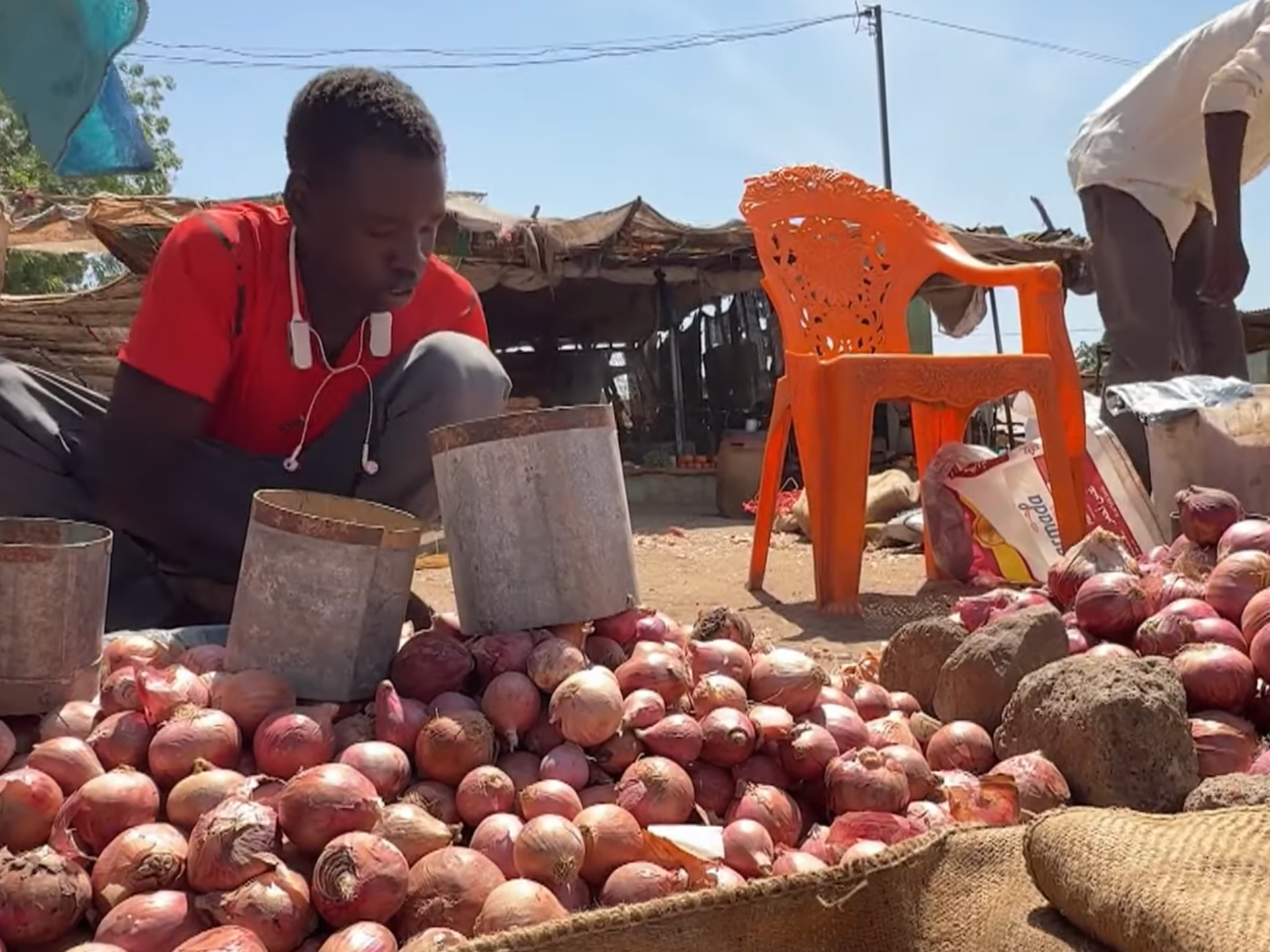
The immediate impact of the army’s advance is visible in the local markets, which were largely shuttered during the blockade. Fresh produce, absent for months, has begun to reappear in stalls.
“The market and vegetables have all returned,” a local trader told Al Jazeera. “Before, the market didn’t exist. Now we have okra, potatoes, sweet potatoes, chillies and lemons. Everything is with us, and the market has returned to normal.”
However, the resumption of trade masks deep scars left by the isolation. The blockade devastated the local economy, stripping residents of their savings and leaving infrastructure in disrepair.
‘The price of isolation’
While food supplies are improving, Dilling’s health sector remains in critical condition. The city’s main hospital is struggling with a severe lack of equipment and essential medicines, a shortage that has had life-altering consequences for the most vulnerable.
Abdelrahman, a local resident suffering from diabetes, paid a heavy price for the siege. During the months of encirclement, insulin supplies ran dry. His condition deteriorated rapidly, ultimately leading to the amputation of both his legs.
“He had a medical appointment after a month, but the month closed off his check-ups,” a relative of Abdelrahman said. “He is suffering severely. He is missing his insulin. There is a shortage of food, and he is tired. His health has declined sharply.”
‘Chased like locusts’
Despite the Sudanese army asserting control over access routes, the security situation in Dilling remains precarious. Authorities said the city is subjected to almost daily drone strikes launched by the RSF and SPLM-N, targeting infrastructure and residential areas.
For Maryam, a mother displaced multiple times by the conflict, the breaking of the siege has not brought peace. She described the terror of the unmanned aerial vehicles that hover over their homes.
“Now the drones bombard and chase us. They chase us like locusts,” Maryam said. “When they come, we just run to hide. When they hover over us, they burn the thatch [roofs], start fires and force you to leave your home.”
She added that the constant threat of aerial bombardment makes normal life impossible: “If you are having a meal, like porridge, … the moment you see them, you leave it.”
Uweit said that while the lifting of the siege is a “glimmer of hope” and a first step towards recovery, the dual challenge of rebuilding a shattered health system and fending off persistent military attacks means Dilling’s ordeal is far from over.

Post Comment