US orders non-emergency personnel to leave Beirut embassy amid tensions | Politics News
The United States has ordered the departure of non-emergency personnel at its embassy in Beirut, a senior US State Department official has confirmed, amid escalating tensions in the region.
The move on Monday comes as the US continues to amass military assets in the Middle East, with President Donald Trump threatening to attack Iran almost daily.
Recommended Stories
list of 3 itemsend of list
“We continuously assess the security environment, and based on our latest review, we determined it prudent to reduce our footprint to essential personnel,” the US official told Al Jazeera.
“The embassy remains operational with core staff in place. This is a temporary measure intended to ensure the safety of our personnel while maintaining our ability to operate and assist US citizens.”
The departure order also covered “eligible family members” of non-emergency embassy staff.
Later on Monday, Washington’s embassy in Beirut said further “travel restrictions may be imposed on US personnel under Chief of Mission security responsibility, with little to no notice due to increased security issues or threats”.
Hezbollah, which has been weakened by Israel’s 2024 assault on Lebanon, has not ruled out interfering militarily in support of Iran should a war break out.
Washington, the largest donor to the Lebanese military, has been playing an increased role in Lebanon since the war that saw the influence of Hezbollah shrink in the country.
The US is the lead sponsor of the 2024 ceasefire between Hezbollah and Israel, which the Israeli military has been violating almost daily with deadly attacks across Lebanon.
Israel has stepped up its strikes in Lebanon in recent weeks. A wave of Israeli attacks killed at least 12 people on Friday.
At the same time, Israel has been blocking the reconstruction of border towns in the country, ensuring that tens of thousands of displaced people are unable to return to their homes.
The Israeli military also continues to occupy five outposts inside Lebanese territory in violation of the ceasefire agreement.
The Lebanese government has been pleading with the international community, including the US, to pressure Israel to end its violations of the truce to no avail.
In a complaint to the United Nations in January, Beirut said it documented 2,036 Israeli breaches of Lebanon’s sovereignty in the final three months of 2025.
And the violations have been intensifying this year.
As the US appeared to be on the cusp of attacking Iran last month, Hezbollah’s chief Naim Qassem kept the door open to entering the conflict, arguing that Lebanon may be attacked as part of the war.
“Facing these similar and intertwining possibilities, and facing this aggression that does not distinguish between us, we are concerned with what is happening and targeted by the possible aggression and determined to defend [ourselves],” Qassem said.
In recent weeks, Israeli attacks have raised concerns over a possible all-out Israeli assault on Lebanon to neutralise Hezbollah before or during a conflict with Iran.
Last year, the government of Lebanon’s President Joseph Aoun and Prime Minister Nawaf Salam agreed to a US plan to disarm Hezbollah.
The Lebanese military said in January that it completed the first stage of removing the weapons of non-state actors near the Israeli border and was moving to the second phase, which covers areas farther north.
However, Hezbollah has remained defiant, arguing that its arms are necessary to protect Lebanon against Israeli expansionism.
In December, Trump accused Hezbollah of “behaving badly” when asked whether his administration would back renewed Israeli war in Lebanon.
US envoy Tom Barrack, who has been regularly visiting the country, said Washington was arming the Lebanese army not to defend the country against Israel but to “fight their own people, Hezbollah”.
The sharp decline of Hezbollah’s power in Lebanon is emblematic of the setback of Iran’s network of allied groups, known as the “axis of resistance”.
Still, the Tehran-backed Iraq group Kataib Hezbollah has threatened “total war” if the US or Israel strikes Iran.
In Lebanon, US diplomats and interests have come under attack in the past.
During the Lebanese Civil War in 1983, a car bombing attack targeted the US Embassy in Beirut, killing dozens of people, including 17 Americans.
Later the same year, an enormous suicide bombing killed 241 US service members at the Marine Corps barracks after US troops deployed to Beirut.
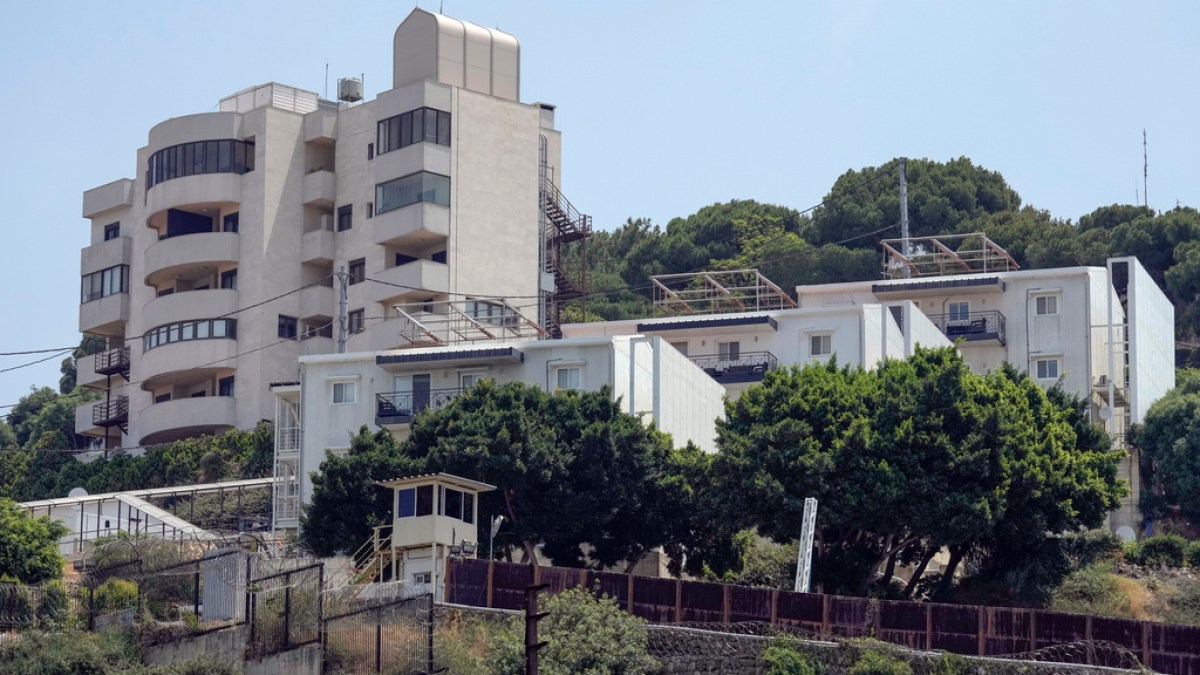
The US Embassy in Lebanon – one of the largest diplomatic missions in the world – is now housed in a fortified campus on a hilltop in the northern Beirut suburb of Aaoukar.



Post Comment