Will Ethiopia be part of Israel’s ‘hexagon’ alliance rivalling its enemies? | Politics News
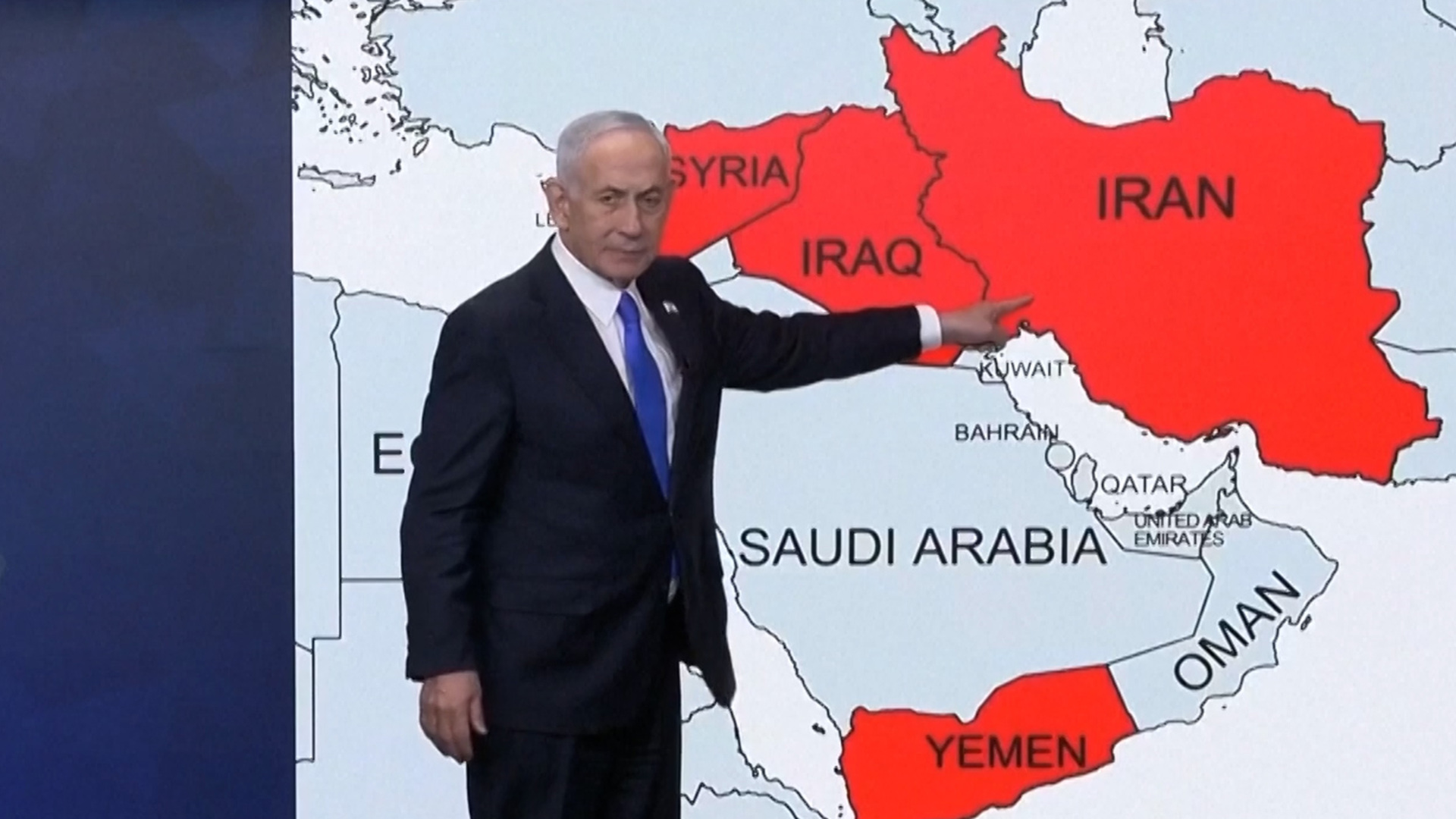
Days after Israeli Prime Minister Benjamin Netanyahu proposed forging a network of allied nations, including in the Middle East and Africa, to stand against what he called “radical” adversaries, the country’s president is on an official visit to key ally, Ethiopia.
It is not yet known which Arab and African countries will form part of Netanyahu’s hypothetical “hexagon of alliances”, which he said on Sunday will include Israel, India, Greece, Cyprus and others to stand against their enemies in the Middle East. Chief among those enemies is presumably Iran and its network of resistance groups from Hezbollah in Lebanon to the Houthis of Yemen.
Recommended Stories
list of 3 itemsend of list
Analysts doubt Israel could secure enough influence over nation-states to form a formal security pact.
However, the country is deepening its ongoing charm offensive in Africa, which it began during the genocide in Gaza, as its reputation suffered a decline on the continent, with the African Union (AU) releasing multiple statements condemning Israeli attacks on Palestinian civilians.
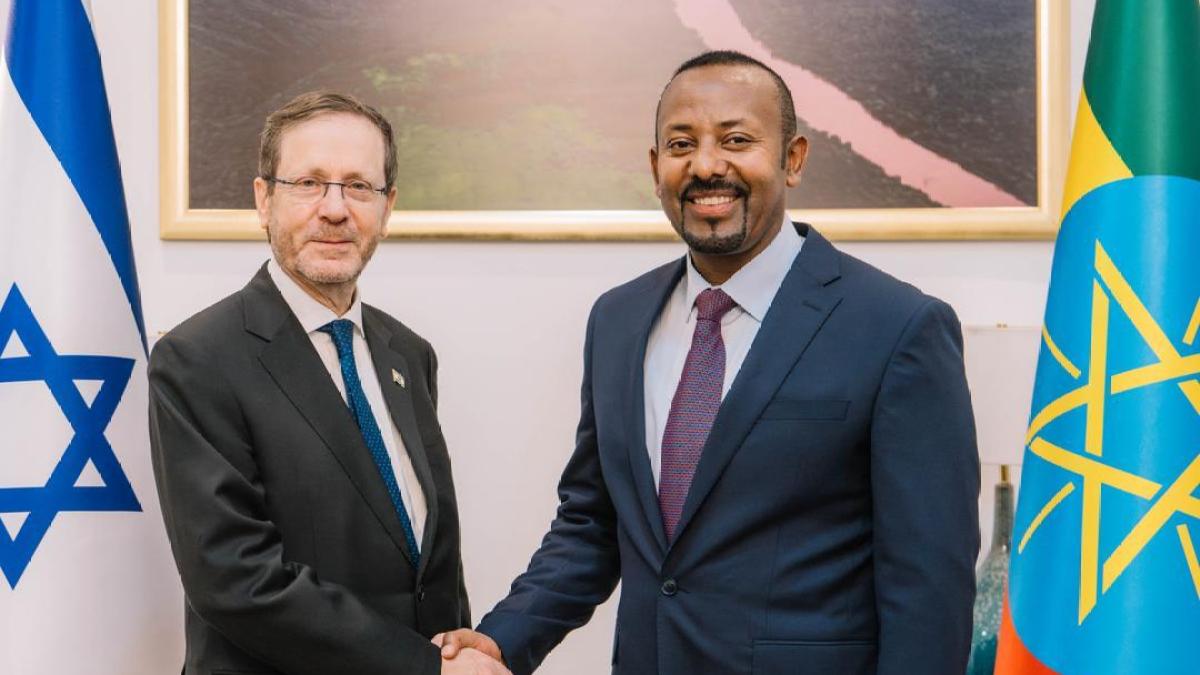
In a rare visit, Israeli President Isaac Herzog arrived in Ethiopia on Tuesday. The last presidential trip to the East African country took place in 2018.
“The relationship between our peoples is woven deep into the pages of history and human tradition,” Herzog said in a statement upon his arrival. “At the heart of the story of both our nations lies a clear common thread – the ability to join hands, unite resources of spirit and substance, to innovate, develop, and grow for the benefit of all.”
Herzog, on Wednesday, met with Prime Minister Abiy Ahmed who said the two leaders talked about “ways to improve collaboration in areas of mutual interest,” without revealing further details.
But beneath the surface, observers say the visit also represents a battle for influence over Addis Ababa, which has received similar high-level delegations from Turkiye and Saudi Arabia in recent days.

Shared ties and shared anger
Ethiopia and Israel are bound by several links, from shared histories of their people to shared scrutiny over recent political moves in the Horn of Africa that have angered several of the region’s influential nations.
Both countries maintain friendly ties largely due to the Beta Israel community, or Ethiopian Jews, who hail from northern Tigray and Amhara. Historically, Ethiopian Jews suffered religious persecution, and after Israel’s formation, it sought their emigration under its Law of Return policy. Between the late 1970s and mid-1990s, tens of thousands of Ethiopian Jews were covertly transported to Israel – during a time when several African countries, including Ethiopia, had cut off ties with Israel over the 1973 Yom Kippur War and its invasion of Egypt. On the cusp of a civil war in Ethiopia in 1991, Mossad, Israel’s spy agency, launched a daring operation that airlifted 14,000 Ethiopians over the course of just two days.
About 160,000 Ethiopian Jews now live in Israel. Many within the community have struggled to integrate and have complained of discrimination and racism. In 2019, tens of thousands of Ethiopian Jews flooded the streets in protest across Israeli cities after a 19-year-old of Ethiopian origin was shot dead by the police.
Ethiopia-Israel state relations have, meanwhile, remained steady. In 2016, when Netanyahu visited the country in his first prime ministerial visit – Addis Ababa became one of the first African countries to voice support for Israel’s long-sought observer status at the AU. Fierce opposition from South Africa, Algeria and other countries supporting Palestine delayed the process until 2021. Later, in 2023, the AU confirmed it had withdrawn the status.
Mashav, Israel’s aid agency, has, in the past decade, provided aid to Ethiopia in the form of agriculture and water cooperation projects, although Addis Ababa receives much more significant funding from wealthier partners like China. When Israel sponsored several African journalists on media trips to the country last year, Ethiopia was among the countries it invited journalists from.
More recently, both countries are bound by their support for Somaliland, which Somalia claims as part of its territory and which Israel sees as critical to its own national security, Hargeisa-based analyst Moustafa Ahmad told Al Jazeera.
In December, Israel recognised Somaliland’s statehood, becoming the first country to do so. Months before, there were unconfirmed talks about plans to move displaced Palestinians to Somaliland or to South Sudan, another key Israeli ally in the region. Analysts speculate that countries like South Sudan and the United Arab Emirates, another close friend of Israel, may also recognise Somaliland.
Israel’s focus on the Horn of Africa intensified after a late 2024 report from a United Nations expert panel, which found that the Somalia-based armed group, al-Shabab, was actively collaborating with Yemen’s Houthis. Where the Houthis were providing weapons and drone training, al-Shabab was, in return, granting access to a smuggling corridor stretching along the Somali coast and connecting to the Gulf of Aden, where Iranian weapons could be smuggled into Yemen.
The move to recognise Somaliland was therefore meant to disrupt that cooperation by stationing an Israeli naval base in the region, analysts note.
“It’s part of their calculations even if they haven’t said it publicly,” Ahmad said.
Several countries, as well as the AU, have pushed back on Israel’s recognition of Somaliland, calling it a violation of Somalia’s sovereignty. In Somaliland, however, many have celebrated the move.

Addis Ababa under pressure
While neither Israel nor Ethiopia has provided details of topics on the agenda during Herzog’s visit, Somaliland is likely at the top of the list.
Addis Ababa had in 2024 enraged its neighbours after it signed a controversial port deal with Hargeisa that would allow it access to the sea, reportedly in exchange for a future recognition of Somaliland. Although massive and rapidly industrialising, Ethiopia is landlocked, having lost its sea access after Eritrea seceded in 1993. Prime Minister Abiy has often said sea access is critical for his country.
The fall-out between Ethiopia and Somalia was so severe that analysts sounded the alarm over possible armed conflict between the two neighbours until Turkiye, a key development partner for Mogadishu, stepped in to smooth things over by pressuring Addis Ababa to coordinate with Mogadishu instead.
It is likely, analysts say, that Israel is now hoping to push Ethiopia further towards recognising Somaliland, which boasts a 850km (528-mile) coastline. In Hargeisa, many are disappointed after more countries failed to follow Israel’s steps, Ahmad said.
Addis Ababa, though, might not appreciate further pressure at the moment as it faces increasing regional isolation on several fronts.
One key reason is the controversial Grand Ethiopian Renaissance Dam (GERD), which Egypt and Sudan say is blocking the water supply they need for irrigation.
A source of national pride for Ethiopians, the dam was funded almost entirely through citizens’ donations and government funds. Israeli engineers participated in the project, and Israel reportedly sold weapons to Ethiopia to protect the dam amid tensions with its neighbours, although the Israeli government denies this.
At the same time, Addis Ababa is also facing tensions with Eritrea, which has moved closer to Somalia and Egypt. Both countries have historically feuded, and recently, tensions have again risen over the 2020 Tigray War and Abiy’s repeated statements about his country needing access to the sea.
“Addis Ababa is cautious of making a decision that will cement its regional isolation at this time [because] it is clearly hedging among various actors seeking to influence the Horn of Africa and Red Sea region,” Ahmad said.
Pressure is also mounting on Addis Ababa from countries eager to keep the status quo.
On Sunday, Turkiye’s President Recep Tayyip Erdogan visited Ethiopia and said in his speech: “I would like to emphasise that Israel’s recognition of Somaliland does not benefit Somaliland or the Horn of Africa.”
His statement drew a backlash from Hargeisa, which called it “unacceptable interference” aimed at wrecking relations between Somaliland and its partners.
Meanwhile, Saudi Arabia, which is embroiled in an ongoing rift with the United Arab Emirates over how to deal with the conflict in Yemen, also intervened in the fray in February. Vice Minister of Foreign Affairs Waleed Elkhereiji was in Addis Ababa this week to discuss “regional peace”, just two weeks after Foreign Minister Prince Faisal bin Farhan Al Saud arrived in the city for talks with Abiy.
So far, it is unclear if Riyadh has recorded any success in influencing Addis Ababa.
How Israel will fare in that regard is also still unclear.

Post Comment