Iran war is latest threat to a global economy rattled by Trump | Business and Economy News
As the United States and Israel’s war on Iran unfolds over the coming days and weeks, the scale of the fallout for the global economy will be measured at the petrol pump.
The biggest threat the conflict poses to global economic health lies in rising energy prices.
Recommended Stories
list of 4 itemsend of list
Iran’s effective closure of the Strait of Hormuz and Iranian attacks on key energy production facilities in Qatar and Saudi Arabia have paralysed a substantial chunk of the world’s energy supply.
For a global economy already rattled by US President Donald Trump’s tariffs and what many see as his unravelling of the post-World War II order, much now depends on how long the disruption lasts.
A sustained surge in energy prices would drive up the cost of everyday goods.
Central banks would then likely raise borrowing costs to curb inflation, dampening consumer spending and dragging down economic growth.
“It’s really a question on how long the disruption of flows through the Strait of Hormuz lasts and whether there will be destruction of physical assets,” said Anne-Sophie Corbeau, an analyst at Columbia University’s Center on Global Energy Policy.
“For the moment, the market is pricing a short disruption and no destruction. But that may change in the future. We simply do not know right now how this whole crisis ends.”

While Iran’s threats to shipping have halted traffic through the Strait of Hormuz, the conduit for one-fifth of the world’s oil, crude prices have seen relatively modest gains so far.
Brent crude hovered about $84 a barrel on Friday morning, US time, up about 15 percent compared with pre-conflict prices.
That gain pales in comparison with past crises.
During the 1973-74 oil embargo led by OPEC’s Arab members, prices quadrupled in just three months.
Since then, the world’s dependence on Middle Eastern oil has declined substantially.
Today, the US is the biggest producer globally, producing some 13 million barrels a day, more than Iran, Iraq and the UAE combined, according to the US Energy Information Administration.
But if supply disruptions extend beyond a few weeks, oil prices could rise precipitously.
Storage capacity constraints
The seven oil-producing Gulf nations – Bahrain, Kuwait, Oman, Qatar, Saudi Arabia and the UAE – are likely to run out of crude oil storage capacity in less than a month if the Strait of Hormuz remains closed, according to an analysis by JPMorgan Chase.
With storage capacity depleted, producers would be forced to cut production.
“While there will be some capacities elsewhere, and some options to use pipelines rather than shipping, it is incredibly difficult to replace the sheer volume as we are talking about an average of 20 million barrels of oil per day that usually cross the Strait of Hormuz,” said Sarah Schiffling, a supply chains expert at the Hanken School of Economics in Helsinki.
“This important maritime chokepoint provides very significant leverage in the global economy.”
This week, Goldman Sachs analysts estimated that global oil prices will likely hit $100 a barrel – a threshold not seen since Russia’s 2022 invasion of Ukraine – if shipping through the waterway stays at the current reduced levels for five weeks.
In an interview published by The Financial Times on Friday, Qatar’s energy minister Saad al-Kaabi warned that producers in the region could halt production within days and that oil could soar as high as $150 a barrel.
Such increases would reverberate through the global economy.
The International Monetary Fund has estimated that global economic growth is reduced by 0.15 percent for every 10 percent rise in oil prices.
The pain would not be spread evenly.
About 80 percent of the oil shipped through the strait goes to Asia.
India, Japan, South Korea and the Philippines, which are all highly dependent on foreign energy imports, would be among the economies most vulnerable to spikes in the cost of necessities such as food and fuel.
“The effect would be felt in Asia and Europe in particular,” said Lutz Kilian, an economist at the Federal Reserve Bank of Dallas.
“Some countries, such as China, have ample oil reserves to help weather a temporary outage, while others do not.”
Liquefied natural gas (LNG), which is also shipped through the strait and has fewer alternative suppliers outside the region than crude oil, has already seen much steeper price rises.
European prices of LNG surged by as much as 50 percent on Monday after state-run QatarEnergy, which ships about one-fifth of global supply through the waterway, announced a halt to production following drone attacks blamed on Iran.
“Gas will be more impacted because the market was still relatively tight and stocks are low in Europe as we are at the end of winter; also, there is no replacement for the LNG lost,” Corbeau said.

Prolonged uncertainty
With US President Donald Trump signalling that he intends to continue the assault on Iran for at least several more weeks, the extent to which Tehran is willing – or able – to keep the strait closed will be critical to the global economy.
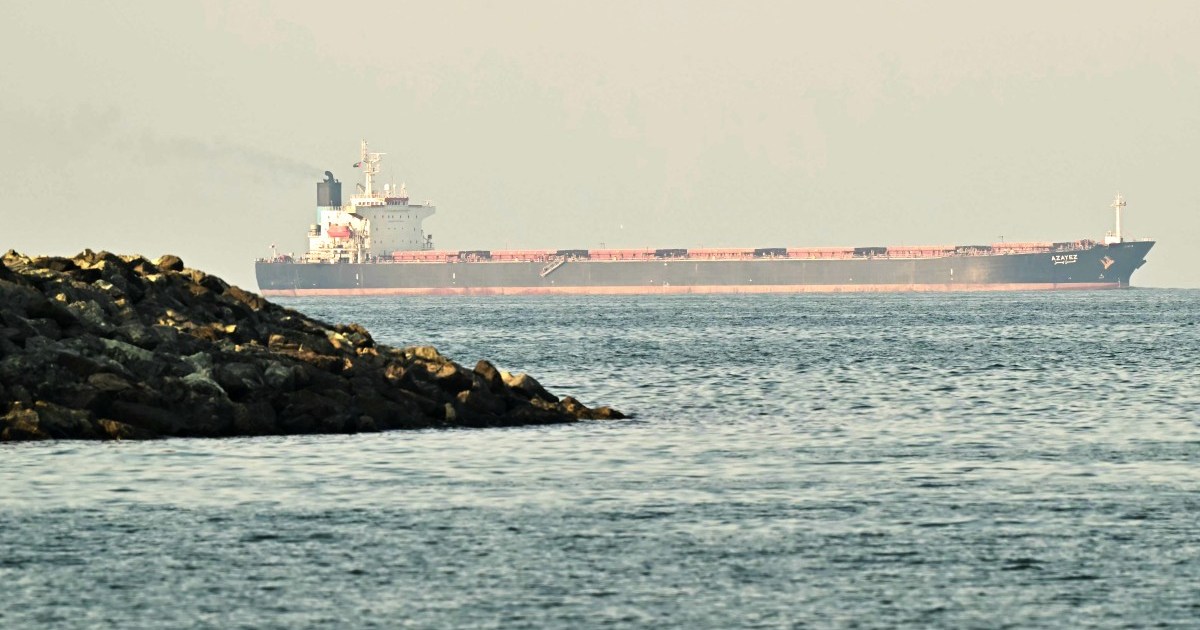
At least nine commercial vessels have been targeted in attacks in or near the strait since the start of the conflict, prompting multiple insurance firms to cancel coverage for vessels in the Gulf.
While traffic through the strait has not halted, it is down about 90 percent compared with normal levels, according to ship tracker MarineTraffic.
“The uncertainty itself is probably the most dangerous part. Supply chains hate uncertainty,” Schiffling said.
“It is possible to plan for almost anything, but not knowing what will happen makes it really challenging to adapt operations.”
On Wednesday, Trump said he had ordered the US International Development Finance Corporation to start insuring shipping lines in the region in order to keep trade flowing.
Trump also said the US Navy could begin escorting vessels through the strait if necessary.
“As long as Israel and the US are able to suppress Iranian drone and missile attacks in the strait to the point that the bulk of the oil tankers gets through, and as long as the United States provides back-up insurance for shippers and their cargo, the global economy may make it through this war without a recession,” Kilian said.
“On the other hand, if there is a severe disruption of oil traffic, the economic costs will grow the longer the disruption lasts.”



Post Comment