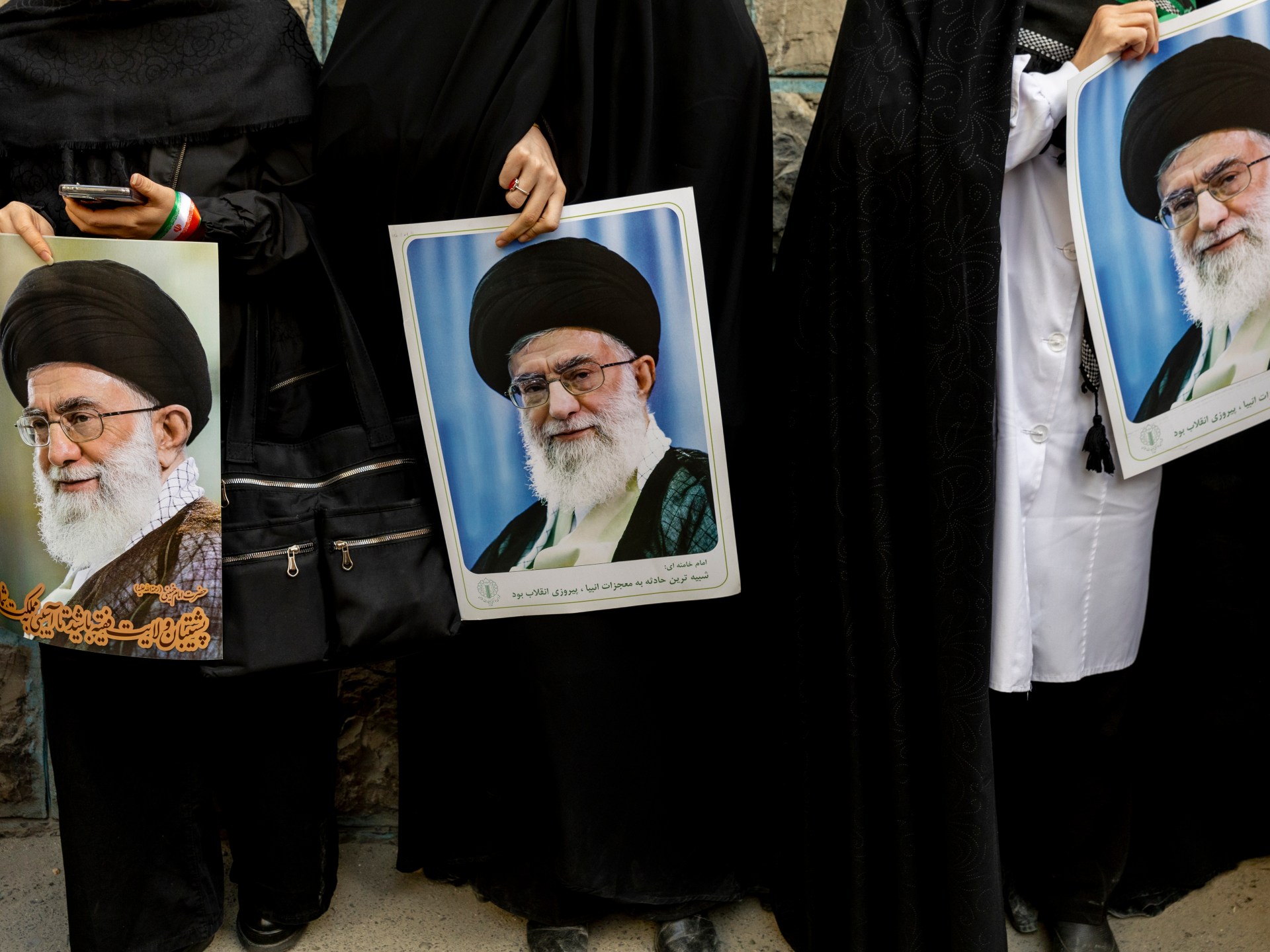
Amid escalation, Iran religious scholars signal new leader to be named soon | US-Israel war on Iran
Tehran, Iran – Senior religious leaders have signalled that Iran’s government may soon announce a new leader as hardliners and sidelined reformists deliberate their futures amid the quickly escalating United States-Israeli war on Iran.
Mohammad Mehdi Mirbagheri – a top figure in the 88-member Assembly of Experts, which will appoint the new supreme leader after Ayatollah Ali Khamenei was killed in Tehran on February 28 – said the choice had to be made with care so it would be indisputable internally.
Recommended Stories
list of 4 itemsend of list
“An almost decisive opinion has been reached. A significant majority has been formed, but at the same time, some obstacles have to be removed, which we hope will happen soon,” the head of the Qom Academy of Islamic Sciences said in a video released on Sunday by the Fars news agency, which is affiliated with the Islamic Revolutionary Guard Corps (IRGC).
The top ultraconservative Muslim leader representing the holy Shia city of Mashhad in the Assembly of Experts, Ahmad Alamolhoda, said on Sunday that the leader has been chosen and the secretariat of the Assembly of Experts must soon announce the result.
Abbas Kaabi, a senior member of the Guardian Council, said on Friday that the powerful 12-member constitutional body was not given any names to consider for the next supreme leader by Khamenei during his lifetime, only attributes.
“He said: Among all attributes, the financial piety of the supreme leader is of primary importance because, given the important powers and responsibilities of leadership, if financial deviation occurs, it will spread to all other matters,” Kaabi was quoted as saying by the IRGC-affiliated Mehr news agency.
The religious leader also quoted Khamenei as pointing to “a rooted belief in the fundamentals of the [1979] Islamic revolution, having insight and knowledge of enemies and sedition, and especially being anti-arrogance and having faith and resistance in confronting America and the Zionist regime” as being among other top attributes for a future leader.
Mojtaba Khamenei, the second son of the late supreme leader, is believed to be a frontrunner for the position as he enjoys wide backing from powerful commanders in the IRGC who have been launching missiles and drones across the region over the past week.
US President Donald Trump, who has said he wants to play a role in determining the future leadership of Iran, has objected to the younger Khamenei’s ascension.
The Israeli army has said it will try to assassinate Iran’s remaining leaders and has bombed their offices and gathering spots in Tehran, Qom and other cities. Israel and the US have repeatedly expressed their interest in changing the government of Iran.
Israeli media reported on Saturday that Asghar Hejazi, a senior religious leader who was Khamenei’s acting chief of staff, was killed in a series of overnight air strikes targeting an underground compound in downtown Tehran used by the supreme leader and other officials. Iran has not commented.
Reformists weigh in as Pezeshkian creates row
President Masoud Pezeshkian came under fire after he released a video from an undisclosed location on Saturday and apologised to regional neighbours who have been fighting off Iranian missiles and drones.
The armed forces leading the military attacks, including the Khatam al-Anbiya Headquarters of the IRGC and interim leadership council member and chief justice of the Supreme Court, Gholam-Hossein Mohseni-Ejei, quickly released statements to emphasise that the strikes would continue, with Iran as well as the US and Israel, saying they are ready for months of war if necessary.
The row prompted more hardliners, including religious leaders, lawmakers and IRGC-affiliated media, to call on the Assembly of Experts to move quickly to announce the next supreme leader. Ayatollah Hossein Nouri-Hamedani said the process should be expedited to “disappoint the enemy and preserve the unity and solidarity of the nation”.
The disagreement has broken out after reformist factions within the establishment have been pushed aside by hardliners in recent years while the conservatives also have lost favour among an increasingly disillusioned public.
Mohammad Khatami, a reformist religious leader who was president from 1997 to 2005, released a statement to mourn Khamenei last week but also signalled that he sees a future for a reformed Islamic Republic.
The establishment is in need of “reforming approaches and practices objected to by the people”, he said without naming any examples.
“Our path is the path of freedom, independence, people-centrism and fair living, and that is a difficult path to tread and requires wisdom and tolerance,” he said.
Khatami and the Reformist Front of Iran also released general calls for reform after thousands of people were killed during nationwide protests in January.
The Iranian government said “terrorists” backed by the US and Israel were responsible for the killings, but the United Nations and international humanitarian organisations blamed state forces for a lethal crackdown against peaceful protesters.
The leaders of the Reformist Front were arrested or summoned by Iranian intelligence and judicial authorities last month for what the establishment called an attempt to “disrupt the country’s political and social order” and working “for the benefit” of Israel and the US during the antigovernment protests.
Most have since been released on bail, but some remain incarcerated as do many of the tens of thousands of people believed to have been arrested during and in the aftermath of the protests.
Hassan Rouhani, the moderate religious leader who was president from 2013 to 2021 and who rejected being part of a reported power grab last month, has remained publicly silent during the deliberations over the next supreme leader.
Former President Mahmoud Ahmadinejad, another influential figure, survived an assassination attempt last week, according to Iranian media.
Fuel reserves and oil refineries in Tehran were bombed by the Israeli military overnight into Sunday, leaving thick plumes of smoke enveloping the sprawling city of 10 million people during the day as oil residue fell as part of a heavy rain.

Post Comment