President or Congress? Who in the US has the power to declare war? | US-Israel war on Iran News
As United States President Donald Trump faces mounting global criticism for starting the war on Iran with Israel, he is also facing a battle at home with opposition lawmakers who have challenged his authority to conduct the conflict.
Democrats argue that Trump, a Republican, wrongly sidelined Congress to start the war on Iran and has failed to explain the reasons for it – or what the US’s endgame is. Trump’s cabinet says he has the right to order emergency measures in “self-defence” against an “imminent threat” posed by Iran.
Recommended Stories
list of 4 itemsend of list
On February 28, the day the US and Israel launched their strikes on Iran, Trump described the actions as “major combat operations”, not a war. Indeed, the two allies code-named the strikes, in which Iranian Supreme Leader Ali Khamenei and several other senior officials were killed in Tehran, Operation Epic Fury.
In early March, Republican senators and one Democrat rejected a Democratic-led war powers resolution by a vote of 53-47. It sought to halt further US action in Iran and essentially end the war. Supporters of the resolution argued that Trump had exceeded his constitutional authority by launching the war. Under Article II of the US Constitution, presidents are permitted to launch such attacks only in self-defence – in response to an immediate threat. Otherwise, Congress has the sole power to declare war.
Trump has justified the attacks by arguing that despite holding talks with Iran, he believed Tehran was planning to strike first – thus invoking the “self-defence” justification.
Since then, however, the director of the US National Counterterrorism Center, which advises both the president and the director of national intelligence on “terror” threats, has resigned over the war with Iran.
In a resignation letter posted on X, Joe Kent said he could not “in good conscience” support the war. “Iran posed no imminent threat to our nation, and it is clear that we started this war due to pressure from Israel and its powerful American lobby,” he said.
So who in the US ultimately has the power to declare war on another country?
Here’s what we know about what the US Constitution says:

Who has the power to declare war?
The US Constitution lays out a sharing of war powers between the president and Congress through a system of checks and balances.
But Congress ultimately holds the upper hand, a move calculated to rest decisions about war in the hands of the people’s representatives rather than in one person.
Under Article I, US lawmakers have sole power to:
- Officially “declare war” or grant authorisation for such a declaration
- “Grant Letters of Marque and Reprisal” – that is, to authorise private US actors to capture enemy vessels
- Make rules concerning the capture of enemy property on land and water
- Provide for the Army, Navy and related “militia”
- Control the “powers of the purse”, meaning only lawmakers can authorise funding for war efforts
Those powers were on display when the US Congress issued an Authorization for Use of Military Force (AUMF) three days after the al-Qaeda attacks on New York and the Pentagon on September 11, 2001.
Lawmakers also passed a similar resolution before the 2003 invasion of Iraq.
However, under Article II, the president has powers as commander in chief of the military and can decide how a war is fought. Additionally, the US president, in cases of a sudden attack on the US or an impending attack, may give directives for a military response in self-defence without first receiving congressional approval.
![An Iranian woman reacts as she takes part in the Al-Quds (Jerusalem) Day rally, a commemoration in support of the Palestinian people on the last Friday of the Islamic holy month of Ramadan, in Tehran on March 13, 2026. [AFP]](https://www.aljazeera.com/wp-content/uploads/2026/03/AFP__20260313__A3486FD__v6__HighRes__TopshotIranIsraelUsWarQudsDayRally-1773760815.jpg?w=770&resize=770%2C513&quality=80)
Have US presidents always stuck to the constitution?
Not really. US presidents have a long tradition of working around the legal guardrails in the constitution to push on with military action abroad while bypassing Congress.
In 1973, Congress passed the War Powers Resolution during the Vietnam War with broad bipartisan support after news leaked that President Richard Nixon had approved military action to expand the conflict into Cambodia without seeking permission from lawmakers. Like now, debates broke out over who had the power to approve military action abroad, leading to the vote.
The successful resolution mandated that a president may deploy the US military only after a congressional green light or in the case of an emergency, such as an attack on the US or its assets.
Even then, the president must notify Congress within 48 hours of commencing military action, and if there is no legislative approval for it, forces may not remain deployed for more than 60 days.
A recent example of a president who did not seek approval from Congress on war-related matters is former President Joe Biden. Observers argued that he in effect joined Israel’s genocidal war on Gaza without approval from lawmakers by fast-tracking arms shipments to Israel after the war broke out in October 2023.
In a 2024 report, Brian Finucane, a former war powers adviser at the US Department of State and an analyst at the International Crisis Group, argued that Congress had not done much to stop Biden from doing this due to broad support for Israel across party lines. However, the report warned that Biden’s government was setting precedents for future wars that could have negative consequences.
When Trump bombed Iran’s nuclear facilities on June 22 during the 12-day war between Iran and Israel, he did notify Congress of the strikes the following day. Classified briefings to explain the decision to Congress were postponed from June 24 to June 26, drawing widespread criticism from Democratic lawmakers.
Is Trump justified in launching strikes on Iran now?
Many analysts do not believe he is. Finucane’s predictions appear to be bearing out as Trump’s war on Iran amounts to a “dramatic usurpation of Congress’s war powers” not seen in recent decades, he noted in a report this month, just days after the first US-Israeli strikes on Iran.
Trump administration officials have also released conflicting statements about the aim of the attacks, ranging from “regime change” to ending Iran’s ability to continue a nuclear programme and manufacture ballistic missiles. Trump has also claimed he wants to “free” the Iranian people from a government he called brutal. Tehran is accused of massacring thousands of antigovernment protesters in January.
In a February 28 address after ordering the launch of the war, Trump stated that the US had decided to strike because Washington knew Israel was going to hit Iran and Tehran would retaliate against the two allies. This has since been called into question by the director of the US National Counterterrorism Center, Joe Kent, who has resigned from his post, stating, “Iran posed no imminent threat to our nation.”
United Nations Secretary-General Antonio Guterres condemned the US-Israeli move. On February 28, Guterres warned that the attacks and Iran’s retaliation across the region would “undermine international peace and security” and called for an immediate end to the hostilities.
Analysts said the US also had no justification for striking Iran.
“The administration has not articulated any plausible claim for how the attack on Iran might be reconciled with Article 2(4) as an exercise in lawful self-defense in response to an armed attack or even a threat of an imminent armed attack,” Finucane wrote recently on The Contrarian website.
“Trump’s attack on Iran thus conflicts with and undermines not just the US constitutional order and its allocation of war powers but also the international legal order the United States helped establish in the wake of two world wars and the Holocaust.”
What does international law say about US-Israeli strikes on Iran?
Rights experts said Washington has violated international law in striking Iran.
For one, the US and Israel have been accused of targeting civilian infrastructure, resulting in the deaths of hundreds of civilians. The bombing of a girls primary school located near an army base in the southern city of Minab at the start of the war caused global outrage. The US said it is investigating the incident, but a preliminary US military investigation has confirmed what independent experts have said: A US Tomahawk missile appears to have hit the school, killing more than 160 people, most of them children.
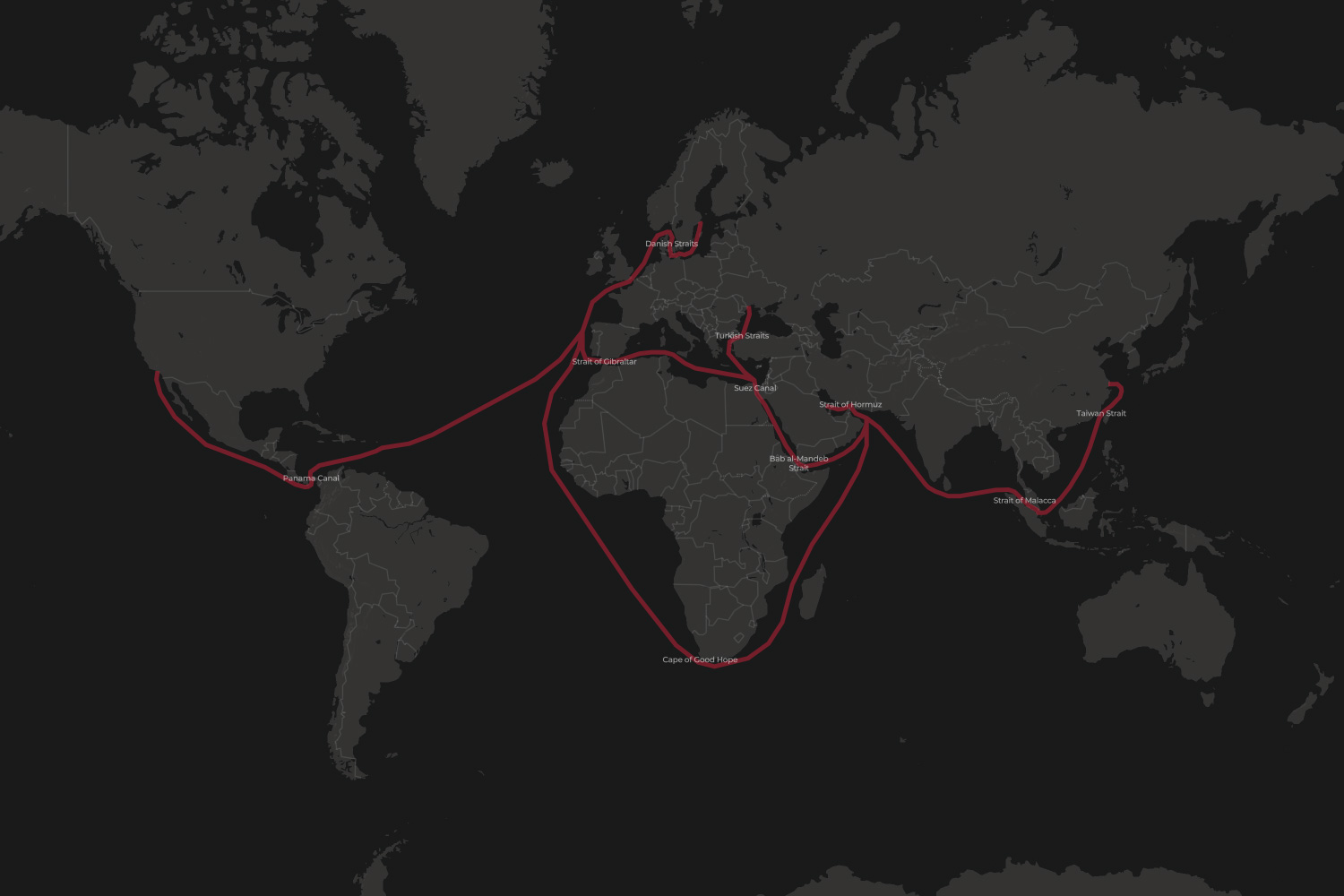
On March 7, one week into the war, US air strikes targeted a desalination plant on Qeshm Island in the Strait of Hormuz. The strike, which Tehran branded a “flagrant crime” against civilians, cut off freshwater supplies to 30 surrounding villages.
Similarly, the US has come under fire for torpedoeing an Iranian warship filled with sailors while it was in the Indian Ocean near Sri Lanka. At least 87 people were killed, and scores were injured. Critics said the US submarine that fired on the ship ignored the Geneva Conventions, which state survivors from such an attack should be given assistance, something the submarine failed to do.
While some experts argued that the US was justified in hitting an enemy ship, others said targeting the vessel in international waters far from Iran potentially violated the UN Charter on prohibiting aggression.
Iran has also been accused of violating international law in its retaliatory strikes on infrastructure and US military assets in neighbouring Gulf countries.
Could Democrats block Trump from continuing the Iran war?
Several opinion polls have shown that most Americans do not support the US war with Iran. Estimates put the mounting cost of the war at about $11bn for the first six days alone. Overall, it is expected to be costing the US about $1bn per day since then. Globally, the economic blowback could be huge with the price of oil already surging past $100 a barrel.
After the Democratic-led resolution to curb Trump’s war powers was voted down last week in the Senate, however, opposition lawmakers will have to find other ways to counter Trump, analysts said, as the White House refuses to provide a clear timeline for the conflict.
One suggestion is that lawmakers wield the “power of the purse” by stalling approval for any additional funding for the war.
Democratic Representative Ro Khanna, who has been at the centre of the war resolution efforts, told the US news site The Lever that blocking funds is the only way to end the war.
“This war is costing taxpayers nearly $1 billion per day and burning through critical munitions,” Khanna said in a statement this week. “This kind of spending is unsustainable, and Americans are already feeling the consequences as gas prices soar and economic uncertainty mounts.”
Republicans currently hold narrow majorities in both chambers of Congress. Their 53-47 majority in the Senate means, however, that they are unlikely to attain the 60-vote threshold required to pass many types of legislation in the upper chamber. To do so, they would need at least seven Democratic votes, and Democrats could use these rules to block supplemental war funding.
This approach has had success in the past, including during the Vietnam War. Along with the War Powers Resolution, a Democratic-led Congress passed two pieces of legislation in 1970 and 1973 that banned the use of federal funds for US combat operations in Vietnam, Cambodia and Laos, hindering Nixon, a Republican, in his war efforts. Congress also limited the number of US personnel permitted to be deployed in Vietnam.
Similar funding cuts were also passed in 1982 when Congress used the tactic to stop the overthrow of the Nicaraguan government as well as in 1993 when it ended the US military presence in Somalia.


Post Comment