War enters new phase as Israel attack on Iran gasfield sparks Gulf response | US-Israel war on Iran News
Iran has ratcheted up the pressure on several Gulf nations by attacking their energy facilities in retaliation for an Israeli strike on its South Pars gasfield as the war threatens to further ignite the entire region into an even more ominous phase, all-out conflagration.
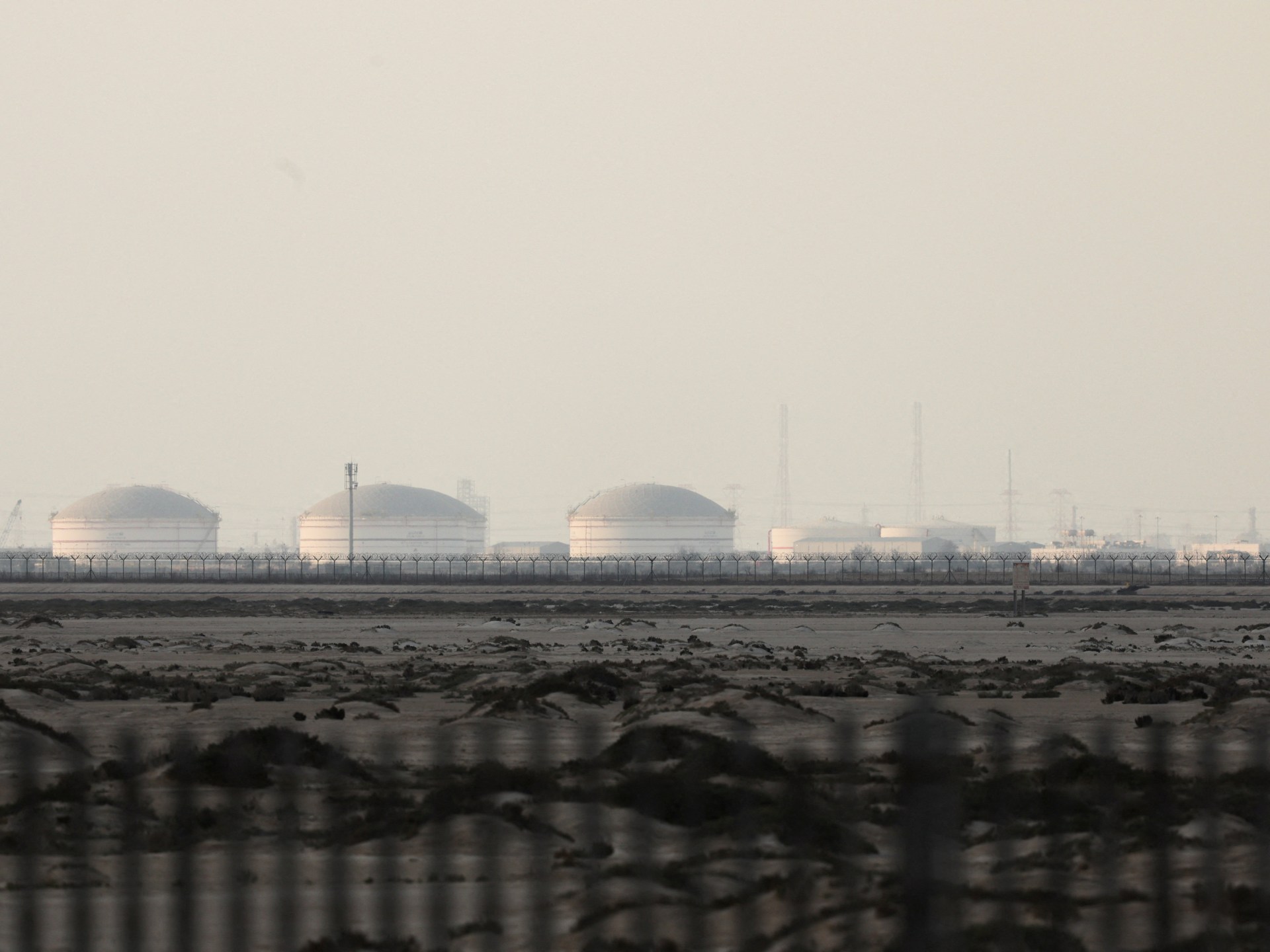
The dangerous new developments in the war saw Iran hit Qatar’s Ras Laffan liquefied natural gas (LNG) facility early on Thursday amid a broader campaign that also included attacks on energy infrastructure in the United Arab Emirates and Saudi Arabia, raising serious concerns about global energy supplies.
Recommended Stories
list of 3 itemsend of list
The attacks during the United States-Israeli war on Iran, launched by the two countries on February 28, followed Israel’s killing of Iranian Intelligence Minister Esmail Khatib and its strike on a South Pars LNG facility on Wednesday.
As Iran lashed out at its Gulf neighbours – which it has targeted repeatedly since the start of the conflict because of what it said is the presence of US soldiers, facilities and assets on their soil – US President Donald Trump upped the ante further by threatening in a social media post to “massively blow up the entirety” of South Pars if Iran continued targeting Qatar.
“I do not want to authorise this level of violence and destruction because of the long-term implications that it will have on the future of Iran, but if Qatar’s LNG is again attacked, I will not hesitate to do so,” Trump said.
At the same time, Trump tried to distance the US from Israel’s attack on South Pars, describing his strongest Middle Eastern ally as having “violently lashed out” at the facility and promising that it would not occur again if Tehran refrains from attacking Qatar.
Trump said the US had “nothing to do” with the strike on the gasfield facilities off Iran’s Bushehr province.
In a social media post on Thursday, Iranian Foreign Minister Abbas Araghchi warned that Iran would show “ZERO restraint” if its infrastructure is struck again as the fallout from the Israeli attack on South Pars continued to escalate.
“Our response to Israel’s attack on our infrastructure employed FRACTION of our power. The ONLY reason for restraint was respect for requested de-escalation,” Araghchi wrote on X.
The foreign minister had earlier held phone conversations with his counterparts in Turkiye, Egypt and Pakistan.
Araghchi discussed the US and Israel’s “military aggression against Iran and its regional and global repercussions” with the foreign ministers as well as the “need for vigilance and coordination among regional countries in the face of these threats”, the Iranian Ministry of Foreign Affairs said in a statement.
‘Irresponsible approach’
Qatar, the world’s second largest LNG exporter, said on Thursday that the Iranian ballistic missile attack on its Ras Laffan gas complex caused three fires and extensive damage. The Ministry of the Interior later reported the fires had been contained with no injuries recorded.
Qatar’s Ministry of Foreign Affairs declared Iran’s security and military attaches “persona non grata” and told them to leave the country within 24 hours as it condemned the attack on Ras Laffan as a “direct threat” to the Qatar’s national security and accused Iran of taking an “irresponsible approach”.
Separately, UAE authorities said they were responding to incidents at the Habshan gas facilities and at the Bab oilfield caused by falling debris from intercepted missiles. The Abu Dhabi Media Office said the facilities were shut down and no injuries were reported.
Saudi Arabia said it intercepted and destroyed four ballistic missiles launched towards Riyadh on Wednesday and an attempted drone attack on a gas facility in its east. On Thursday, Iran targeted the Saudi capital, Riyadh.
Attacks on Kuwait and Bahrain were also reported.
A spokesperson for the Islamic Revolutionary Guard Corps’s Khatam al-Anbiya Central Headquarters said Iran’s response to attacks on its energy infrastructure was “not yet finished”.
“We warn the enemy that you made a major mistake by attacking the energy infrastructure of … Iran,” he said in a statement carried by the ISNA news agency. “If it is repeated again, the next attacks on your energy infrastructure and that of your allies will not stop until their complete destruction.”
Will the Gulf countries strike back?
The question is now whether the Gulf countries will launch retaliatory attacks on Iran, a potential development that would open a new phase of the war.
Attending a meeting of foreign ministers from 12 Muslim-majority countries in Riyadh on Wednesday, Saudi Foreign Minister Faisal bin Farhan Al Saud said: “We reserve the right to take military actions if deemed necessary,” warning Iran that pressure could “backfire politically and morally”.
On Thursday, he warned Iran that tolerance of its attacks on his country and those of neighbouring Gulf states is limited, calling on Tehran to immediately “recalculate” its strategy.
Qatar’s emir, Sheikh Tamim bin Hamad Al Thani, spoke on Thursday with French President Emmanuel Macron with the former’s office later saying the leaders deemed Iran’s attack “a dangerous escalation that threatens the security and stability of the region and undermines the security of global energy supplies”.
Reporting from Dubai in the UAE, Al Jazeera’s Zein Basravi said Iran’s attacks had “shattered any sense of diplomacy” among Gulf neighbours.
“Qatar’s government has said over and over again that no matter what happens, they will continue to press the idea of diplomacy, of dialogue as a way to resolve this and any other conflict,” he said. “But this is really testing their mettle.”
Political scientist Mehran Kamrava told Al Jazeera that Iran’s escalating attacks on Gulf countries had placed their governments “in a real bind diplomatically”.
“On the one hand, there’s this palpable desire to somehow respond to what is openly being called Iranian aggression,” said the professor of government at Georgetown University in Qatar.
“On the other hand, the states are keenly aware that if they do enter the war with Iran, what is there to stop Donald Trump leaving tomorrow and declaring American victory – and then these states are left fighting a neighbour?” he said.
While Israel did not claim the South Pars gasfield attack, Defence Minister Israel Katz has promised more “surprises” as his country seeks to “decapitate” the leadership of the Iranian government.
Among other developments on Thursday, the United Kingdom Maritime Trade Operations (UKMTO) centre reported that a vessel had been hit by an “unknown projectile”, 4 nautical miles (about 7km) east of Ras Laffan in Qatar.

Post Comment