Trump’s tariffs one year on: How Americans are paying the price | Donald Trump News
US households paid $1,000 more for the same goods over the past year, with lower-income families hit the hardest.
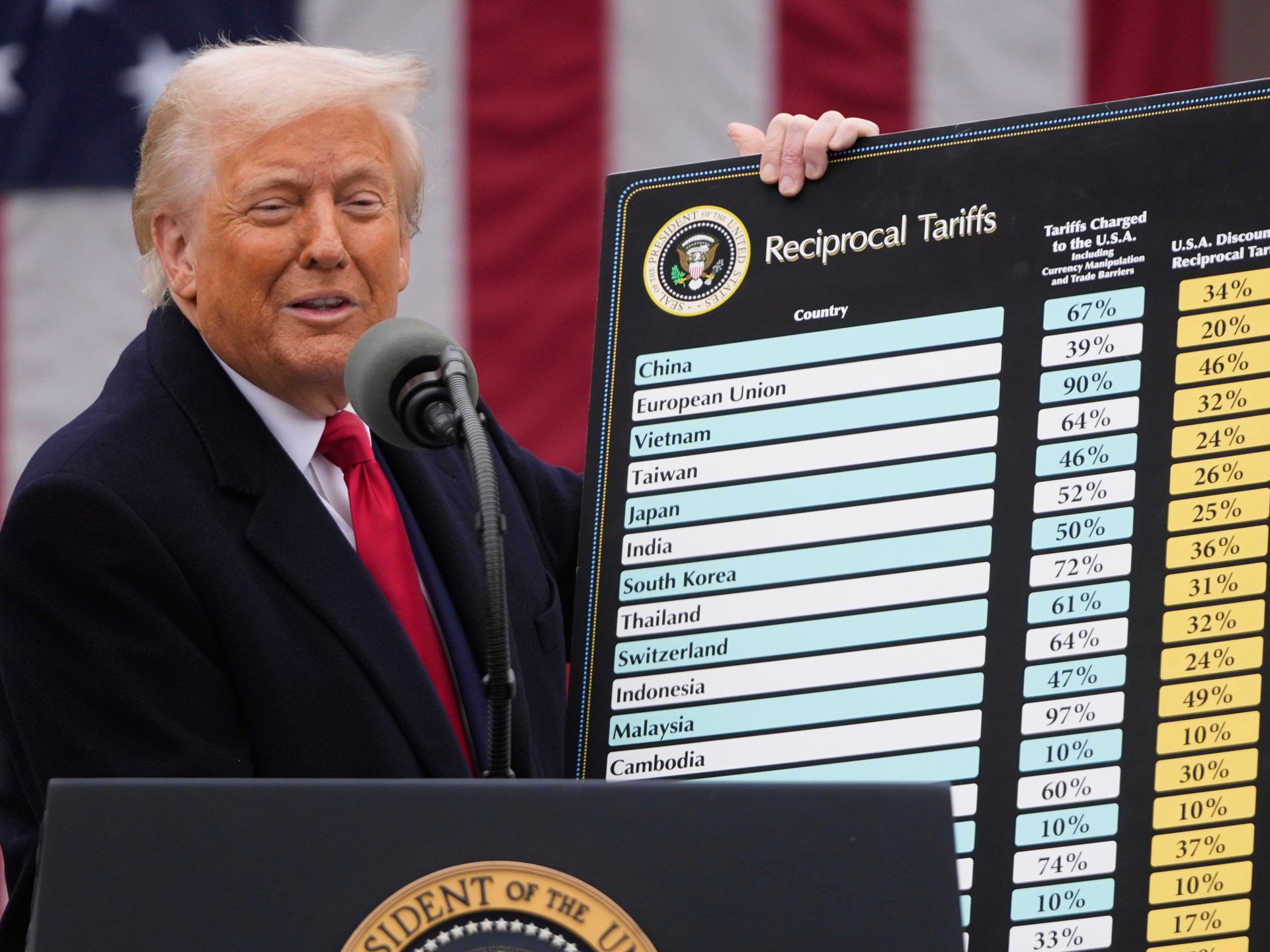
One year ago today, during a Rose Garden ceremony at the White House in Washington, US President Donald Trump announced a new 10 percent global tariff as part of a sweeping executive order he dubbed “Liberation Day”.
The immediate fallout from his announcement was severe, with the stock market suffering its worst drop since the pandemic. In the following days, countries scrambled to make deals with Washington or retaliate with their own levies.
On February 20, the Supreme Court ruled that most of Trump’s tariffs are illegal, noting that the president does not have the authority to impose broad, open-ended tariffs by claiming a national emergency.

Where do global tariffs stand now?
While the Supreme Court’s ruling was a major legal blow to the administration, it did not end the trade war. Within hours of the ruling, the president invoked a different statute to launch a temporary tariff, which is set to expire this July.
Even though the initial tariffs have now been struck down, their effects have already reshaped the US economy.
Between their implementation and the Supreme Court ruling, the average effective US tariff rate rose from 2.6 percent to more than 13 percent according to economists at the New York Federal Reserve.
This puts the effective tariff rate at its highest level since World War II, surpassing any trade barriers seen in the last 80 years.
How do tariffs work?
Tariffs are not a new tool. Almost every US administration has used them in targeted ways to protect certain industries, respond to unfair trade practices or to gain leverage in negotiations.
In basic terms, a tariff is a tax imposed by one country’s government on goods and services from a foreign country, making them more expensive to encourage local purchases.
The graphic below breaks down how tariffs work.

How much has the US collected in tariff revenue?
Trump promised tariffs would reduce the trade deficit and make the US richer, but the reality is the average US consumer is worse off, with households paying more than $1,000 more for the same groceries, clothes and cars, according to the Tax Foundation.
According to the Penn Wharton Budget Model, the US collected more than $287.1bn in customs duties in 2025 and $64.4bn so far in 2026.
Following the Supreme Court’s ruling, the government may be required to refund as much as $175bn to the businesses that paid them, according to the Penn Wharton Budget Model.

Who is paying the costs?
The Trump administration consistently argued that tariffs were a tax on foreign countries and blocs, such as China and the EU, and that these nations would bear the cost.
Economists at the Federal Reserve Bank of New York found that nearly 90 percent of the economic burden from tariffs has fallen on US businesses and consumers, with foreign exporters only absorbing a small percentage of the cost.
Surveys conducted by the New York Fed found that roughly half of the businesses subject to tariffs raised their prices in response, passing the cost directly to the people buying their goods with higher prices at checkout.
According to the Tax Foundation, US households paid $1,000 more in 2025 for the same goods they were already buying. However, the burden has not been shared equally. Lower-income households, who spend a higher proportion of their earnings on essential goods like food, clothing and transportation, felt the squeeze the most.
In November, the Trump administration signed an executive order exempting more than 237 categories of food imports from its tariff regime. Coffee, beef and oranges were among those removed from the list. It was a significant reversal of the administration’s trade policy and acknowledged what economists had warned for months – tariffs on everyday goods hit Americans hardest.
With Trump’s IEEPA tariffs being replaced by a flat 10 percent tariff, the Tax Foundation projects that the average cost to US households will fall to about $600. While an improvement, it is still a significant cost being paid by consumers.


Post Comment