How many ships have passed the Strait of Hormuz and how many were attacked? | US-Israel war on Iran News
At least three tankers entered the Gulf via the Strait of Hormuz on Tuesday, shipping data from LSEG and Kpler shows.
The Panama-flagged Peace Gulf is heading to Hamriyah port in the United Arab Emirates after transiting the new route between the islands of Larak and Hormuz in Iranian territorial waters that the Islamic Revolutionary Guard Corps (IRGC) has ordered all vessels to take.
Earlier, two United States-sanctioned tankers, the Rich Starry and the Elpis, passed through the strategic narrow waterway. As the three vessels transiting the strait were not heading to Iranian ports, they are not affected by the US blockade, which took effect on Monday.

US naval blockade of Iran’s ports
On Monday, the US Central Command (CENTCOM) said its forces began implementing the blockade of maritime traffic to and from Iranian ports at 10am ET (14:00 GMT), in line with Trump’s presidential order.
CENTCOM said the blockade would apply to “vessels of all nations entering or departing Iranian ports and coastal areas, including all Iranian ports on the Arabian Gulf and Gulf of Oman”.

Tehran has warned it could retaliate by targeting ports in neighbouring Gulf countries.
Iran effectively shut the Strait of Hormuz to most international shipping following the US-Israeli attacks on February 28.
Washington and Tehran have issued conflicting instructions to vessels navigating the world’s most critical energy chokepoint, adding to confusion for global shipping.
Alternative route through Hormuz
Before the war, ships used two dedicated lanes that functioned like a divided highway through the congested waterway that carried one-fifth of the world’s oil and gas shipments. One 3.2km (2‑mile) lane carried inbound traffic, separated by a 3.2km buffer and an identical outbound lane just below.
On March 2, Ebrahim Jabari, a senior adviser to the commander-in-chief of the IRGC, announced that the strait was “closed” and if any vessels tried to cross it, the IRGC and the navy would “set those ships ablaze”.
In a statement, the IRGC said all vessels must use the new map for navigation due to “the likelihood of the presence of various types of anti-ship mines in the main traffic zone”. It labelled the area previously used as “restricted”.
Ships were instructed to enter the strait north of Larak Island and exit south of it until further notice, in coordination with the IRGC’s navy.

How many ships have passed through the strait?
Ship traffic through the Strait of Hormuz has plummeted by more than 95 percent since the start of the war.
According to ship-tracking data from Kpler, 279 ships are known to have transited the strait between February 28 and April 12, far below the pre-war average of about 100 per day.
A ceasefire between the US and Iran took effect on April 8. However, only 45 ships have entered or exited the strait since then.
The chart below shows the number of ships that have transited the strait over the past six weeks.

Hundreds of tankers and other ships have been stranded in the Gulf since the war on Iran began, cutting global oil and gas supply by 20 percent in the world’s biggest-ever fuel supply disruption.
The war has also damaged Gulf energy production facilities and boosted oil prices by about 50 percent since the start of the fighting, with Asian buyers among the hardest hit.
How many ships have been attacked?
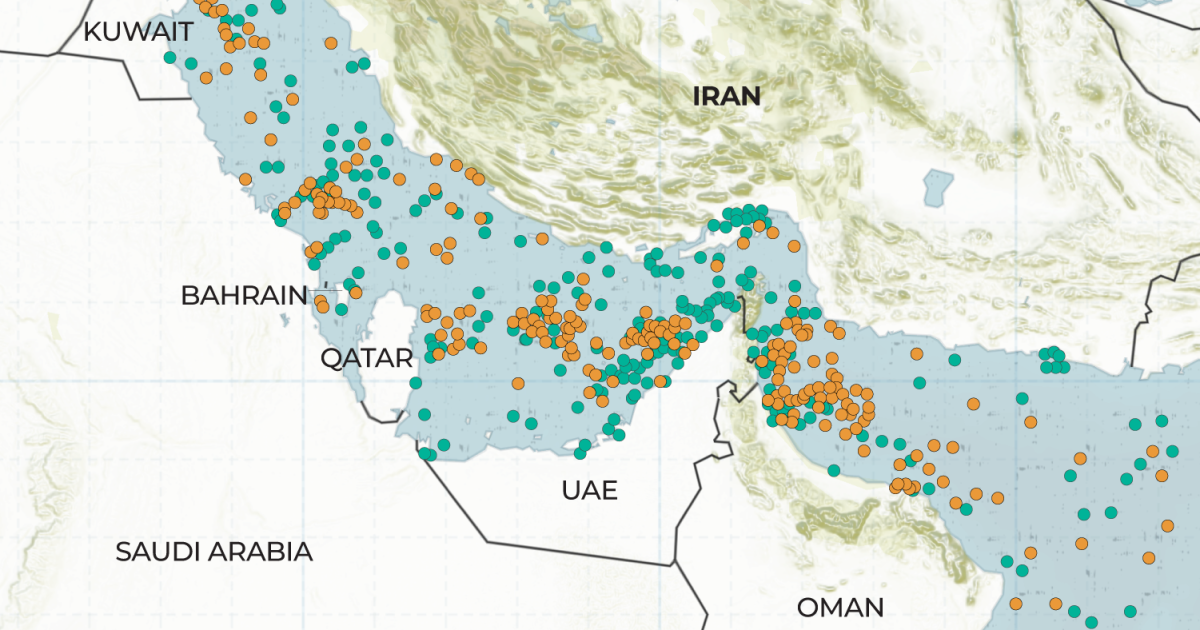
According to ship tracking data from Kpler, 22 ships have been attacked in the Strait of Hormuz since the start of the war.

Eight ships were attacked in UAE territorial waters, six in Omani waters, two each in Iraqi and Qatari waters, and one each in Bahraini, Kuwaiti, Saudi and Iranian waters.
The vessels that came under attack are listed below:



Post Comment