From railways to energy — five strategic projects linking Gulf states | Economy News
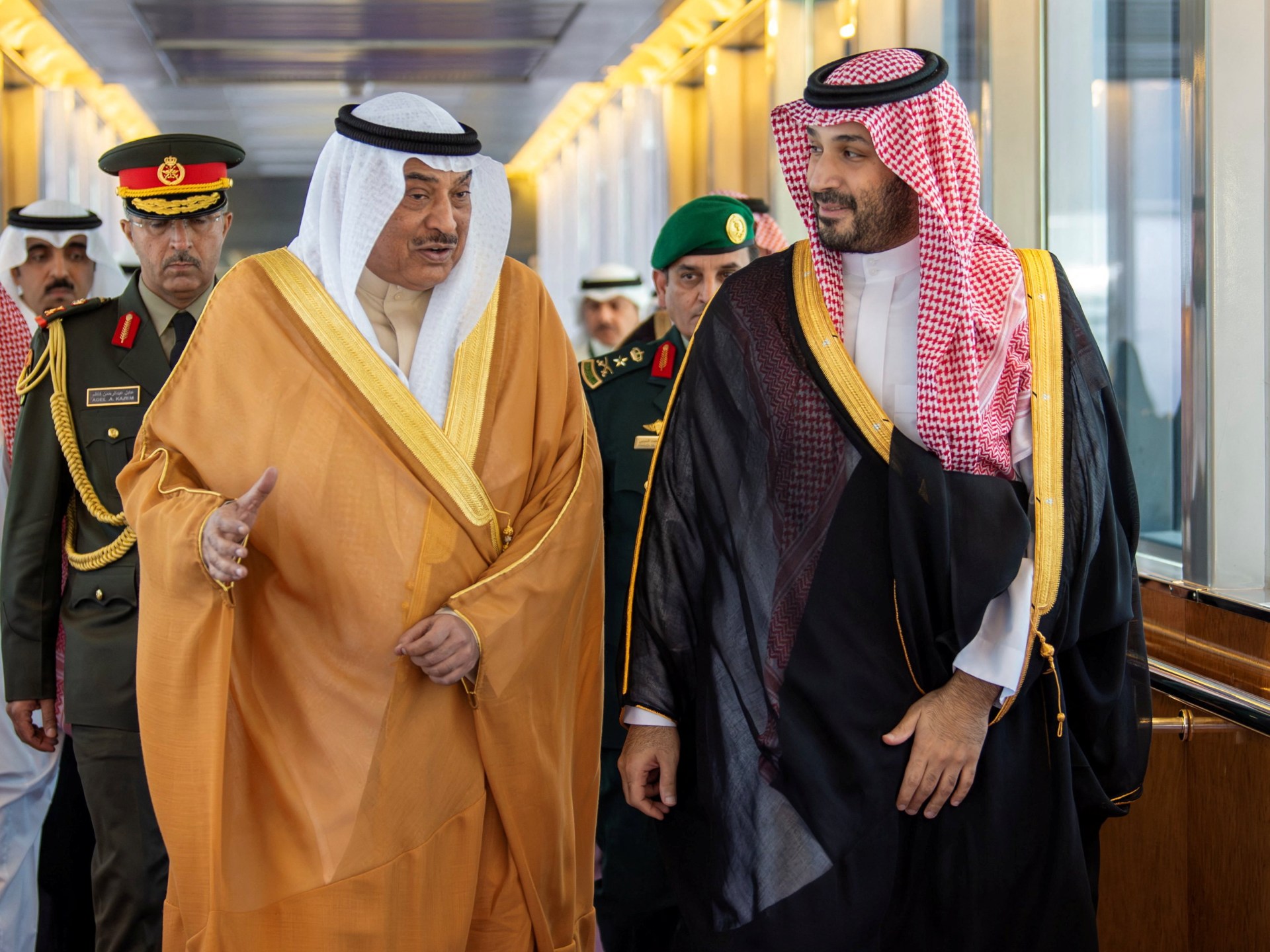
Gulf leaders gathered in Riyadh this week for their first in-person meeting since the outbreak of the US–Israel war with Iran. Alongside security concerns, they also discussed expediting longstanding joint projects.
Under the umbrella of the Gulf Cooperation Council (GCC), these initiatives span transport, energy, water security and defence. They aim to deepen economic ties and strengthen collective resilience.
Recommended Stories
list of 3 itemsend of list
Thomas Bonnie James, a Gulf studies expert at AFG College with the University of Aberdeen, said the significance of this moment lies in how these projects are being redefined. He said the Iranian strikes on key GCC infrastructure have “converted these projects from economic aspirations into security necessities”, a shift that fundamentally alters the political calculus and injects urgency into their implementation.
Here is an overview of the most prominent joint Gulf projects.
A unified Gulf railway network
First approved in December 2009, the GCC railway project is one of the region’s most ambitious infrastructure plans.
The goal is to connect all six member states through a 2,117km (1,315-mile) rail network running from Kuwait City to Muscat, passing through Saudi Arabia, Bahrain, Qatar, and the United Arab Emirates.
Designed for both passengers and freight, trains are expected to reach speeds of up to 200km/h (124mph). The railway would significantly reduce transport times, facilitate trade and improve mobility for citizens and residents. Yet progress has been uneven, with deadlines slipping from 2018 to around 2030.
The challenge, as James’s analysis implies, has never been purely technical. Rather, it lies in the difficulty of aligning “six sovereignties” around customs rules, technical standards and border controls — an issue of governance more than construction.
Even so, the current geopolitical environment may change priorities.
The war with Iran, in his view, could provide the political cover needed to accelerate the most strategically important segments, particularly cross-border freight corridors tied to security logistics.
Electrical interconnection grid
Often described as one of the GCC’s most successful joint projects, the electrical interconnection grid allows member states to share power across borders. Approved in 1997, the project led to the creation of the GCC Interconnection Authority, tasked with building and managing the network.
By 2009, the first phase — linking Bahrain, Saudi Arabia, Qatar, and Kuwait — was operational. Subsequent phases expanded the grid to include the United Arab Emirates and Oman, with full integration completed in 2014.
The system reduces the need for each country to maintain a large reserve capacity, lowers electricity production costs and provides backup during emergencies. It also allows countries to exchange surplus power, improving efficiency and reliability across the region.
It also offers a working model of what deeper integration can achieve. James said the grid stands out because it “was built and it worked” with “15 years of operation, $3bn in economic savings, nearly 3,000 emergency support cases handled through cross-border transfers”.
The real question now, he says, is whether that track record can be replicated in more complex sectors, such as water and transport.

Water interconnection system
Despite vast oil and gas wealth, GCC countries are among the most water-scarce in the world, relying heavily on desalination powered by hydrocarbons to meet their freshwater needs.
Recognising water security as a strategic priority, GCC states proposed a Gulf Water Interconnection Project in 2012 during a consultative meeting in Riyadh. The idea is to link national water networks, allowing countries to share supplies during shortages or emergencies.
Studies for the project have been completed, but implementation is still under discussion. Environmental considerations and technical challenges remain key factors. If realised, the network would provide a critical safety net, ensuring long-term water availability and strengthening regional cooperation on one of the Gulf’s most pressing vulnerabilities.
Iran’s targeting of water infrastructure in the region, James says, exposed a structural vulnerability — separate national systems create multiple “points of failure.” He said resilience in these systems would most likely be achieved through creating a connected system in the region.
Oil and gas pipeline integration
Energy cooperation has long been at the core of GCC coordination. The Unified Economic Agreement and its 2001 update both emphasise alignment across the oil and gas value chain — from production to pricing and export strategy. That foundation is now translating into renewed momentum for a regional pipeline network, designed to streamline energy flows, reduce costs, and reinforce the bloc’s collective weight in global markets.
Beyond economics, such integration would enhance energy security by diversifying transport routes and improving coordination among producers.
Yet this push also exposes a subtle shift in how the GCC operates. As James explains, “you can cooperate on infrastructure and diverge on production strategy simultaneously,” suggesting that deeper physical integration — through shared pipelines and interconnected systems — may advance even as national policy alignment becomes more flexible.
Joint ballistic missile early warning system
On the security front, GCC states are working towards a shared early warning system for ballistic missile threats.
The system is designed as an integrated regional defence network that uses satellite-based sensors and radar tracking to detect launches in real time and follow their full trajectory, allowing military and civilian authorities to coordinate responses and improve both readiness and protection.
It relies on satellite systems equipped with thermal sensors that can detect the heat signature of missile launches at the moment of ignition, providing early warning before missiles reach higher altitudes. Similar systems are already in use in countries such as the United States, Russia, Japan, and South Korea.
Here, too, the shift is as much conceptual as it is technical. Civilian infrastructure — energy, water, and transport — is increasingly treated as part of the security landscape. James said the region is moving towards an approach where “civilian resilience is a collective problem requiring a collective solution”, reflecting a clear change in how the GCC understands its vulnerabilities.


Post Comment