US top court weighs rollback of limits on party campaign spending | Courts News
Conservative justices mull overturning 2001 ruling as campaign finance reform faces challenges in the US Supreme Court.
Published On 9 Dec 2025
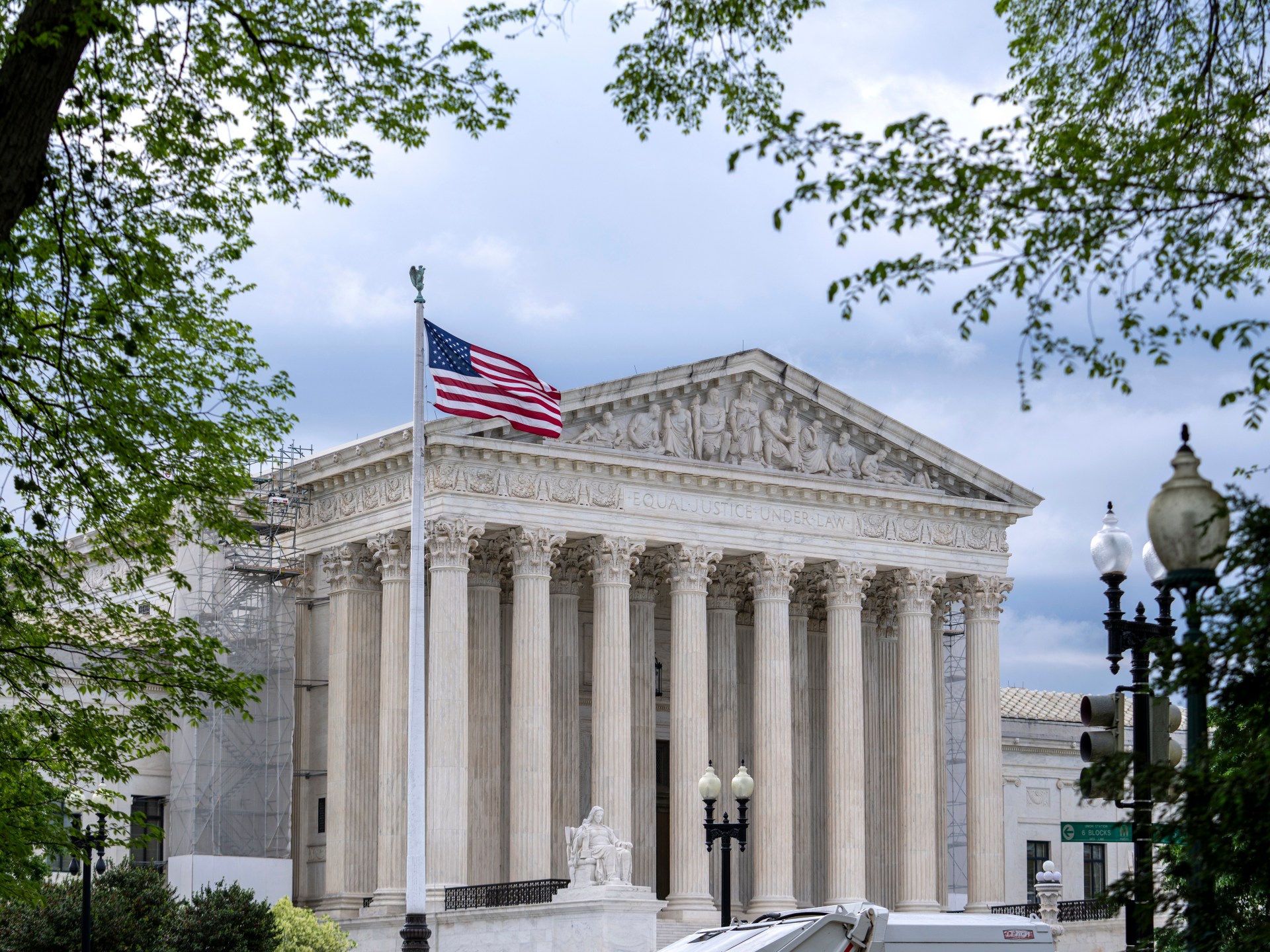
The conservative-majority United States Supreme Court is considering arguments in a case that could roll back existing limits on political party spending, potentially opening the door to further loosening campaign finance rules.
Conservative justices, including Clarence Thomas and Samuel Alito, appeared receptive on Tuesday to a Republican-led push to overturn a 2001 court decision that upheld a federal election law more than 50 years old.
Recommended Stories
list of 3 itemsend of list
The highest US court has consistently ruled to weaken limits on political spending, meant to prevent well-financed interests from playing an outsized role in the political process. The court’s conservative members have argued that political spending is a constitutionally protected form of free speech.
In 2010, the court reshaped the country’s campaign finance landscape with the landmark ruling Citizens United v Federal Election Commission that struck down previous limits on individual expenditures. Corporations and donors rushed to take advantage, leading to a considerable increase in campaign spending.
According to the transparency watchdog Open Secrets, spending by super PACS, or a kind of political action committee that can raise unlimited funds from donors, corporations, and other groups, rose from $62.6m in 2010, the year of the ruling, to $622.7m two years later. By 2024, the figure had exploded to $4.1bn.
The court has continued to chip away at limits in a series of additional rulings since Citizens United.
“The coordinated party spending limits are at war with this court’s recent First Amendment cases,” Noel Francisco, a lawyer for the Republican challengers, told the justices.
Some of the court’s liberal justices noted the surge in political spending that has accompanied previous decisions on campaign finance.
“Once we take off coordinated expenditure limits, then what’s left?” asked Justice Sonya Sotomayor. “What’s left is nothing. No control whatsoever.”
The case before the court was brought by two Republican committees for House and Senate candidates, and was first filed in Ohio in 2022 when a pair of Ohio Republicans, Steve Chabot and current Vice President JD Vance, were running for Senate.
The Trump administration has joined the request to strike down a prior federal election law intended to prevent arrangements in which wealthy donors circumvent limits on individual spending by directing those sums to a party, with the understanding that it will be spent in support of a particular candidate.
“More speech,” Francisco told Sotomayor in response to her concerns, “is always better than less.”

Post Comment