Israel bombards areas across southern Lebanon in latest truce violation | Israel attacks Lebanon News
Strikes hit hills and valleys as Israeli military keeps up pressure, it says, to force Hezbollah to disarm.
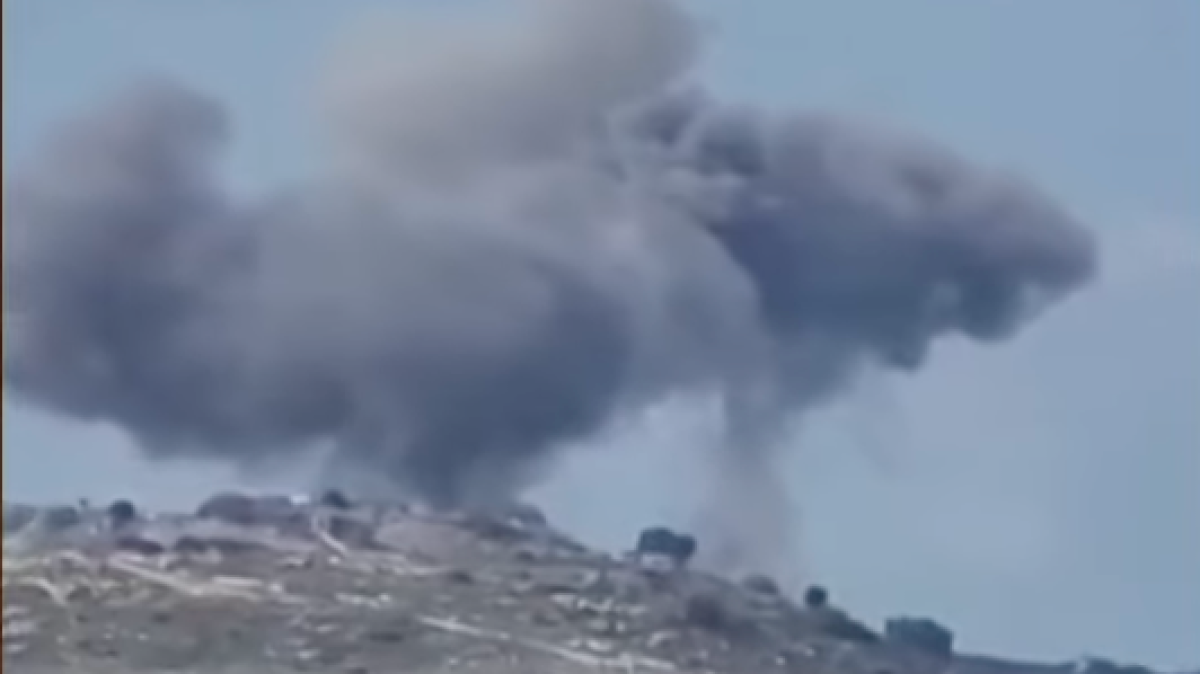
Israeli warplanes have carried out at least a dozen attacks across southern Lebanon, targeting what the military claims are Hezbollah training facilities in the latest flagrant near-daily violations that have further undermined a year-old ceasefire.
The raids hit hills and valleys in the Jezzine and Zahrani areas, including locations near al-Aaichiyeh, between al-Zrariyeh and Ansar, and around Jabal al-Rafie and the outskirts of several towns, according to Lebanon’s state news agency.
Recommended Stories
list of 3 itemsend of list
Israel’s military said it struck a compound used by Hezbollah’s elite Radwan Force for weapons training, claiming the facilities were being used to plan attacks against Israeli forces and civilians.
Al Jazeera’s Zeina Khodr, reporting from Beirut described the ceasefire in Lebanon as “a one-sided truce, since Israel has continued near-daily attacks on the country.”
Khodr said the latest attacks avoided densely populated areas. “The locations were in hills and valleys, not population centres,” she said, noting this marked a repeated pattern.
“In fact, just a few days ago, in the middle of the night, they did the same thing.”
The Israeli military said it also hit what it said were rocket-launching sites and other infrastructure, describing the operations as necessary to counter what it deemed violations of understandings between Israel and Lebanon.
However, the continued bombardment has drawn sharp criticism from the United Nations, which reported in November that at least 127 civilians, including children, have been killed in Lebanon since the ceasefire took effect in late 2024. UN officials have warned the attacks amount to “war crimes”.
Khodr explained that the attacks form part of a sustained military pressure campaign.
“This is all part of military pressure on Hezbollah to force it to disarm,” she said. Israel wants the group “to give up its strategic weapons, its long-range weapons, its precision-guided missiles, its drones” which the Israeli military believes are stored in the Bekaa Valley and further inland.
But Hezbollah has sharply refused to relinquish its arsenal as long as Israel bombards and occupies parts of Lebanon. The group “doesn’t want to give up its weapons because it would view that as surrender”, Khodr added, noting that “Hezbollah and Lebanon do not have the upper hand. Israel enjoys air superiority.”
Tensions escalated further two weeks ago when Israel bombed Beirut’s southern suburbs, killing Hezbollah’s top military commander, Haytham Ali Tabatabai. The group has yet to respond, but said it will do so at the right time.
The attacks come as Lebanon and Israel recently dispatched civilian envoys to a committee monitoring their ceasefire for the first time in decades, a move aimed at expanding diplomatic engagement.
However, Hezbollah leader Naim Qassem criticised Lebanon’s decision to send former Ambassador Simon Karam to the talks, calling it a “free concession” to Israel.
Lebanese officials have expressed frustration over Israel’s near-daily attacks.
“It is one of the reasons why Lebanon agreed to sit down for face-to-face talks with the Israelis,” Khodr said, “engaging in diplomatic talks that are seen as very sensitive in Lebanon, in the hopes that it would avoid war.”
President Joseph Aoun said last week that Lebanon “has adopted the option of negotiations with Israel” aimed at stopping the continued attacks, while Prime Minister Nawaf Salam called for a more robust verification mechanism to monitor both Israeli violations and Lebanese army efforts to dismantle Hezbollah infrastructure.
“But the US ambassador to Lebanon, Michel Issa, made it clear a few days ago that even though Lebanon is sitting down in a room with a longtime enemy, it does not mean that the Israeli attacks will stop,” Khodr said.



Post Comment