India and New Zealand conclude free trade agreement | International Trade News
Governments across the globe are seeking to diversify trade links due to the uncertainty driven by Trump’s sweeping tariffs.
India and New Zealand have announced reaching a free trade agreement that is expected to boost trade between the two countries by hundreds of millions of dollars.
New Delhi and Wellington confirmed the agreement on Monday, saying the deal is expected to be formally signed in the first quarter of next year.
Recommended Stories
list of 4 itemsend of list
The announcement comes as governments across the globe seek to diversify trade links due to the uncertainty driven by United States President Donald Trump’s sweeping tariffs.
Under the terms of the agreement, India will gain zero-duty access for all goods exports to New Zealand. Wellington will receive duty concessions and market access for about 70 percent of India’s tariff lines, covering roughly 95 percent of New Zealand’s exports to India on a phased basis, officials said.
New Zealand is seeking to expand exports of dairy, fruit, wool and wine to India, with significant gains expected in horticulture, wood products and sheep wool.
India’s biggest beneficiaries from tariff-free access to New Zealand’s market are expected to include textiles and apparel, engineering goods, leather and footwear, and marine products.
New Zealand will also commit to investment worth $20bn in India over 15 years, India’s Ministry of Commerce and Industry said, while skilled Indian professionals should get easier access to New Zealand’s job market.
The uncertainty stemming from Trump’s unconventional economic policies has spurred countries to pursue bilateral trade deals, reducing their exposure to rising protectionism and higher US import tariffs.
New Delhi has stepped up efforts to broaden its export destinations as part of a wider strategy to shield its economy.
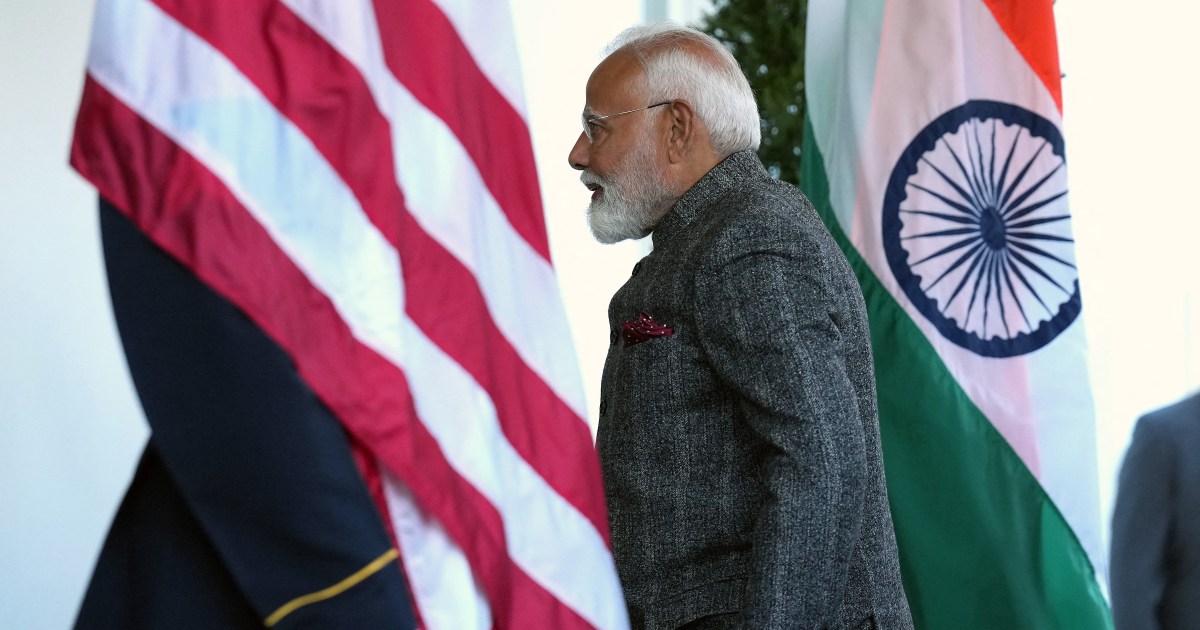
Prime Minister Narendra Modi put that push front and centre as he welcomed Russia’s President Vladimir Putin to the Indian capital earlier this month for trade talks, as well as the inevitable discussion of geopolitical tensions.
Still, New Delhi is seeking to maintain a longstanding balancing act between the East and the West. India’s Commerce Minister Piyush Goyal said so on Monday. As well as the deal with New Zealand, India is also working on agreements with the US and Canada.
New Zealand Prime Minister Christopher Luxon said in a post on X that his country’s exports to India are forecast to increase by $1.1bn to $1.3bn annually over the next two decades as a result of the deal.
“Boosting trade means more Kiwi jobs, higher wages and more opportunities for hard-working New Zealanders,” Luxon said.
However, the deal has drawn criticism from the right-wing populist party New Zealand First.
Party leader Winston Peters said the agreement “gives too much away, especially on immigration”, according to a statement cited by The New Zealand Herald.
The deal also risks encroaching on some sensitivities in India.
In a nod to those concerns, New Delhi has excluded dairy imports such as milk, cream, whey, yoghurt and cheese from the agreement, along with several animal and vegetable products, including goat meat, onions and almonds.
The deal should be signed following a legal review of the negotiated text, India’s chief negotiator Petal Dhillon said.


Post Comment