Libyan army chief killed in plane crash near Turkiye’s capital, Ankara | Aviation News
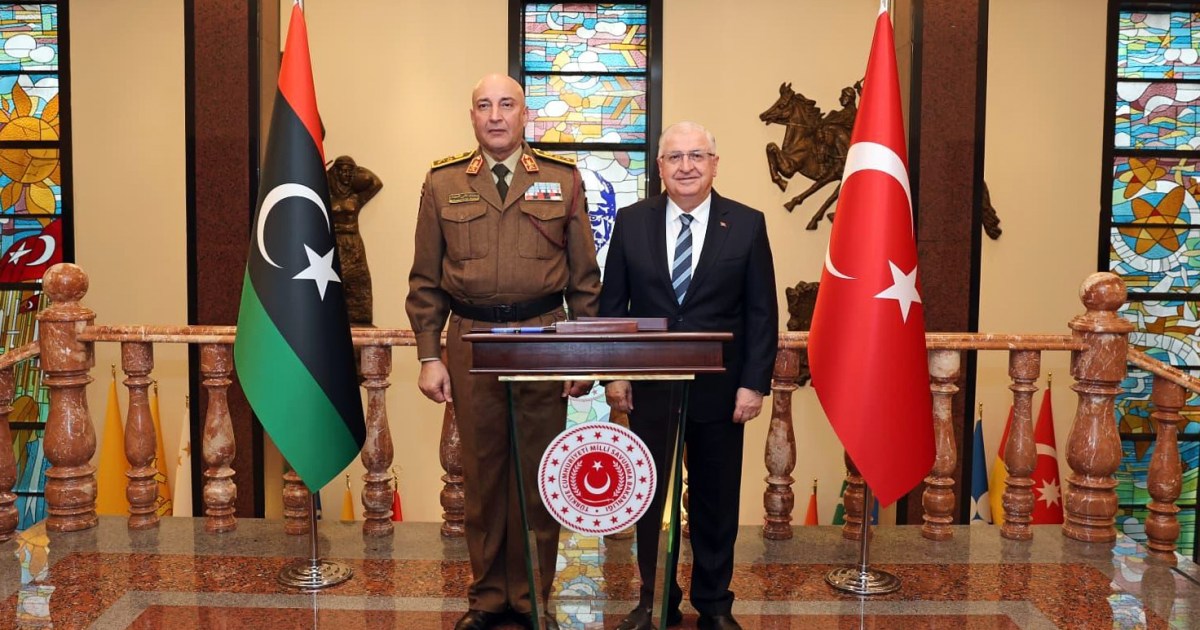
The Libyan army’s chief of staff Mohammed Ali Ahmed al-Haddad has died in a plane crash near the Turkish capital, Ankara, minutes after the private jet he was travelling in took off from an airport.
The crash on Tuesday killed everyone on board.
Recommended Stories
list of 4 itemsend of list
They included four other high-ranking military officials and three crew members.
Turkish officials told Al Jazeera that initial investigations have ruled out sabotage, and instead point to a technical failure as the cause of the crash.
Libyan Prime Minister Abdul Hamid Dbeibah confirmed the death of al-Haddad and the four officers, saying the “tragic accident” took place as the delegation was returning home.
“This great tragedy is a great loss for the nation, the military establishment, and all the people,” he said in a statement. “We have lost men who served their country with sincerity and dedication and were an example of discipline, responsibility, and national commitment.”
Al-Haddad was the top military commander in western Libya and played a crucial role in the ongoing United Nations-brokered efforts to unify the country, which has been divided since the NATO-backed revolt that toppled and killed longtime ruler, Muammar Gaddafi, in 2011.
The four other officers who died in the crash were General Al-Fitouri Gharibil, the head of Libya’s ground forces, Brigadier General Mahmoud Al-Qatawi, who led the Military Manufacturing Authority, Muhammad Al-Asawi Diab, an adviser to the chief of staff and Muhammad Omar Ahmed Mahjoub, a military photographer with the chief of staff’s office.
The UN-recognised Government of National Unity (GNU) in Tripoli announced official mourning across the country for three days.
Turkish Interior Minister Ali Yerliaya said on X that al-Haddad’s plane took off from Ankara’s Esenboga Airport at 8:10pm local time (17:10GMT) en route to Tripoli and that radio contact was lost about 40 minutes later.
He said authorities found the plane’s wreckage near the Kesikkavak village in Ankara’s Haymana district.
Yerliaya added that the Dassault Falcon 50-type jet had made a request for an emergency landing while over Haymana before all communication ceased.
Burhanettin Duran, the head of Turkish presidential communications office, said the plane notified air traffic control of an electrical fault and requested an emergency landing.
The aircraft was redirected back to Esenboga where preparations for its landing began.
The plane however, disappeared from the radar while descending for the emergency landing, Duran said.
Security camera footage aired on local television stations showed the night sky over Haymana suddenly lit up by what appeared to be an explosion.
Turkish Minister of Justice Yilmaz Tunc said that the Ankara chief prosecutor’s office has launched an investigation into the incident.
In a statement to Al Jazeera, a Turkish official said that “initial reports from the investigation rule out any sabotage to the Libyan Army Chief plane crash”.
The initial cause is technical failure, the official added.
According to the GNU, Libya will send a team to Ankara to work with Turkish authorities on investigating the crash.
Walid Ellafi, state minister of political affairs and communication for the GNU, told broadcaster Libya Alahrar that it was not clear when a crash report would be ready.
He said the jet that crashed was a leased Maltese aircraft and that officials did not have “sufficient information regarding its ownership or technical history”.
Al Jazeera’s Malik Traina, reporting from Tripoli, described al-Haddad’s death as a “huge loss” to the Libyan military and said there has been an “outpouring of grief” from across the country, including from the rival administration based in eastern Benghazi.
Eastern Libyan Commander Khalifa Haftar expressed his “deep sorrow over this tragic loss”, while the House of Representatives in Benghazi offered their condolences to the families of al-Haddad and his delegation.
Al-Haddad was “well respected across western Libya and across the country”, said Traina. He was a career soldier who had been in the military for decades.
“Here in Western Libya, it’s extremely fractured. We have powerful armed groups that control vast areas of land. They have a huge influence on the government. But Mohammed al-Haddad refused to bow down to the pressure of these armed groups. He was always talking about reconciliation,” Traina said. “He was trying to bring the country together. People rallied behind him. They had hope, trust that perhaps possibly that though Mohammed al-Haddad they could broker a deal with eastern Libya and come up with some sort of agreement that will unify this divided country.”
Turkiye’s Ministry of Defence had announced the Libyan chief of staff’s visit to Ankara this week, saying he had met his Turkish counterpart and other military commanders.
Tuesday’s crash occurred a day after Turkiye’s parliament passed a decision to extend the mandate of Turkish soldiers’ deployment in Libya by two more years.
Ankara has close ties with the UN-recognised government in Tripoli, which it provides with economic and military support.
In 2020, it sent military personnel there to train and support the government, and later reached a maritime demarcation accord.
In 2022, Ankara and Tripoli also signed a preliminary accord on energy exploration.


Post Comment