Burkina Faso leader vows AES alliance crackdown on armed groups in Sahel | Military News
Burkina Faso, Niger, Mali have launched joint battalion aiming to bolster sovereignty after group booted out France, US.
Published On 24 Dec 2025
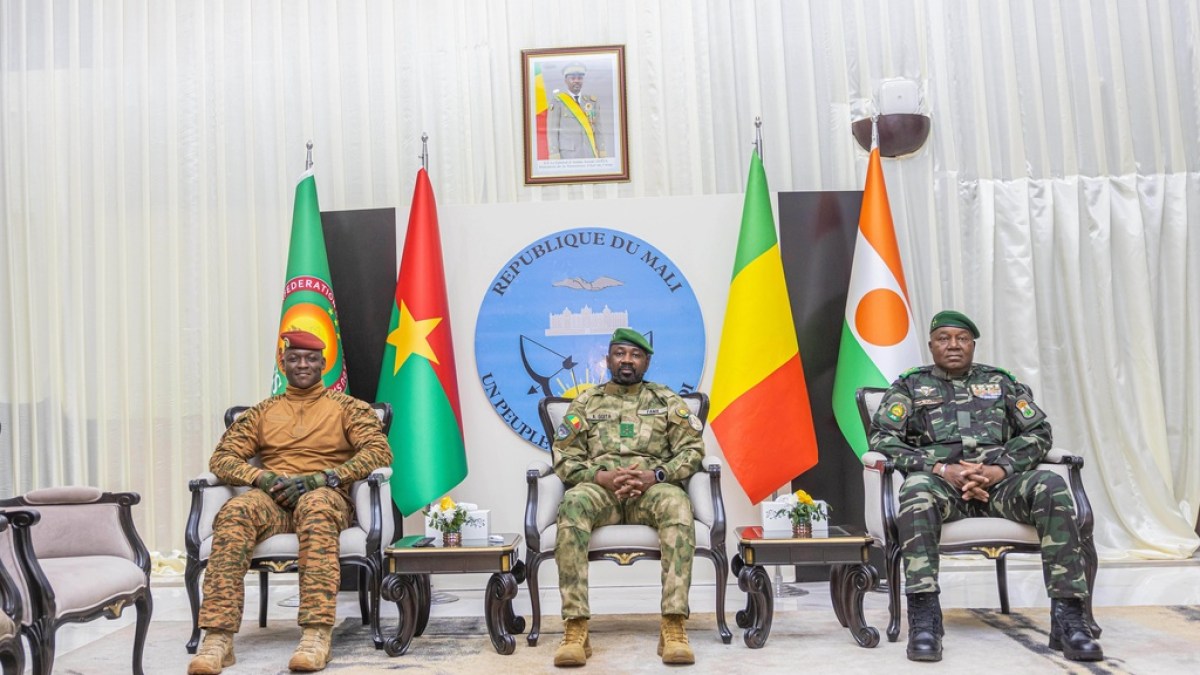
Burkina Faso’s interim leader, who is part of a regional alliance of military-led countries that includes Mali and Niger, has announced “large-scale” joint operations against armed groups in the coming days.
Captain Ibrahim Traore’s comments came as the three countries, allied under the banner of the Alliance of Sahel States (AES), held a joint summit that concluded on Tuesday, days after the launch of a joint military battalion aimed at fighting groups linked to al-Qaeda and ISIL (ISIS).
Recommended Stories
list of 3 itemsend of list
Newly installed as AES chief, Traore provided no further details on the actions planned by the three countries, which have all experienced coups in recent years and have withdrawn from the Economic Community of West African States (ECOWAS) bloc to form the AES in 2024. The three pledged at this week’s summit to deepen their security and economic ties.
The military leaders of the three nations have kicked out longtime security partners France and the United States, turning instead to Russia as an ally in their bid to advance regional sovereignty, with this week’s launch of the 5,000-strong AES Unified Force (FU-AES) seen as a key milestone for the bloc.
General Omar Tchiani, leader of Niger’s military government, said at the summit that the AES had “put an end to all occupation forces in our countries”.
“No country or interest group will decide for our countries any more,” he said.
Burkina Faso’s Traore warned of looming destabilisation in West Africa, which he termed the “Black Winter” – a phase of external threats, violence, and economic pressure aimed at undermining Sahelian sovereignty.
At the summit, the three states launched a joint broadcaster called AES Television, with Malian President General Assimi Goita describing it as a strategic tool “to break disinformation campaigns and hostile narratives targeting our states”.
On security, Goita reported positive operational outcomes, claiming that “several terrorist bases” had been destroyed.
On the economy, he rejected narratives portraying the Sahel as structurally poor, lauding the bloc’s “immense mining and agricultural potential”.
The second annual AES summit shows growing collaboration among the three countries, despite fractured relations and coup-related sanctions from global partners, said Ulf Laessing, head of the Sahel programme at the Konrad Adenauer Foundation.
The alliance “enjoys popularity among citizens of the three countries” and is trying to keep momentum going by deepening cooperation beyond cross-border military operations, Laessing told The Associated Press news agency.

Post Comment