Israel becomes first country to recognise Somaliland | Politics News
Israel has become the first nation in the world to formally recognise Somaliland, ending the breakaway region’s three-decade quest for international legitimacy.
Prime Minister Benjamin Netanyahu announced on Friday that Israel and Somaliland had signed a joint declaration establishing full diplomatic relations, describing it as being “in the spirit of the Abraham Accords” signed under United States President Donald Trump’s initiative.
Recommended Stories
list of 3 itemsend of list
The move marks a significant breakthrough for Somaliland, which declared independence from Somalia in 1991 but has failed to gain recognition from any United Nations member state. The region controls the northwestern portion of what was once the British Protectorate in northern Somalia.
Somalia has never accepted Somaliland’s independence. A Somali government source told Al Jazeera that the cabinet was due to hold an urgent meeting on Friday evening to deliberate the government’s position on the issue.
Somalia’s Foreign Minister, Abdisalam Abdi Ali, participated in a call with the foreign ministers of Egypt, Turkey, and Djibouti, during which they reiterated their support for Somalia’s unity.
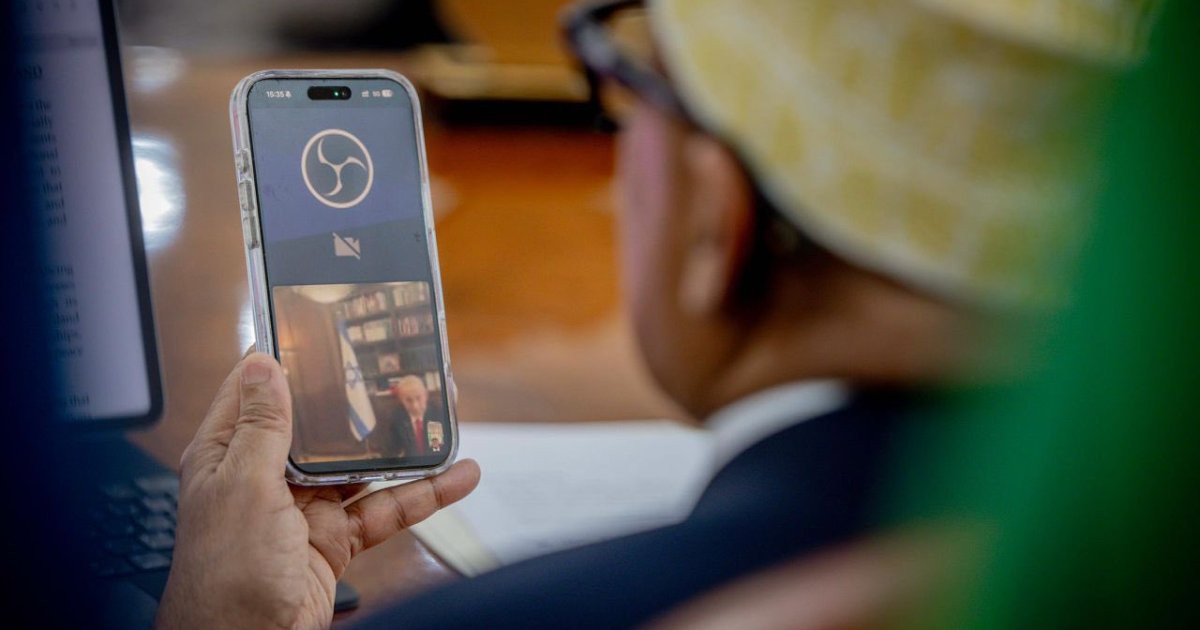
Netanyahu congratulated Somaliland President Abdirahman Mohamed Abdullahi, known as Abdirahman Cirro, during a video call, praising his “leadership and commitment to promoting stability and peace” and inviting him to visit Israel.
Israeli Foreign Minister Gideon Saar said the agreement followed a year of extensive dialogue between the two governments and was based on a joint decision by Netanyahu and Cirro to establish full ties, including the appointment of ambassadors and the opening of embassies in both countries.
“We will work together to promote the relations between our countries and nations, regional stability and economic prosperity,” Saar wrote on social media, adding that he had instructed his ministry to immediately institutionalise ties across a wide range of fields.
Cirro welcomed the development as a “historic moment”, expressing readiness for Somaliland to join the Abraham Accords.
The Somaliland president said the move “marks the beginning of a strategic partnership that advances mutual interests, strengthens regional peace and security, and delivers shared benefits to all stakeholders”.
‘Complex’ issue
The recognition represents a dramatic shift in Somaliland’s fortunes after years of diplomatic isolation.
The region seceded from Somalia during a brutal civil war that followed decades under the dictatorship of Siad Barre, whose forces devastated the north. While large parts of Somalia descended into chaos, Somaliland stabilised by the late 1990s.
Somaliland has developed a distinct political identity from Somalia, with its own currency, flag, and parliament. But its eastern regions remain disputed by communities who do not back the separatist programme in the capital Hargeisa.
In recent years, Somaliland developed ties with the United Arab Emirates and Taiwan as it sought international acceptance.
Rumours had swirled for months that Trump would push for recognition, with Somaliland even appearing in the Project 2025 document, though no move materialised until now.
Prominent figures within the Republican Party, including Senator Ted Cruz, have been vocal advocates for deepened ties between Somaliland and Israel. Cruz has repeatedly urged the US to recognise Somaliland, often remarking without elaboration that the region was pro-Israel.
In August, Trump signalled that he was preparing to move on the issue when asked about Somaliland during a White House news conference. “Another complex one, but we’re working on that one, Somaliland,” he said.
The US, as yet, has not changed its position on the issue.
The announcement comes amid dampening US interest in Somalia, with Trump repeatedly carrying out verbal attacks on the country and its president.
Earlier this year, speculation emerged linking potential recognition of Somaliland to plans for Palestinian resettlement from Gaza, though those reports never materialised into concrete proposals.
In 2024, Ethiopia also sought a pact with Somaliland, offering recognition in exchange for sea access for Addis Ababa, but backed down under diplomatic pressure.
Jethro Norman, a Somalia expert at the Danish Institute for International Studies, told Al Jazeera that it was unclear whether this development would prompt other countries to follow suit, but it could “embolden other centrifugal forces” in a politically fragmented nation.
Somalia operates a federal system granting significant autonomy to its member states. Two key states, Puntland and Jubaland, have withdrawn from the system amid constitutional and electoral disputes.
In a post on X, Puntland’s interior minister said patience pays off, signaling that he viewed the development favorably. “#Puntland needs to calculate strategically,” Juha Farah said.
“Basically, you already have a series of de facto states, and Israel’s message is that if you provide strategic value, recognition becomes transactional rather than principled,” he added.

Post Comment