Thailand, Cambodia agree to build on ceasefire in talks in China’s Yunnan | Conflict News
Countries meet for a second day of negotiations after a truce agreed on Saturday to halt weeks of fighting.
Thailand and Cambodia plan to rebuild mutual trust and consolidate a ceasefire, Beijing says at the end of two days of talks in southwestern China, despite new accusations from the Thai military that its Cambodian counterparts are violating the truce with drone flights.
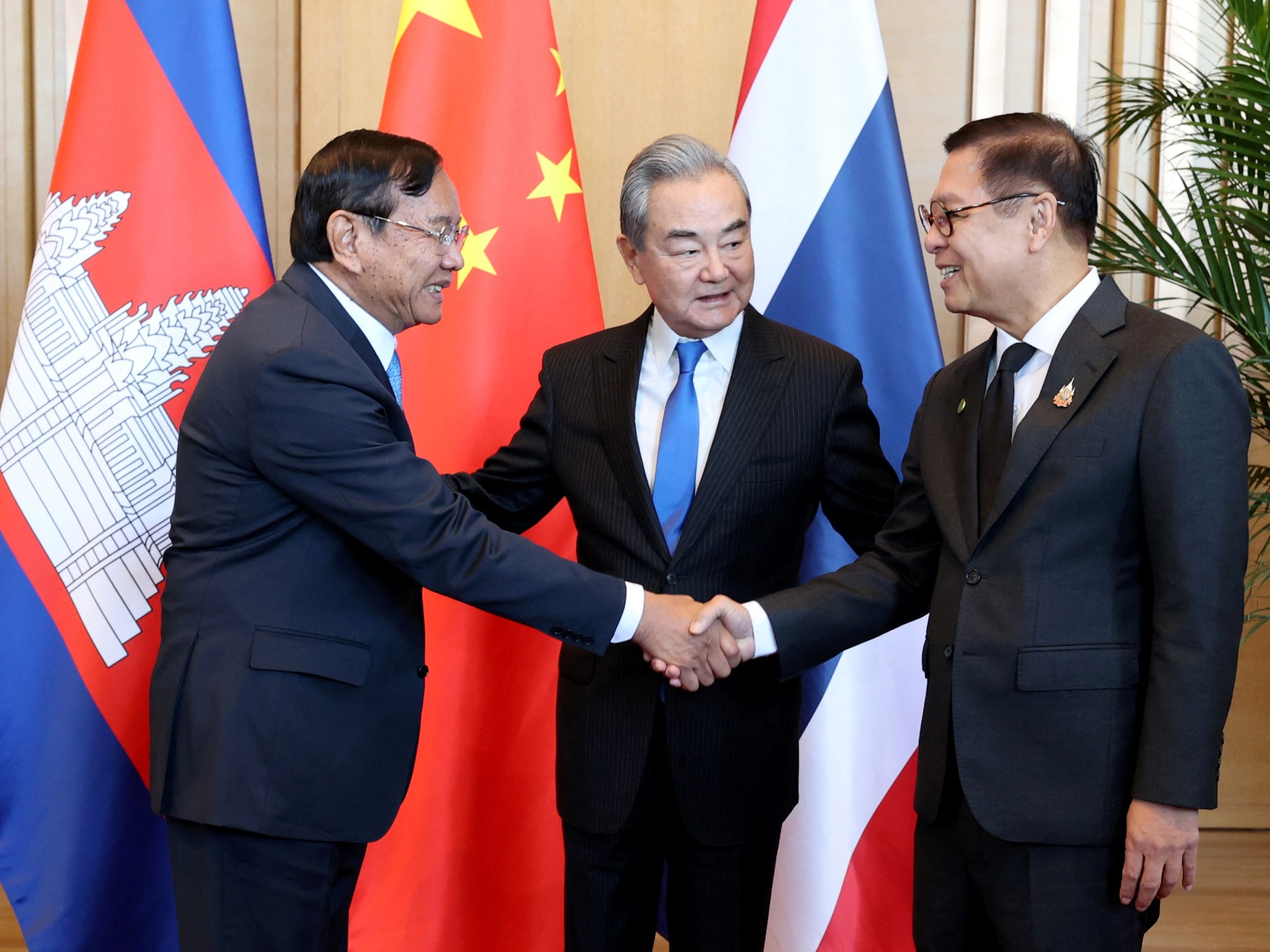
The foreign ministers of Thailand and Cambodia met with the Chinese foreign minister in Yunnan province on Monday for the scheduled two days of talks aimed at ending weeks of fierce fighting along their border that has killed more than 100 people and displaced more than half a million civilians in both countries.
Recommended Stories
list of 4 itemsend of list
The talks, billed as a “mutual confidence” building initiative aimed at restoring “peace, security and stability” along the border, were held after both sides agreed to a ceasefire on Saturday, freezing troop positions at their current locations.
As part of the deal, Thailand has agreed to return 18 captured Cambodian soldiers on Tuesday if the ceasefire, which took effect at noon (05:00 GMT) on Saturday, is fully observed.
‘Positive direction’
Speaking to reporters after the meeting, Thai Foreign Minister Sihasak Phuangketkeow said he believed the parties were “moving in a positive direction”.
“We haven’t resolved everything, but I think we are making progress in the right direction, and we have to keep up the momentum,” he said.
Cambodian Foreign Minister Prak Sokhonn, speaking to Cambodian state TVK, said he believed the latest ceasefire would last and provide an environment for the neighbours to resolve their differences.
“We don’t want to return to the past, which means that no one wants to see this fighting happening again. Therefore, what is important is that this ceasefire is to be permanent and must be firmly respected and implemented.”
In a statement released by his ministry, Chinese Foreign Minister Wang Yi said the discussions had been “beneficial and constructive and an important consensus was reached”.
A joint communique released by China’s official Xinhua news agency said Bangkok and Phnom Penh would “rebuild political mutual trust, achieve a turnaround in relations and maintain regional peace”.
Thailand alleges violations
Despite the positive statements from the talks, Thailand’s military on Monday accused Cambodia of violating the ceasefire by flying hundreds of drones over its territory, warning it may reconsider the scheduled release of the 18 Cambodian soldiers.
The Thai army said in a statement that “more than 250” drones were detected “intruding into Thailand’s sovereign territory” on Sunday night, calling the incident a “provocation”, a “violation of measures aimed at reducing tensions” and inconsistent with Saturday’s agreement.
Thailand’s army “may need to reconsider its decision regarding the release of 18 Cambodian soldiers, depending on the situation and the behaviour observed”, the statement added.
In his remarks aired on Cambodian state television, Sokhonn described the incident as “a small issue related to flying drones seen by both sides along the border line”, adding that the two countries had discussed it and agreed to investigate and “resolve it immediately”.
Border area deserted
Along with the pledge to return the Cambodian soldiers, the two sides also agreed in Saturday’s truce to cooperate on demining efforts and combating cybercrime and to allow civilians living in border areas to return home as soon as possible.
An Al Jazeera team has been able to gain exclusive access to one such border area where Thai forces had advanced into Cambodian territory in the border province of Banteay Meanchey.
Reporting from the border, Al Jazeera’s Assed Baig said the guns had fallen silent since Saturday’s agreement but the area remained littered with shrapnel and unexploded ordnance.
He said villages had been deserted by civilians and some residents appeared to have tried to dig their own bunkers before the hostilities drew too close and forced them to flee.
“People are afraid to return or come close to the border,” he said.
Baig said that although the ceasefire was holding, there has been no resolution yet to the deeper causes of the conflict, rooted in territorial disputes along the neighbours’ 800km (500-mile) border.
“But the longer the guns remain silent, the greater the chance this fragile calm can turn into lasting peace,” he said.




Post Comment