Guinea coup leader Mamady Doumbouya wins presidential election | Elections News
DEVELOPING STORYDEVELOPING STORY,
Mamady Doumbouya faced eight rivals for the presidency, but the main opposition leaders were barred from running.
Published On 30 Dec 2025
|
Updated: 3 minutes ago
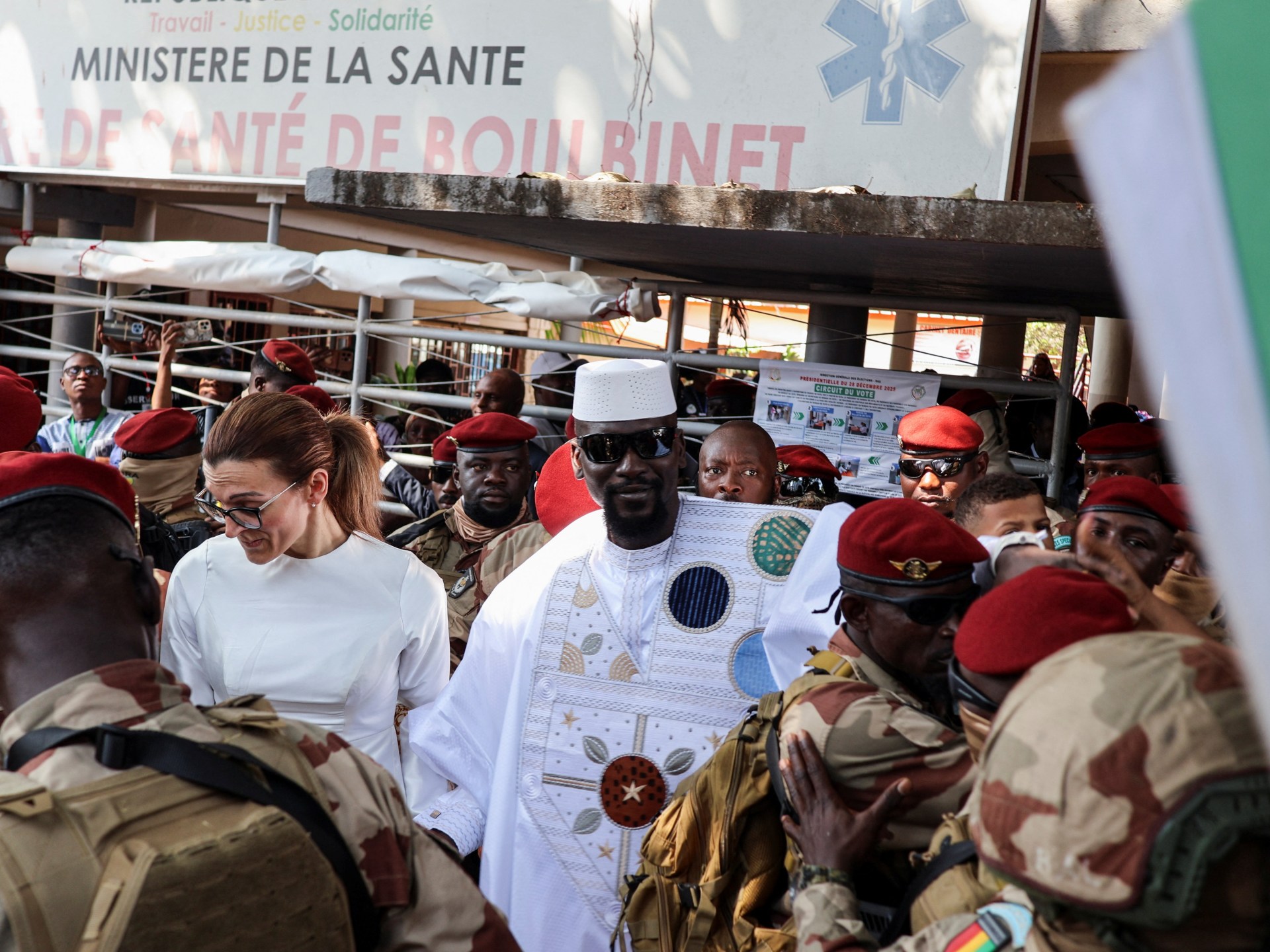
Guinea coup leader Mamady Doumbouya has been elected president, according to provisional results, paving the way for a return to civilian governing after a military takeover nearly five years ago.
The provisional results announced on Tuesday showed Doumbouya winning 86.72 percent of the vote held on December 28 – an absolute majority that allows him to avoid a runoff.
Recommended Stories
list of 4 itemsend of list
The Supreme Court has eight days to validate the results in the event of any challenge.
Doumbouya, 41, faced eight rivals for the presidency, but the main opposition leaders were barred from running and had urged a boycott of the vote.
The former special forces commander seized power in 2021, toppling then-President Alpha Conde, who had been in office since 2010. It was one in a series of nine coups that have reshaped politics in West and Central Africa since 2020.
Both Conde and longtime opposition leader Cellou Dalein Diallo are currently living in exile.
Doumbouya goes back on pledge
After taking power four years ago, Doumbouya had promised not to run for elected office. Guinea’s initial post-coup charter prohibited military members from contesting elections, but those restrictions were removed under a new constitution approved in a referendum held in September.
Announcing the provisional results late Tuesday, election commission head Djenabou Toure said voter turnout stood at 80.95 percent. However, participation appeared limited in the capital, Conakry, and opposition figures disputed similarly high turnout figures reported during the September referendum.
Guinea is home to the world’s largest reserves of bauxite and holds one of the biggest untapped iron ore deposits at Simandou, a project officially launched last month after years of delays. Doumbouya has pointed to progress on the mine as evidence of his leadership, saying his government has ensured the country will benefit more directly from its resources.
His administration has also moved toward greater state control of the mining sector, revoking the licence of Emirates Global Aluminium’s subsidiary Guinea Alumina Corporation following a dispute over refinery development and transferring its assets to a state-owned company.
Similar policies of resource nationalism in fellow African nations such as Mali, Burkina Faso and Niger have bolstered support for military-led governments in the region.
Concerns on political restrictions
Political activity in Guinea has remained tightly controlled under Doumbouya’s rule. Civil society groups accuse the authorities of banning demonstrations, limiting press freedom and restricting opposition organising.
The election campaign was “severely restricted, marked by intimidation of opposition actors, apparently politically motivated enforced disappearances, and constraints on media freedom”, United Nations human rights chief Volker Turk said last week.
On Monday, opposition candidate Faya Lansana Millimono told a news conference that the vote was affected by “systematic fraudulent practices” and said observers were prevented from monitoring both voting and ballot counting.
The government did not respond to a request for comment.

Post Comment