Here is to a quarter century of US military havoc | Opinions
The year 2025 has come to an end, and along with it, the first quarter of the 21st century. Reflecting on the course of the past 25 years, it is hard to understate the extent to which global events have been shaped by the military excesses of the United States – not that the same cannot be said for the 20th century, too.
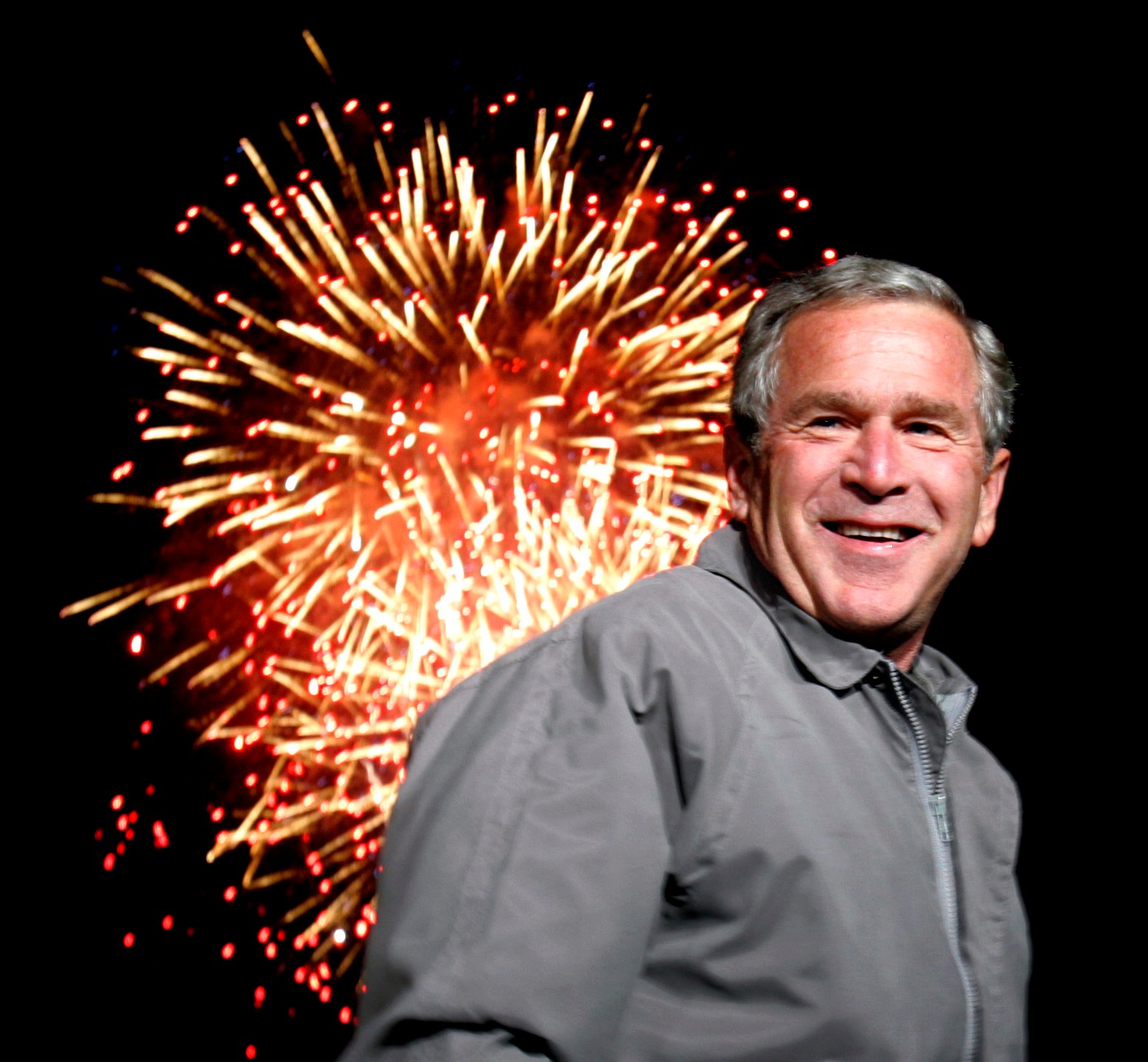
Shortly after the new century kicked off, the US launched the so-called “global war on terror” under the enlightened guidance of President George W Bush, who offered the professional call to arms following the 9/11 attacks of 2001: “We have our marching orders. My fellow Americans, let’s roll.”
According to Bush, the US had undertaken to “wage a war to save civilisation itself”, which ultimately entailed pulverising various parts of the world and killing millions of people.
On September 11, 2001, I was enrolled as a junior at Columbia University in New York City, the site of the World Trade Center attacks. However, as I was scheduled to study in Italy that fall, I was not in New York at the time but rather in Austin, Texas, where my family then resided.
I spent the day at the office where I had been employed for the summer, watching apocalyptic replays of the incoming planes on a large projector screen set up by my colleagues specifically for that purpose.
Outside, American flags began to proliferate across every available surface, as the country went about appointing itself the number one victim of terrorism in the history of the world – and never mind the quite literal terror the US had been inflicting on other nations for decades, from Vietnam and Laos to Nicaragua and Panama.
That evening, I visited my boyfriend, whose three housemates were morosely gorging themselves on the living room floor amid copious buckets of Kentucky Fried Chicken, which, they explained to me, was “comfort food” meant to help assuage the pain of national tragedy.
Suffice it to say that, for the countless civilians soon to be on the receiving end of US bombs, massive fast-food takeaway orders generally were not an available antidote.
From Austin I flew to Rome via New York, where I watched on Italian television as my country went about “saving civilisation itself” by bombing the daylights out of Afghanistan. This exercise in mass slaughter paved the way for the Iraq War in 2003, a nation already well acquainted with the phenomenon; by 1996, it was estimated that half a million Iraqi children had perished on account of US sanctions.
In a rare and presumably unintended moment of lucidity, Bush would remark: “You know, one of the hardest parts of my job is to connect Iraq to the war on terror.”
And while commander-in-chief Bush may have ultimately been better known for his grammatical incompetence than for his ability to strike existential fear into the hearts of Americans, he was flanked by other, more formidable creatures such as the recently departed Dick Cheney – aka “the Darth Vader of the administration” and Bush’s vice president – who were far more serious about manufacturing threats to justify war forevermore.
Bush was succeeded as leader of the global superpower by premature Nobel Peace Prize recipient Barack Obama, who, in his final year in office alone, managed to drop no fewer than 26,172 bombs on seven different countries.
One of these countries was Yemen, where Obama’s illegal drone strikes had made a name for themselves, killing Yemeni wedding attendees. When Donald Trump took over from Obama in 2017, the London-based Bureau of Investigative Journalism reported more US strikes on Yemen in the first 100 days of his presidency than in the previous two years combined – with Trump changing up the rules to allow the military to “authorise strikes without running them through the White House security bureaucracy first”.
Joe Biden, who served as president in between the two Trump administrations, distinguished his time in office by expanding Washington’s traditionally egregious support for Israeli massacres of Palestinians to underwrite an all-out genocide in the Gaza Strip with the help of billions of dollars in US taxpayer money.
Israel, which jumped on the whole “war on terror” bandwagon from the post-9/11 get-go, now continues to slaughter Palestinians left and right in Gaza under the guise of a Trump-brokered ceasefire.
Meanwhile, Trump’s resumption of control over imperial “counterterror” operations has been characterised by even less restraint this time around, as his newly rebranded Department of War goes about blowing up boats willy-nilly off the coast of Venezuela and extrajudicially murdering the folks on board.
Whereas during the old Bush-Cheney days the US at least concerned itself with presenting a semi-coherent narrative to justify aggression abroad, Trump can hardly be bothered to waste too much time constructing a veneer of legality, preferring instead to randomly fling about absurd allegations of Venezuelan “narcoterrorism” and oil “theft”.
Now, US military might is becoming increasingly harnessed to the whims of a man whose spontaneous and haphazard bombing of Iran, Yemen, Syria, and elsewhere mimics his pathological stream-of-consciousness style of discourse.
And as we embark on the second quarter of a 21st century that is already defined by the catastrophic legacy of US militarism, one cannot help but recall those unfortunate “marching orders” that started it all: “My fellow Americans, let’s roll.”
The views expressed in this article are the author’s own and do not necessarily reflect Al Jazeera’s editorial stance.

Post Comment