‘I am innocent,’ says Venezuela’s abducted leader, Maduro, in US court | US-Venezuela Tensions News
Abducted Venezuelan President Nicolas Maduro told a packed New York City courtroom on Monday that he was “innocent”, a “decent man”, and that he had been “kidnapped”, in his first public comments since the brazen US attack on his country on Saturday.
Maduro, who was abducted along with his wife by US special forces from his home in Caracas in an operation widely condemned as illegal under international law, appeared in federal court for a hearing on alleged “narcoterrorism” and other charges.
Recommended Stories
list of 4 itemsend of list
Maduro and his wife, Cilia Flores, were brought before US District Judge Alvin K Hellerstein at 12pm (17:00 GMT) on Monday for a brief proceeding that kicks off a long legal battle over whether they can face trial in the US.
Handcuffed and wearing blue jail uniforms, Maduro and his wife were led into the court by officers, and both put on headsets to hear the English-language proceeding as it was translated into Spanish.
Maduro pleaded not guilty, telling the judge, “I was kidnapped. I am innocent and a decent man, the president of my country.”
Across the street from the court, the police separated a small but growing group of protesters from about a dozen pro-intervention demonstrators, including one man who pulled a Venezuelan flag away from those protesting against the US abduction.
The left-wing leader, his wife, son and three others could face life in prison if convicted of working with drug cartels to facilitate the shipment of thousands of tonnes of cocaine into the country. Some observers say there is no evidence linking Maduro to cartels.
Maduro’s lawyers said they will contest the legality of his arrest, arguing he is immune from prosecution as a sovereign head of a foreign state, though he is not recognised as Venezuela’s legitimate leader by the US and other nations.
Flores also pleaded not guilty to US charges against her during the arraignment. Hellerstein ordered the Venezuelan leader to appear in court for a hearing on March 17.

‘Attacks’ against US people
Near the end of the hearing, Maduro’s lawyer, Barry J Pollack, said his client “is head of a sovereign state and entitled to the privilege” that the status ensures.
Pollack said there were “questions about the legality of his military abduction”, and there will be “voluminous” pretrial filings to address those legal challenges.
Earlier, images showed the pair being led handcuffed and under heavy guard from a helicopter en route from a detention facility to the court, two days after they were forcibly removed from Caracas in a brazen US special forces operation.
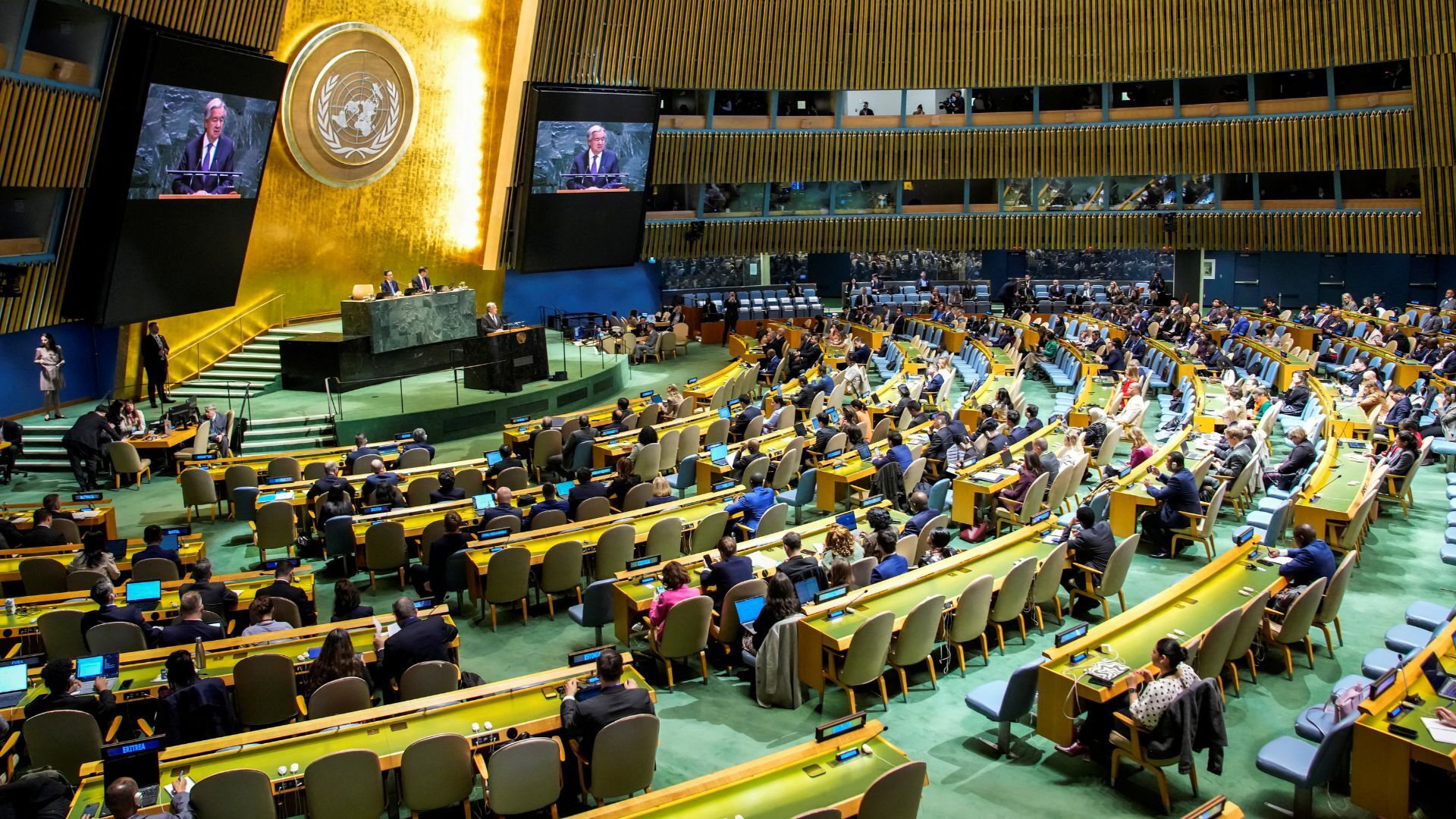
At an emergency session of the United Nations Security Council earlier on Monday, Secretary-General Antonio Guterres expressed concern that Washington’s capture of Maduro violated international law.
“I remain deeply concerned that rules of international law have not been respected with regard to the 3 January military action. The Charter enshrines the prohibition of the threat or use of force against the territorial integrity or political independence of any state,” Guterres said, referring to the UN’s founding document.
“The maintenance of international peace and security depends on the continued commitment of all member states to adhere to all the provisions of the Charter.”
Samuel Moncada, Venezuela’s ambassador to the UN, accused the US of carrying out an illegal armed attack against his country.
Venezuela was subjected to bombing, destruction of civilian infrastructure, the loss of civilian and military lives, and the “kidnapping” of Maduro and his wife, Moncada said.
The abduction of a sitting head of state breached a core norm of international law, the personal immunity of leaders in office, he added, warning that such actions set a dangerous precedent for all countries.
Russia and China, Venezuela’s most powerful allies, strongly condemned Maduro’s abduction and called for his release.
US allies France and Colombia also notably voiced concern, saying Washington’s military operation had undermined international law.
The US ambassador to the UN, Mike Waltz, defended Maduro’s abduction, describing it as a “law enforcement operation”.
“The United States arrested a narcotrafficker who is now going to stand trial in the United States,” Waltz said.
Waltz accused Maduro of being “responsible for attacks against the people of the United States, for destabilising the Western Hemisphere, and illegitimately repressing the people of Venezuela”.
Vast oil wealth
All eyes are on Venezuela’s response to the swiftly moving events after US President Donald Trump said late on Sunday that the US is “in charge” of the South American nation, which has the world’s largest oil reserves.
Vice President Delcy Rodriguez, meanwhile, was officially sworn in as interim president on Monday.
Rodriguez, a 56-year-old labour lawyer known for close connections to the private sector and her devotion to the governing party, was sworn in by her brother, Jorge, who is the head of the National Assembly legislature.
Delcy Rodriguez initially took a defiant stand against the seizure of the president, in what some observers labelled a return to “US gunboat diplomacy”. But she has now offered “to collaborate” with Washington.
One analyst said that Venezuela’s opposition appreciates the US intervention to remove Maduro from power, but is alarmed by Trump’s comments about US plans to “run” Venezuela, apparently with members of his government.
“Trump doesn’t recognise the decision of the Venezuelan people. We are not a colony of the US. We are an independent country,” Jose Manuel Puente, a professor at the Instituto de Estudios Superiores de Administracion, a private university in Caracas, told Al Jazeera.
“We want to initiate a transition to democracy, to rebuild the institutions, to rebuild the economy, to rebuild the oil sector. And we don’t see that from Trump until now.”
‘You will not succeed’
Venezuela’s National Assembly opened on Monday with lawmakers chanting “Let’s go, Nico!” as they denounced his abduction.
“The president of the United States, Mr Trump, claims to be the prosecutor, the judge, and the policeman of the world,” senior lawmaker Fernando Soto Rojas told the assembly.
“We say, you will not succeed, and we will ultimately deploy all our solidarity so that our legitimate president, Nicolas Maduro, returns victorious to Miraflores”, the presidential palace, he added.
Rodriguez has served as Maduro’s vice president since 2018, overseeing much of Venezuela’s oil-dependent economy and its feared intelligence service, and was next in the presidential line of succession.
She is part of a band of senior officials in Maduro’s administration who now appear to control Venezuela, even as Trump and other US officials say they will pressure the government to fall in line with their vision for the oil-rich nation.
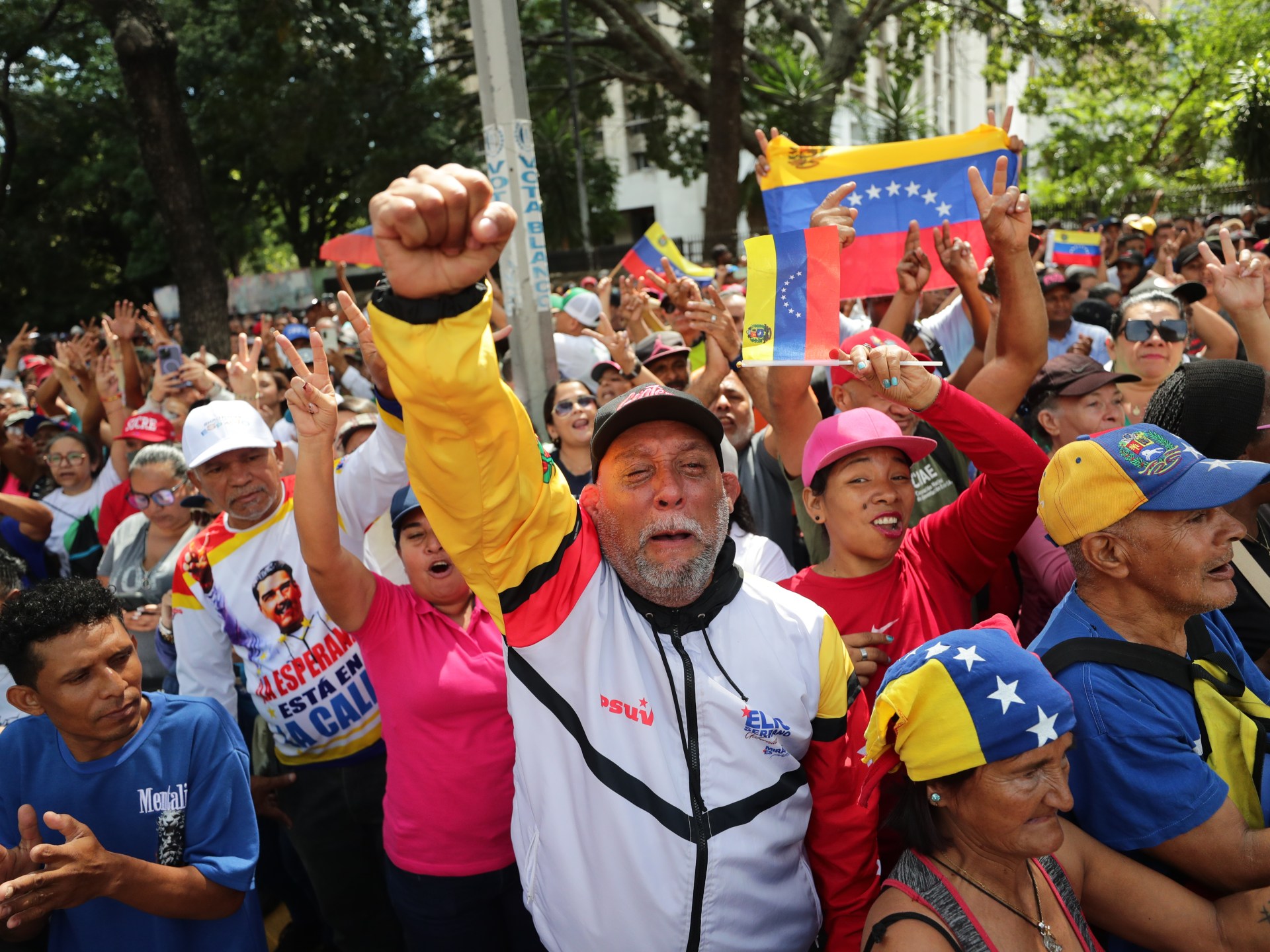
On Sunday, some 2,000 Maduro supporters, including rifle-wielding men on motorcycles, rallied in Caracas with crowds shouting and waving Venezuelan flags. The Venezuelan military, loyal to Maduro, announced it recognised Rodriguez and urged calm.
The White House indicated on Sunday that it does not want regime change, only Maduro’s removal and a pliant new government that will enable US companies to exploit the country’s oil reserves, even if the government is filled with his former associates.


Post Comment