Why did Israel join Trump’s ‘Board of Peace’ after raising objections? | Israel-Palestine conflict
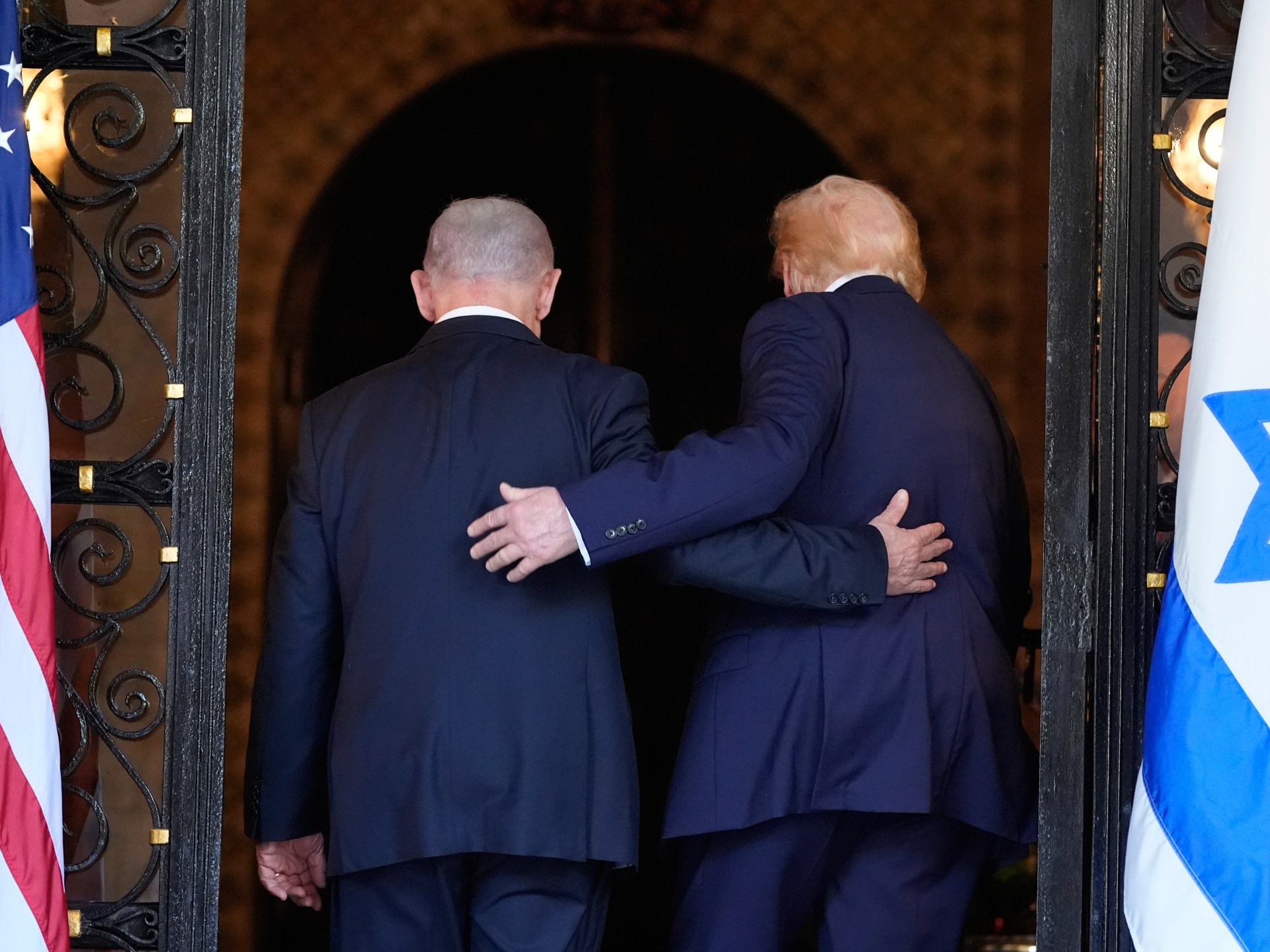
Israeli Prime Minister Benjamin Netanyahu has agreed to join US President Donald Trump’s “Board of Peace” for the future of Gaza, days after opposing elements of the multilayered structure proposed by Washington to oversee the Palestinian territory.
That apparent flip-flop came even as the idea of Netanyahu as a member of the board sparked criticism from many Palestinians and their supporters, given the Israeli leader’s central role in the genocidal war on Gaza since October 2023, in which more than 71,450 people have been killed. Netanyahu faces an arrest warrant from the International Criminal Court (ICC) over alleged war crimes in the Palestinian territory.
But many analysts believe there’s a thought-out strategy behind what on the surface appear to have been shifting Israeli positions.
Just days before he accepted a seat on the multi-national board, Netanyahu raised opposition to the Gaza “executive board”, saying its composition “was not coordinated with Israel and runs contrary to its policy”.
Members of the US-led board, including representatives of nations friendly to Israel, former United Kingdom Prime Minister Tony Blair, US Secretary of State Marco Rubio and Trump’s son-in-law Jared Kushner, “will oversee a defined portfolio critical to Gaza’s stabilization and long-term success”, the White House has said, including “governance capacity-building, regional relations, reconstruction, investment attraction, large-scale funding, and capital mobilization”.
But at the same time that Netanyahu prepares to sit alongside them on the board, the Israeli army is simultaneously blocking entry to the enclave by the very people tasked with rebuilding it.
According to analysts, the Israeli government’s decision to join may, therefore, be a calculated strategy to sabotage future efforts for governance of Gaza.
While all members of the board will be able vote on decisions, Trump, as chairman, will be able to veto them – and could well be drawn into “negotiations” on these decisions by Israel.
“Israel does not have a veto,” Rami Khouri, a fellow at the American University of Beirut, told Al Jazeera, but added: “Trump has clearly shown that he will make deals … Israel will object, and then ultimately come around to making the deal, as just happened with the Board of Peace.”
“While Trump is transactional and eager to close the file to focus on Iran, Netanyahu is a ‘long-term Zionist planner’ intent on buying time,” Khouri said.
Israel has already objected to Trump’s inclusion of Turkiye and Qatar on the board, calling this a “red line”, according to Israeli media reports.
Israeli opposition leader Yair Lapid reportedly told Netanyahu in the Knesset that Trump had announced the board “without your knowledge”. He accused the prime minister of weakness, saying: “The hosts of Hamas in Istanbul and Doha … have been invited to manage Gaza.”
Netanyahu responded that “there will be no Turkish or Qatari soldiers in Gaza”, acknowledging a “disagreement” with Washington regarding the advisory council.
A strategy of ‘disruption’
While the diplomatic row has so far focused on members of the board, the real deadlock is operational, analysts say.
Haaretz reported on Tuesday that Israel is refusing to allow the Palestinian National Committee for the Administration of Gaza – a 15-person committee of politically independent Palestinian experts tasked with rebuilding and overseen by the Board of Peace – to enter the Gaza Strip via the Rafah crossing. These “technocrats” had been scheduled to take over civil administration of the Strip this week.
On the surface, therefore, there are differences of opinion between the US and Israel over Gaza and phase two of the ceasefire agreement, which this committee is part of. But analysts say that despite the rhetoric, there is no real rupture between the allies.
“I do not call it a clash, but a divergence,” Mohannad Mustafa, an expert on Israeli affairs, told Al Jazeera.
“Netanyahu cannot say ‘no’ to Trump directly, so Israel will use tools to disrupt the work of the committee … restricting their movement and keeping the Rafah crossing closed.”
Ultimately, Israel’s goal is to decouple the second “humanitarian phase” of the ceasefire agreement from the first “withdrawal phase”.
“Israel will tell everyone: continue with your committees, but we will not withdraw,” Mustafa predicted. “They are currently expanding control over 55 to 60 percent of the Gaza Strip.”

Reconstruction vs security: The ‘high-rise’ threat
While the rebuilding of Gaza is high on the agenda for the peace plan in Gaza, the Israeli military is already raising the alarm over it.
Haaretz reported that Israeli military officials are worried about the physical reconstruction plans, specifically the proposed “high-rise towers” in a new Gaza. They argue these buildings would overlook southern Israeli settlements and military bases, and say this is “unacceptable”.
By citing such security threats, Israel effectively freezes reconstruction before it can begin, by demanding a separate demilitarisation process that no international body is willing or able to enforce.
This demonstrates the “absurdity of the US vision clashing with Israeli reality”, Mustafa said.
“Imagine building residential clusters in an area that Israel still controls militarily. The committee might start managing the areas … but with Israeli security clearance.”
A pattern of compliance for compensation
Khouri argues that this game of “brinkmanship” which Israel appears to be playing is a historical pattern dating back 75 years, whereby it concedes to US demands only after extracting a great deal of compensation.
“It will try to extract, in return, guarantees,” Khouri said, citing the withdrawals from Sinai in 1979 and Lebanon in 2000 as precedents. “It did what the US wanted … but it got guarantees of unprecedented levels of aid, support at the UN, and strategic defence collaborations.”
By creating a crisis over the inclusion of Turkiye and Qatar – or over the building of high-rise apartment blocks – Netanyahu is likely positioning himself to demand new security guarantees – or perhaps access to advanced weaponry – in exchange for allowing the Board of Peace to function.
A domestic pressure cooker
Netanyahu is not just negotiating with Trump, however; he is also fighting for political survival at home.
A recent Channel 13 poll revealed that 53 percent of Israelis view the Turkish-Qatari involvement in the Board of Peace as an “Israeli failure”. Finance Minister Bezalel Smotrich rebuked the US plan and called it ”a bad plan for Israel”.
According to the Israeli newspaper Ma’ariv, Smotrich also claimed countries like the UK and Egypt are hostile to Israel’s security. Smotrich has continued to demand military rule over Gaza and the “voluntary migration” of its population instead of Israel’s withdrawal.
“Netanyahu is in a political whirlwind,” Mustafa said. “He is being squeezed by the opposition, the settlers who want to return to Gaza, and the Americans.”
The election clock is ticking
The final variable is the Israeli electoral calendar, with elections likely in October 2026.
“If Israel withdraws from Gaza without Hamas being disarmed, this will be considered a failure,” Mustafa said. “Netanyahu will prefer his personal electoral interest over pleasing Trump.”
While the disarmament of Hamas is part of the ceasefire agreement with Israel, no formal agreement on when this will happen has been reached yet, despite Trump’s increasing displeasure. Last week, he said he would push for the “comprehensive” demilitarisation of Hamas, and, in a social media post, wrote: “As I have said before, they can do this the easy way, or the hard way.”
However, the bottom line, according to Khouri, is that while US public opinion is shifting further to horror at the genocide in Gaza, forcing Washington to take heed, Israel is terrified of losing “sole security control” of the Strip.
“They are afraid of the same thing happening in Gaza that happened in Lebanon,” Khouri concluded. “Because then the same thing might happen in the West Bank and East Jerusalem. So they will use all the different methods they’ve used for 100 years to stall.”


Post Comment