Venezuela’s interim president’s oil law reform to break with Chavez model | Oil and Gas News
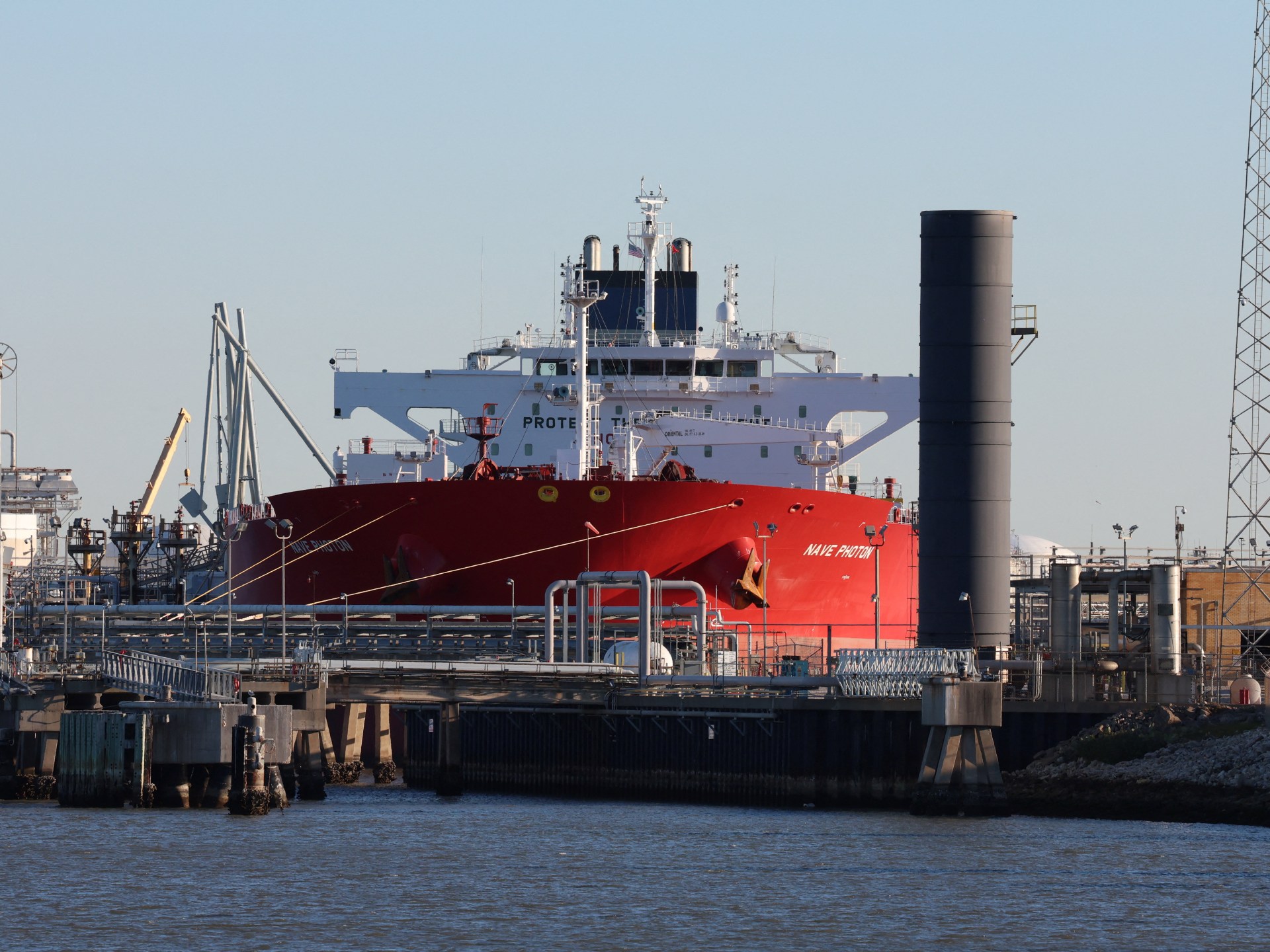
Caracas, Venezuela: Venezuela’s parliament has advanced a proposal to loosen the state’s control over its oil industry and boost the private sector’s role in the first major overhaul of the industry in years.
The proposal to reform Venezuela’s Hydrocarbons Law was thrust upon the country after the abduction of former President Nicolas Maduro by the United States on January 3 and had generated significant interest across businesses and political parties.
Recommended Stories
list of 4 itemsend of list
In the wake of those events, the White House and US Energy Secretary Chris Wright announced a $500bn energy agreement between the two countries, under which Washington seeks to exert significant influence over Venezuela’s oil industry.
Approved in its first reading on Thursday, the reform breaks with several principles of the oil nationalisation carried out by former President Hugo Chavez in 2006, which reserved exclusive crude marketing rights for state-owned oil company PDVSA.
The new text allows direct commercialisation by private companies, permits the opening of bank accounts in any currency and jurisdiction, and, while reaffirming PDVSA’s majority stake in joint ventures, allows minority partners to exercise technical and operational management.
The bill also proposes repealing the law that reserves ancillary services related to primary oil activities for the state, allowing private companies to subcontract oil extraction, provided they assume the associated costs and risks.
It further introduces flexibility in royalty payments, lowering them from 30 percent to as little as 15 percent of extracted crude as an incentive to attract investment, particularly new drilling in undeveloped areas.
Another key change seeks to incorporate legal safeguards through independent dispute-resolution mechanisms such as mediation and arbitration.
Legal certainty was among the main demands raised by executives from multinational oil companies during a meeting with US President Donald Trump on January 9, in reference to multibillion-dollar claims filed by ExxonMobil and ConocoPhillips against the Venezuelan state following the nationalisation process in 2007.
‘Law of ambiguity’
For economist Jose Guerra, former director of research at Venezuela’s Central Bank, the proposal remains heavy on rhetoric. He argues it lacks clarity and does not explicitly establish that private companies can hold majority ownership.
“This law is a law of ambiguity, designed to avoid openly breaking with Chavez’s oil legacy,” Guerra said. “It is not emphatic about private participation.”
He noted that, in practice, the government has already ceded ground to private capital through production participation contracts (CPP), under which companies could effectively hold more than 50 percent.
The CPP framework emerged in 2024 when Rodríguez was serving as energy and oil minister. Its operation has been marked by opacity, as it is shielded by Article 37 of the Anti-Blockade Law, enacted to circumvent sanctions imposed on PDVSA in 2019.
That provision establishes a regime of confidentiality and document classification, allowing the government to bypass the existing Hydrocarbons Law, which limits private or foreign capital to joint ventures in which PDVSA must hold a majority stake.
On January 15, Rodríguez told the National Assembly that the introduction of CPPs in April of 2024 led to a rebound in oil production, from 900,000 barrels per day to 1.2 million bpd, and that investments under this model reached nearly $900m in 2025.
But the introduction of the proposed changes were marred by controversy as the draft was not made public until just a couple of hours before lawmakers convened for its first debate. The opposition declined to vote, arguing that in a country with the world’s largest oil reserves, energy legislation should be treated as a “social pact”, the result of a broad and thorough consultation among all stakeholders.
‘Chevron model’
Luis Oliveros, dean of the Faculty of Economic Sciences at the Metropolitan University at Caracas, described it as a positive sign that the law formalises what is known as the “Chevron model”.
“It opens room for foreign companies to assume technical, operational and financial management of the joint ventures they operate, with greater flexibility,” he said. However, he added that eliminating PDVSA’s mandatory majority stake would have been more attractive to foreign investors.
Oswaldo Felizzola, coordinator of Venezuela’s International Centre for Energy and Environment (CIEA), told Al Jazeera that the reform contains enough elements to invite new capital to invest in the industry, but ultimately falls short.
“What has been proposed is necessary, but not sufficient. The law needs to be updated for the 21st century,” Felizzola said. “That said, it is no longer as statist as to paralyse the industry.”
He noted that many existing companies could shift to a different operating model to improve profitability, but warned that the framework still has significant shortcomings. “It does not take into account current or future issues – climate change, for example – and therefore it is not a law that will drive the role of oil in the years ahead,” he said.
According to Felizzola, the conditions outlined in the reform are closer to the model that prevailed in Venezuela during the last quarter of the 20th century. “Are further reforms needed? Yes. But there is at least enough in place to work with – and for the Venezuelan government to allow you to do so.”
The reform bill must now move to a consultation phase and a second, article-by-article debate in the National Assembly before it can be enacted. It is not clear when that will happen.
Meanwhile, energy cooperation with the Trump administration is already having an impact on Venezuela’s economy. This week, the country received its first $300m from US crude sales, earmarked for stabilising the foreign exchange market.
“We are witnessing a shift,” Guerra said. “The Rodriguez–Trump pact is clearly being implemented, and oil revenues are already flowing in. The lifting of sanctions allows Venezuela to sell at market prices rather than at a discount, as it has been doing. At a minimum, oil revenues this year are expected to rise by 30 percent compared with last year.”


Post Comment