UN aid convoy reaches Syria’s Ain al-Arab as truce between army, SDF holds | Syria’s War News
Convoy carrying food and fuel reaches Kurdish-majority town, also known as Kobane, in Aleppo province.
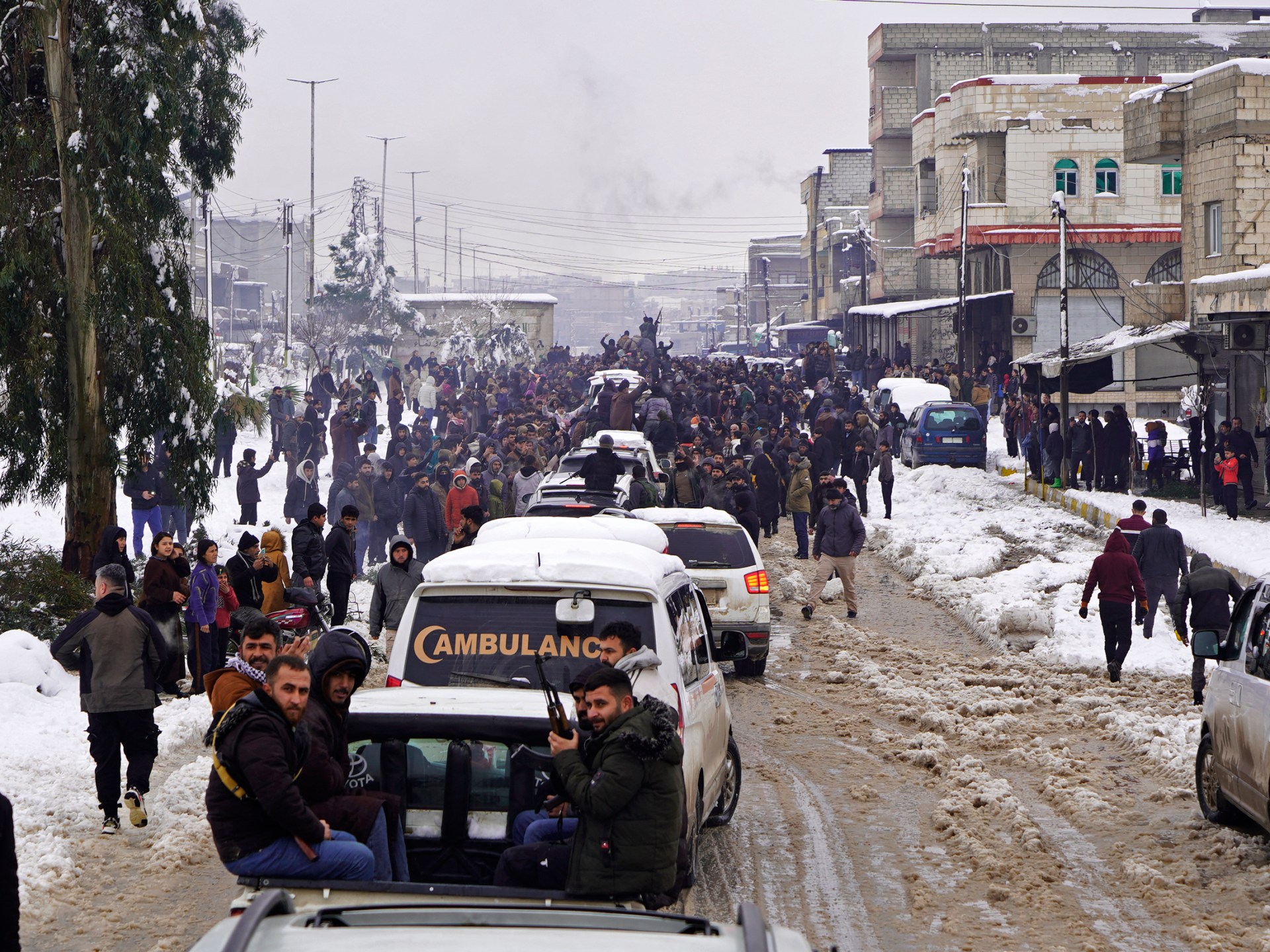
A United Nations convoy carrying “life-saving” aid has arrived in the Kurdish-majority town of Ain al-Arab in northern Syria as a ceasefire agreement between the Syrian army and the Kurdish-led Syrian Democratic Forces (SDF) continues to hold.
The convoy’s arrival in Ain al-Arab, also known as Kobane, on Sunday came amid growing concerns about humanitarian conditions in the town, which has been surrounded by Syrian government forces.
Recommended Stories
list of 3 itemsend of list
Electricity and water in the town have also been cut off for days.
The United Nations Office for the Coordination of Humanitarian Affairs (OCHA) said that the convoy consisted of 24 trucks carrying “life-saving aid, including fuel, bread, and ready-to-eat rations, to support people affected by the recent developments”.
It said the convoy was coordinated with the Syrian government.
The Syrian army said in a statement that it was opening two corridors, one to Ain al-Arab, located in Aleppo province, and another to the nearby Hasakah province, to allow “the entry of aid”.
Ain al-Arab, which has a population of 400,000 people, is hemmed in by the Turkish border to the north and government forces on all sides. It is approximately 200km (125 miles) from the SDF’s stronghold in Syria’s far northeast.
The SDF has accused the Syrian army of imposing a siege on the town.
Clashes between the two sides erupted earlier this month amid a dispute over the integration of the SDF into the Syrian army. Under pressure from the United States, the two sides agreed to a four day ceasefire last week, with Syrian President Ahmed al-Sharaa giving the SDF until Saturday night to lay down arms and come up with a plan to integrate with the army, or to resume fighting.
The two sides extended the ceasefire by another 15 days on Saturday.
Damascus said the renewed truce was intended to support a US operation to transfer some 7,000 detainees from the ISIL (ISIS) group held in prisons previously under SDF control to facilities in Iraq.
By Sunday night, however, the two sides were trading accusations of violations.
The Syrian army told state media that the SDF had targeted its positions with drones.
The SDF accused “Damascus-affiliated factions” of attacks around Ain al-Arab, including one that killed a child.
The SD, which has lost large areas of the country to the army, have now been restricted to Kurdish-majority areas in the northeast and Ain al-Arab.
Residents of the town say it was full of people who had fled the Syrian army’s advances in the northeast in recent weeks.
Al Jazeera’s Zein Basravi, reporting from Qere Qozaq in Aleppo province, said the arrival of the UN aid convoy came amid reports of worsening humanitarian conditions in Ain al-Arab.
“But these negotiated solutions, getting humanitarian aid in, remain very fragile, with both sides still primed to return to fighting as and when they feel it is needed,” he said.
“Whether the ceasefire holds or not, whether the fighting continues, these are all question marks. But there is one certainty: as long as the fighting carries on, rebuilding cannot happen,” he added.
Ain al-Arab, which the SDF liberated from a lengthy siege by ISIL in 2015, took on symbolic value as their first major victory against the armed group. It took another four years for the SDF, supported by a US-led international coalition, to defeat ISIL territorially in Syria.
Syria’s new government, which took power in 2024 after the fall of longtime leader Bashar al-Assad, has demanded that the SDF disband.
The US, meanwhile, has said the purpose of its alliance with the SDF has largely ended.



Post Comment