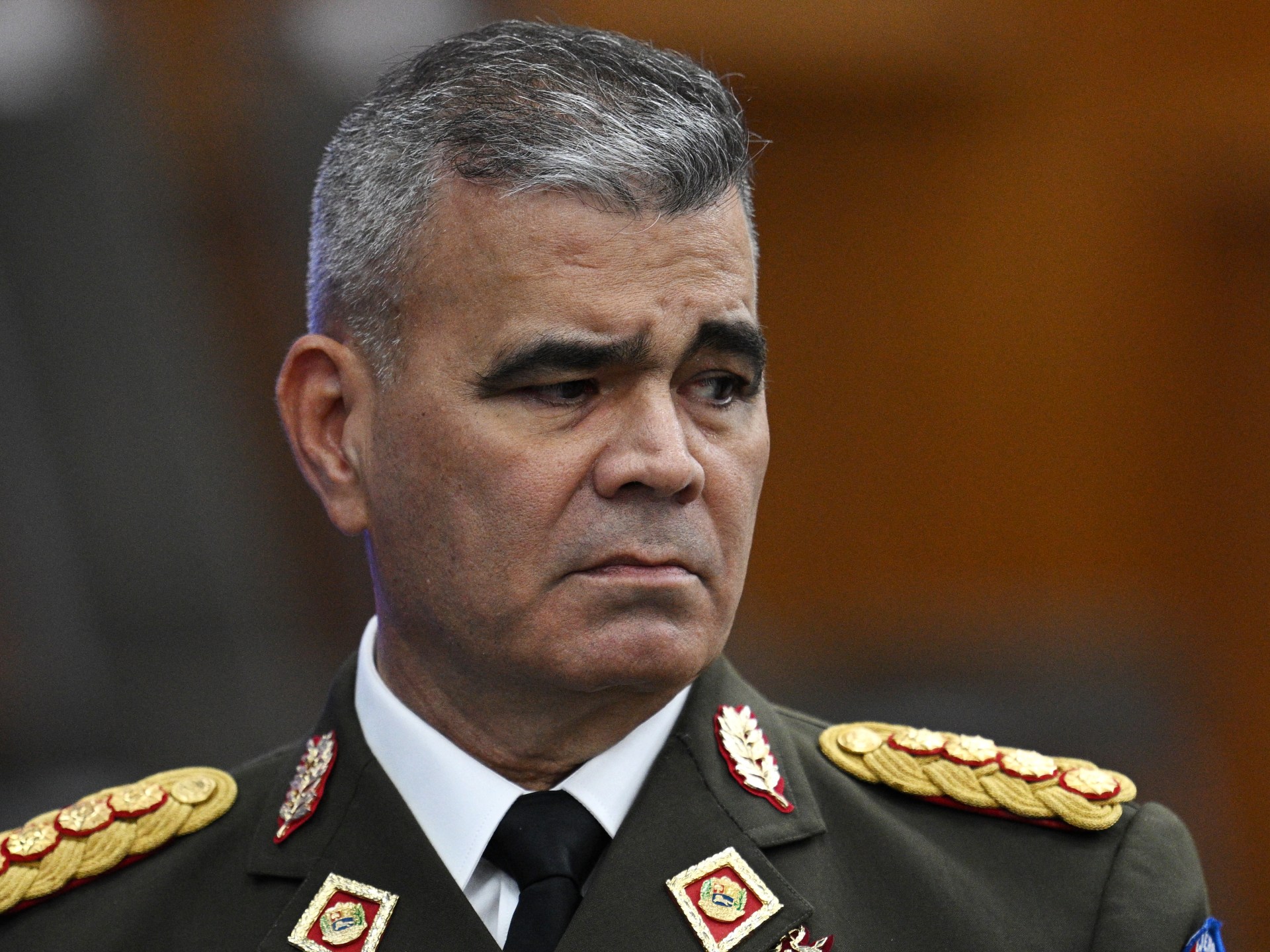
Delcy Rodriguez replaces Venezuela’s Defence Minister Vladimir Padrino | US-Venezuela Tensions News
General Vladimir Padrino spent 11 years as the country’s defence minister, acting as a key ally of Nicolas Maduro.

Published On 18 Mar 2026
Venezuela’s interim President Delcy Rodriguez has announced that she is replacing the country’s longtime defence minister, General Vladimir Padrino, a central figure from the administration of former President Nicolas Maduro.
Rodriguez announced the high-level departure in a post on Wednesday on the social media platform Telegram.
Recommended Stories
list of 3 itemsend of list
“We thank Vladimir Padrino Lopez for his loyalty to the homeland and for having been, for all of these years, the first soldier in the defence of our country,” Rodriguez said.
She added that Padrino would be given unspecified “new responsibilities”. No explanation was given for the change.
Padrino’s departure is the latest cabinet-level shake-up in the Venezuelan government since January 3, when the United States launched a military operation to abduct Maduro and his wife, Cilia Flores.
February, for instance, saw the departure of government ombudsman Alfredo Ruiz, followed by the resignation of Tarek William Saab as attorney general. Saab has since taken up Ruiz’s post on an interim basis.
All three officials were closely associated with Maduro and have been accused by human rights groups of contributing to government repression in Venezuela.
The 62-year-old Padrino has led the country’s military since 2014. Under his leadership, the military has faced accusations of corruption and abuses, including carrying out violent crackdowns on protesters.
Critics have also noted that the military’s influence extends into important sectors of the economy, such as mining, oil and food distribution.
Last week, a United Nations fact-finding mission noted that much of Maduro’s government remains in place, with little sign that there would be accountability for human rights violations.
“The complex legal and institutional machinery that instigated and enabled the commission of serious human rights violations and international crimes — previously documented by the Mission — remains intact,” the group wrote.
In the aftermath of Maduro’s abduction, President Rodriguez’s interim government has faced pressure to implement reforms.
Already, her administration has released hundreds of political prisoners and passed a general amnesty law, though rights advocates point out that the legislation has loopholes that could continue to allow for political repression.
US President Donald Trump, meanwhile, has used the threat of further military action to pressure the Venezuelan government into opening its nationalised oil and mining sector to foreign investment.
The US has also pushed to control Venezuelan oil sales, with Trump claiming to have taken “hundreds of millions of barrels of oil out” already.
The US embassy in Caracas officially resumed activities last week after a seven-year hiatus under Maduro, who took office in 2013.
Prior to the January 3 attack, Rodriguez had served as Maduro’s vice president. While she has cooperated with the US, she has nevertheless called on the Trump administration to release both Maduro and Flores.
In Wednesday’s announcement, Rodriguez indicated that Padrino would be replaced by General Gustavo Gonzalez Lopez.
Both Padrino and Gonzalez Lopez have faced US sanctions, based on allegations of human rights abuses and corruption. In the past, Gonzalez Lopez has served as Venezuela’s domestic intelligence chief, and more recently, he worked in the management of the state oil company PDVSA.


Post Comment