US to require up to $15,000 bond for visa applicants from 12 new countries | Migration News
Trump administration has introduced measures meant to restrict both legal and illegal immigration to the US.

Published On 18 Mar 2026
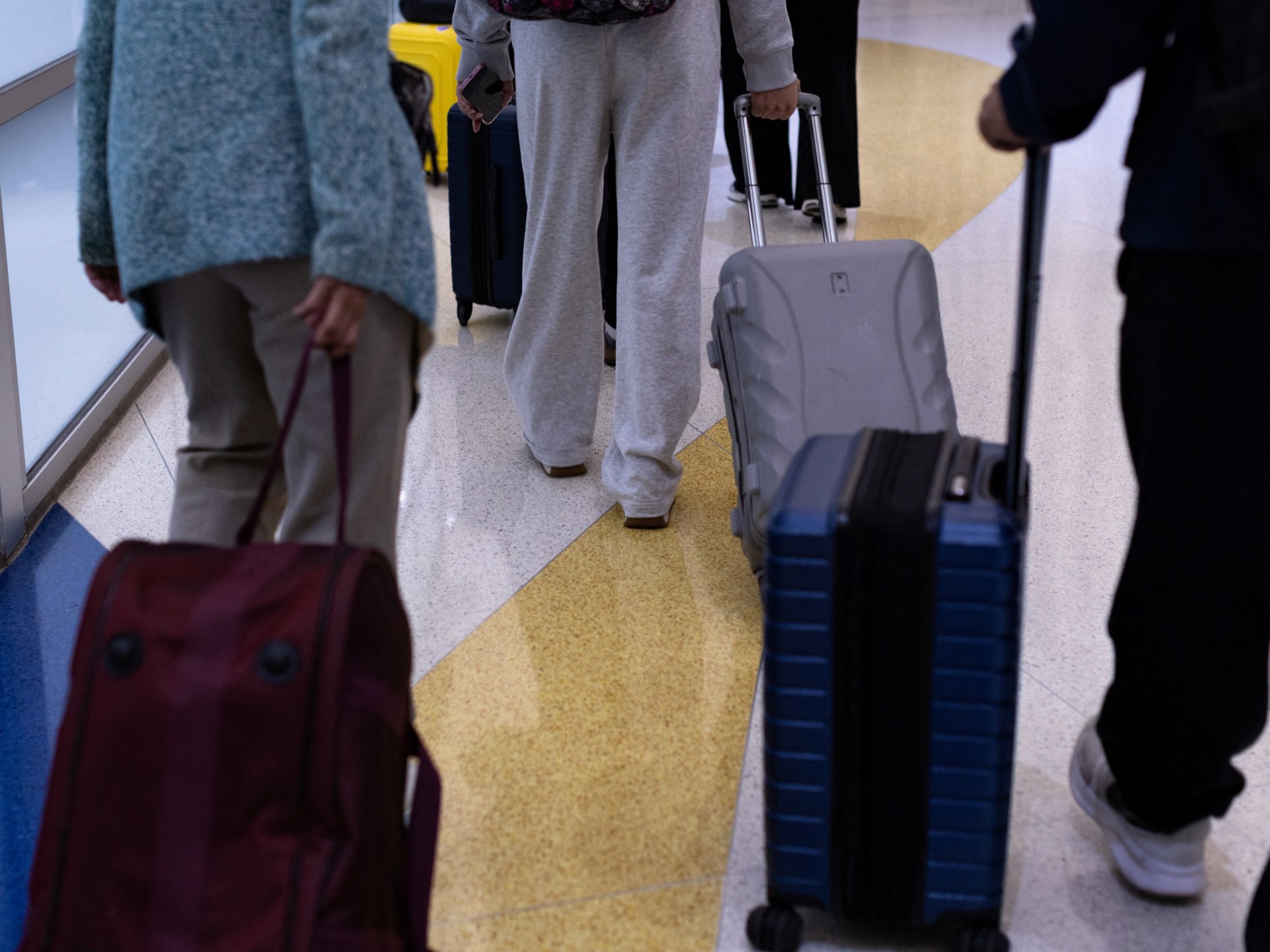
The United States Department of State has added a dozen countries to a list that requires visa applicants to post bonds of as much as $15,000 for entry into the US.
Wednesday’s list expansion is the latest move under President Donald Trump to restrict immigration into the US from largely non-Western nations.
Recommended Stories
list of 3 itemsend of list
The 12 additional countries bring the total number of nations subject to the restrictions to 50. Most of them are African nations, and critics argue that the high bonds discriminate against low-income travellers.
But the Trump administration has defended the policy as a means of reducing visa overstays.
“The visa bond program has already proven effective at drastically reducing the number of visa recipients who overstay their visas and illegally remain in the United States,” the State Department wrote in a news release on Wednesday.
It explained that an estimated 1,000 visas have been issued under the bond programme, and that 97 percent of the recipients left the US within the timeframe of their visa.
The bonds are applied to B-1 and B-2 visas, granted for business visitors and tourists, respectively.
The costs are set according to three tiers: $5,000, $10,000, or $15,000. “The amount is determined at the time of the visa interview,” the State Department says on its website.
Paying the bond does not guarantee a visa will be granted. The bond is ultimately refunded if the visa application is rejected, if entry into the US does not occur, or if the recipient adheres to the terms of the visa.
The new countries added to the list are Cambodia, Ethiopia, Georgia, Grenada, Lesotho, Mauritius, Mongolia, Mozambique, Nicaragua, Papua New Guinea, Seychelles and Tunisia.
The bonds for visa applicants from those countries will be enforced starting on April 2. In Wednesday’s news release, the State Department hinted it reserves the right to further expand the programme in the future.
“The Department may continue to place Visa Bonds on countries based on a range of immigration risk factor,” it said.
Since returning to the White House in January 2025, Trump has increasingly implemented initiatives to restrict both legal and illegal immigration, especially from poor and non-Western countries.
The bond programme was initially debuted last August, with the Trump administration describing it as a tool to increase government revenue and heighten screenings for short-term travellers.
Trump had previously attempted to implement a similar programme in 2020, during the final full year of his first term. But the COVID-19 pandemic that year prevented the programme from taking effect.
The Republican leader’s second term, however, has seen him double down on his efforts to restrict immigration.
In addition to bond requirements on certain countries, the Trump administration suspended immigrant visa processing from 75 countries in January, a measure that has been challenged in court.
It has also pursued an aggressive campaign of mass deportations, claiming in January to have conducted 675,000 removals.
In tandem with those efforts, Trump officials have sought to roll back legal immigration programmes like Temporary Protected Status and humanitarian parole. It has also paused most asylum claims and introduced the lowest refugee admissions cap in US history.
Refugee admissions will prioritise white South Africans, according to the Trump administration, which has claimed Afrikaners were subject to persecution.
The wave of restrictive policies has impacted tourism and raised questions about access to the upcoming World Cup, which is being co-hosted by the US, Canada and Mexico.

Post Comment